
Ooencyrtus pityocampae
Ooencyrtus pityocampae
Description
How to identify
Ooencyrtus pityocampae is a species of parasitic wasp belonging to the family Encyrtidae, order Hymenoptera. It is a tiny but highly specialized insect that targets specific host eggs.
As a solitary parasitoid, it is evolved to navigate the canopy of pine forests to locate the egg batches of its primary host, the pine processionary moth (Thaumetopoea pityocampa).
The adults are extremely small, often metallic or dark-colored, which allows them to effectively blend in with the texture of pine needles and bark while foraging.
The morphology of this insect is optimized for sensory detection of host chemical cues, ensuring that they can locate even well-hidden egg clusters within the forest environment.
Its role as a biological agent makes it an essential subject for forestry experts studying natural pest regulation mechanisms in Mediterranean pine ecosystems.
What it damages
This species is not a direct pest to trees; rather, it is a beneficial parasitoid that attacks the pine processionary moth, which is a major defoliator of pine forests.
The moth larvae are notorious for causing massive needle loss and weakening trees, making them susceptible to secondary infections or secondary pests like bark beetles.
Ooencyrtus pityocampae actively parasitizes the eggs of the moth, preventing the emergence of damaging larvae that would otherwise consume the forest canopy.
By consuming the contents of the moth eggs, the wasp significantly reduces the potential density of the next generation of defoliating caterpillars.
In terms of forest health management, this wasp acts as a natural control agent, serving as a critical ally in maintaining the resilience of coniferous stands.
When it appears
The activity of these wasps is strictly seasonal, coinciding with the late summer oviposition period of the pine processionary moth.
Adult females are most active when fresh egg batches are deposited on the needles, as they require these specific sites to lay their own eggs.
The entire developmental cycle of the parasitoid, from egg to adult, takes place within the shell of the host egg, effectively shielding the wasp from external environmental hazards.
Weather conditions, particularly temperature and humidity, play a fundamental role in the synchronization of the wasp's life cycle with that of the host.
Any disruption in the seasonal timing due to climate change can affect the efficacy of this parasitoid, potentially leading to increased outbreaks of the moth.
Signs of infestation
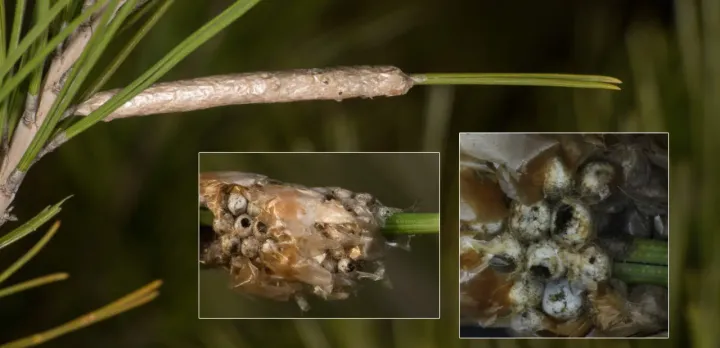
The primary sign of parasitism by Ooencyrtus pityocampae is the presence of tiny, circular exit holes on the surface of the moth egg batches.
Under laboratory examination, parasitized batches show a significant lack of larvae hatching, with dead eggs containing wasp remnants instead.
A reduction in total defoliation damage in specific zones is a strong indicator of successful population control by these wasps during the previous season.
Field monitoring involves the collection of egg batches in autumn to evaluate the parasitism rate, which provides data for long-term population forecasting.
The presence of these wasps often coincides with a lower number of typical silken "tents" produced by the larvae during their subsequent development phases.
Control measures
The most important control strategy is the preservation of the forest habitat to maintain a healthy population of natural parasitoids and predators.
Avoiding the indiscriminate use of broad-spectrum chemical insecticides during the wasp's active flight season is vital to protect the existing parasitoid population.
Biological monitoring allows foresters to determine when natural control is sufficient and when targeted interventions are required to stop the moth outbreak.
Reforestation efforts should include maintaining biodiversity, as diverse plant species can provide necessary resources for adult wasps, such as nectar sources.
When chemical intervention is necessary, the use of targeted biological agents like Bacillus thuringiensis or viral preparations is preferred to minimize harm to beneficial hymenopterans.
Taxonomy
- Latin name
- Ooencyrtus pityocampae
- Order
- Hymenoptera
- Family
- Encyrtidae
- EPPO code
- OOENPI
Discussion
No discussions yet — be the first.