
Ooencyrtus kuvanae
Ooencyrtus kuvanae
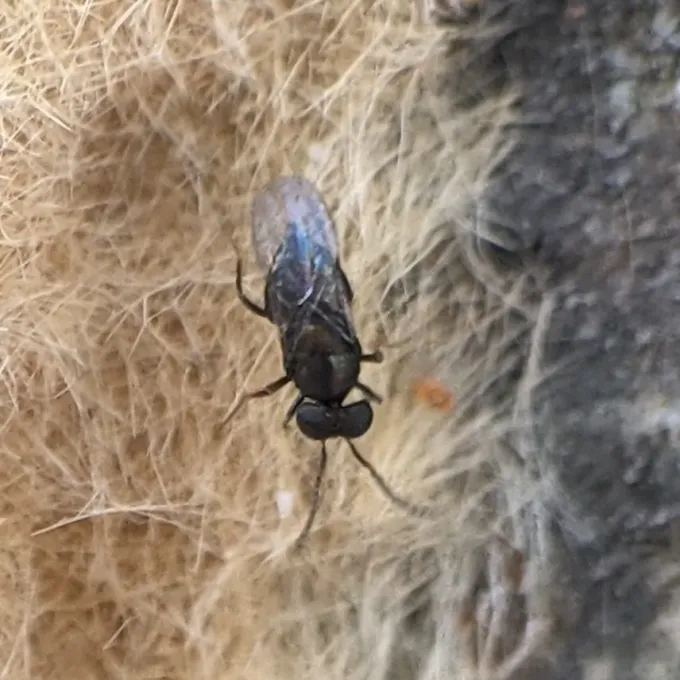
Description
How to identify
Ooencyrtus kuvanae is a minute parasitic wasp belonging to the family Encyrtidae, widely recognized as a significant natural enemy of various lepidopteran pests, most notably the gypsy moth.
The adult wasps are tiny, usually measuring about 1 mm in length. They typically possess a dark, often metallic-colored body, which is characteristic of many chalcid wasps.
As a highly specialized parasitoid, this insect has developed precise mechanisms to locate host egg masses, utilizing chemical cues emitted by the host or the host's pheromones.
Taxonomically, it falls under the order Hymenoptera, a group containing both vital pollinators and essential regulators of insect populations.
The life cycle involves complete metamorphosis, where the larval stage develops exclusively within the host egg, effectively consuming the pest before it has a chance to hatch.
What it damages
This species causes no damage to plants. On the contrary, it is an extremely beneficial organism that serves as a cornerstone in classical and augmentative biological control programs.
The parasitoid reduces the population of harmful defoliators like the gypsy moth, preventing large-scale damage to forest trees, orchards, and urban parkland greenery.
By destroying the eggs of the host, Ooencyrtus kuvanae acts as a preventive measure against the subsequent larval stages that would otherwise cause extensive foliage loss.
There is no economic harm associated with this insect; instead, its presence is a desired indicator of a healthy, functioning ecosystem capable of self-regulation.
The activity of these wasps contributes significantly to the natural suppression of outbreaks, reducing the need for broad-spectrum insecticide applications in forestry and agriculture.
When it appears
The seasonal activity of Ooencyrtus kuvanae is closely synchronized with the oviposition periods of its primary hosts, typically during the mid-to-late summer months.
Adult wasps are most visible during this window as they patrol tree trunks and branches in search of freshly laid egg masses suitable for parasitization.
The species survives the winter in the adult stage, often overwintering within the shells of the host eggs it previously utilized or in protected bark crevices.
With the onset of warmer spring weather, these overwintering adults emerge to begin a new cycle, searching for any remaining viable host eggs to sustain their population.
The ability to produce multiple generations within a single season allows the wasp to track the host population density effectively, responding quickly to any increase in pest numbers.
Signs of infestation
Signs of Ooencyrtus kuvanae activity are found by inspecting host egg masses on tree bark, particularly those of the gypsy moth.
The most diagnostic sign is the presence of tiny emergence holes on the surface of the egg mass, which indicate that the adult wasps have successfully completed their development.
- Minute circular exit holes on host egg casings.
- Noticeable discoloration or slight distortion of the egg mass.
- Observation of small, dark-colored wasps crawling on egg masses during the summer.
Microscopic examination of the eggs often reveals the internal presence of parasitoid pupae or larvae, confirming that the egg mass has been colonized.
A reduction in the number of hatched caterpillars in the following spring serves as an indirect indicator of the high efficacy of the parasitoid during the previous year.
Control measures
No control measures are needed for Ooencyrtus kuvanae, as it is a beneficial insect and a valuable ally in integrated pest management strategies.
The primary management objective should be the conservation of this species by avoiding the use of non-selective insecticides that could harm these beneficial wasps.
Promoting habitat complexity, such as maintaining hedgerows and diverse tree species, provides necessary resources for the adult wasps, such as nectar or shelter.
Integrated programs emphasize timing chemical interventions to avoid periods when beneficial populations are most active and vulnerable in the field.
Protecting the natural reservoir of these parasitoids ensures that the biological control services they provide remain effective for years to come.
Taxonomy
- Latin name
- Ooencyrtus kuvanae
- Order
- Hymenoptera
- Family
- Encyrtidae
- EPPO code
- OOENKU
Discussion
No discussions yet — be the first.