
Oobius
Oobius
Description
How to identify
The genus Oobius belongs to the family Encyrtidae within the order Hymenoptera. These tiny wasps are primarily recognized as egg parasitoids, playing a nuanced role in agricultural ecosystems.
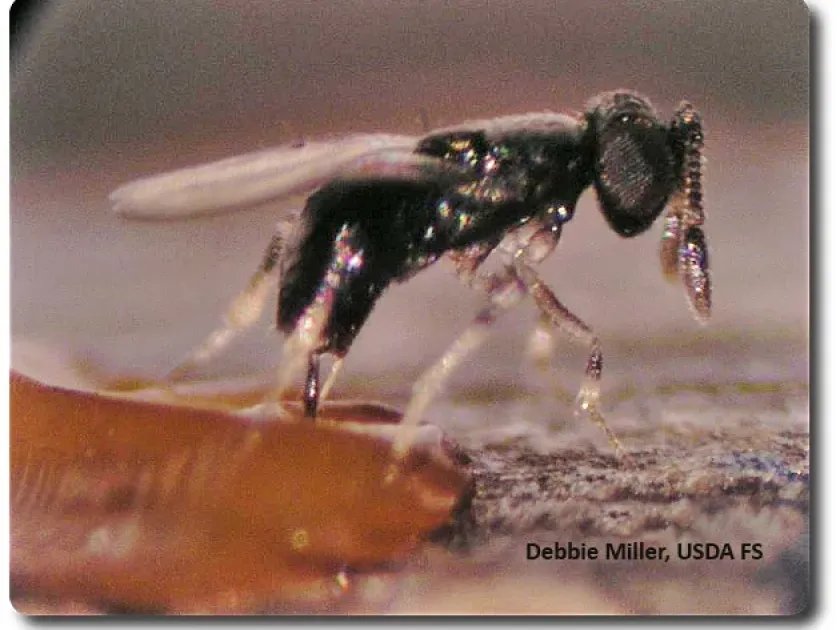
Measuring typically less than 1 millimeter in length, these insects are difficult to detect with the naked eye. They often display dark, metallic-tinted bodies characteristic of this wasp family.
They are classified as parasitoids because their larvae develop entirely inside the eggs of their insect hosts, eventually consuming the content of the host egg.
Morphological identification to the species level is complex and requires specialized entomological knowledge and laboratory equipment such as microscopes.
Their life cycle is highly adapted to the availability of host eggs, making them synchronize their emergence with the reproductive phases of their targets.
What it damages
The impact of Oobius on crops is indirect and depends on the specific host species they parasitize. They can either be beneficial agents or interfere with natural biological control.
By destroying the eggs of various beetle pests, they act as natural controllers of pest populations, contributing to the health of the agricultural environment.
However, if they parasitize eggs of beneficial predatory beetles or other natural enemies, they reduce the overall biological control efficiency in the field.
Plants themselves do not suffer direct physical damage from these wasps, but the ecological balance of the farmland can be shifted by their activity.
Effective management requires distinguishing between the target pest eggs and beneficial insect eggs to ensure that Oobius populations are monitored appropriately.
When it appears
The seasonal activity of Oobius is largely driven by temperature and the phenology of their hosts. In temperate regions, activity peaks during the spring and summer.
Emergence typically starts when temperatures rise sufficiently to allow the development of the first spring generation of wasps.
During the summer months, several generations may overlap, leading to a high density of wasps wherever host eggs are abundant in the crop canopy.
As autumn approaches, the insects seek protected hibernation sites, such as bark crevices, leaf litter, or the upper soil layer to survive the winter.
The timing of emergence in the following year is critical for the success of their offspring, as it must match the egg-laying period of the specific host species.
Signs of infestation
Signs of Oobius infestation are very subtle. The primary indicator is the presence of minute exit holes on the surface of insect eggs.
Affected eggs often show discoloration or a darker appearance compared to healthy, unparasitized eggs, as the larvae develop inside.
In cases of high infestation rates, one might notice a decrease in the number of larvae hatching from pest eggs on the crop leaves or stems.
Monitoring the adult wasps on sticky traps or through direct sweep netting can confirm their presence in the crop field during the peak season.
Advanced diagnostic tools, including DNA analysis of egg samples, are sometimes used in agricultural research to identify parasitism by specific Oobius species.
Control measures
Management strategies for Oobius are rarely targeted towards eradication, as they are often recognized as valuable biological control agents.
If population control is deemed necessary due to negative impacts on beneficial insects, selective management practices that preserve ecological balance should be favored.
Cultural practices, such as clearing crop residues, can influence the overwintering success of these insects, thereby modulating the population density for the next season.
Avoiding the indiscriminate use of broad-spectrum insecticides helps preserve the natural population of these wasps, maintaining a healthy ecosystem in the field.
Field monitoring and identifying the specific host-parasitoid relationships are essential steps before implementing any changes to standard agricultural procedures.
Taxonomy
- Latin name
- Oobius
- Order
- Hymenoptera
- Family
- Encyrtidae
- EPPO code
- OOBISP
Discussion
No discussions yet — be the first.