
Microterys okitsuensis
Microterys okitsuensis
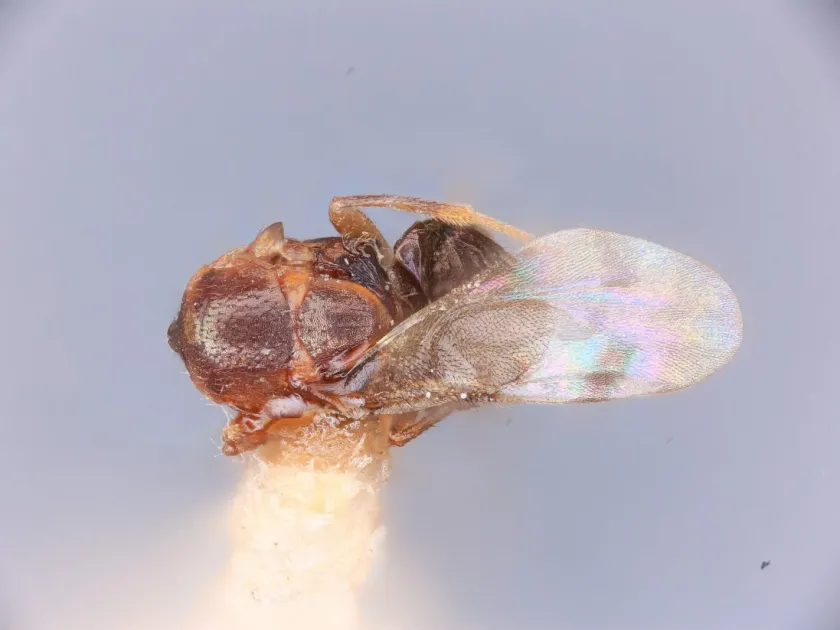
Description
How to identify
Microterys okitsuensis is a tiny parasitic wasp belonging to the Encyrtidae family. In agricultural settings, it is valued primarily as a natural enemy of scale insects that infest citrus and other woody plants.
Adult wasps are extremely small, typically measuring between 1 to 2 millimeters in length. Their bodies often possess a dark or metallic coloration, which provides camouflage against the bark and foliage of host plants.
The life cycle of this wasp is strictly parasitic. Females are equipped with an ovipositor, which they use to insert eggs directly into the body of the host scale insect through its protective covering.
The larvae develop inside the host's body, consuming its soft tissues and organs throughout their larval stages. The scale insect eventually dies, turning into a hardened shell known as a mummy.
Upon completing development, the adult wasp chews a circular exit hole through the scale's shell. This hole is a hallmark sign that a parasitoid has emerged from the host.
What it damages
The primary hosts for Microterys okitsuensis are scale insects (Coccidae), which are significant pests of subtropical and citrus orchards. By targeting these insects, the wasp serves as an effective biological control agent.
Scale insects harm plants by sucking out phloem sap, which leads to reduced vigor, stunted growth, and, in severe cases, branch dieback. Parasitism by the wasp significantly limits the number of active scales.
Indirect damage from scales includes the secretion of honeydew, which encourages the growth of sooty mold on leaves, blocking sunlight and reducing photosynthesis. Parasitoids help keep this damage in check.
Without the regulating influence of natural enemies like M. okitsuensis, populations of scale insects can grow exponentially, causing substantial economic losses in commercial citrus production.
The presence of this parasitoid is essential for maintaining a healthy orchard ecosystem and reducing the need for intensive synthetic pesticide applications.
When it appears
The activity of Microterys okitsuensis is closely tied to the lifecycle of its host and seasonal temperature fluctuations. They are most active during the warmer months when scale insects are rapidly reproducing.
Emergence of adult wasps occurs as temperatures rise in the spring. Multiple generations can be completed within a single growing season, provided there is a continuous supply of host insects.
During the summer peak, the generation time can be as short as a few weeks, allowing the wasp population to increase quickly in response to scale outbreaks.
As autumn approaches and temperatures drop, the development rate slows down. The wasp overwinters in the larval or pupal stage inside the mummy of the host, surviving until the following spring.
Timing agricultural interventions around the peaks of wasp activity is crucial to ensure that natural biological control is preserved rather than disrupted.
Signs of infestation
The most reliable sign of the presence of M. okitsuensis is the appearance of scale insect mummies on the twigs and leaves of the plant. These mummies are often slightly discolored or misshapen.
Closer inspection with a magnifying lens reveals distinct circular exit holes on the dorsal surface of the scale covers. These holes are clear indicators that the parasitoid has successfully completed its life cycle.
A visible decline in the scale insect population density, accompanied by the absence of fresh honeydew or sooty mold, suggests that the natural enemies are performing their control function effectively.
Monitoring these symptoms allows orchard managers to track the success of natural control measures and determine if supplemental protection is required.
- Presence of perforated scale covers.
- Decrease in live scale insect colonies.
Control measures
To support Microterys okitsuensis, growers should adopt Integrated Pest Management (IPM) practices. The most critical step is avoiding the use of broad-spectrum insecticides that kill beneficial insects along with the pests.
If chemical intervention is unavoidable, choose selective pesticides or biological agents that have minimal impact on parasitoid wasps. Always consider the timing of applications to avoid critical wasp activity windows.
Maintaining floral strips or hedgerows near orchards provides nectar sources for adult wasps, which can improve their lifespan and reproductive success in the field.
Regular orchard monitoring through traps or visual inspections helps in making data-driven decisions about the need for control, preventing unnecessary expenses and environmental harm.
Promoting a balanced orchard environment through proper irrigation and fertilization keeps trees resilient, making them better able to withstand minor infestations that the wasps will eventually regulate.
Taxonomy
- Latin name
- Microterys okitsuensis
- Order
- Hymenoptera
- Family
- Encyrtidae
- EPPO code
- MIROOK
Discussion
No discussions yet — be the first.