
Microterys nietneri
Microterys nietneri
Description
How to identify
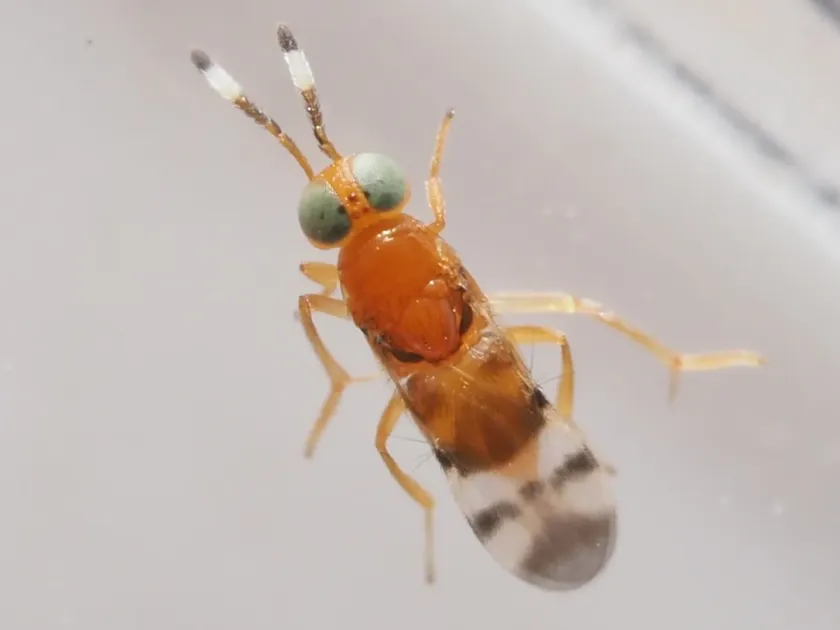
Microterys nietneri is a member of the Hymenoptera order and the Encyrtidae family. These are minute parasitoid wasps that play a crucial role in controlling populations of various scale insects.
The morphology of this insect is characterized by a compact body and specialized wings, allowing it to navigate effectively in the canopy of trees to find its host organisms.
Its biological cycle is strictly dependent on the host. The female wasp deposits eggs into the body of the scale insect. The developing larva consumes the host from within, effectively terminating the pest's development.
Microterys nietneri undergoes a complete metamorphosis. The stages of egg, larva, and pupa are passed within the host insect, which serves as both food and a protected environment for the developing wasp.
Due to their microscopic size, identifying these insects in the field is difficult and usually requires expert entomological analysis of collected samples under high magnification.
What it damages
Microterys nietneri does not damage plants directly. It is a highly beneficial insect that serves as a natural enemy to various species of scale insects (Coccidae) that infest fruit and ornamental trees.
The host plants often include citrus and other woody species prone to heavy scale infestations. The presence of these wasps is an indicator of an existing pest population that needs management.
The "damage" caused by this wasp is limited to the pest population it targets. It prevents the scale insects from reproducing and damaging the plant's sap and structural integrity.
For agronomists, seeing these wasps suggests that a biological control process is already underway in the field. This can reduce the need for aggressive chemical interventions.
Therefore, this insect should be preserved and protected as a valuable component of an integrated pest management (IPM) strategy for orchards and commercial nurseries.
Control measures
No control measures should be taken against Microterys nietneri, as it is a beneficial parasitoid. Instead, agricultural strategies should focus on fostering an environment where these wasps can thrive.
The most important control strategy is the avoidance of broad-spectrum insecticides, which can non-selectively wipe out both the pests and their natural enemies.
Integrated Pest Management (IPM) should prioritize the use of biological control agents and pheromone traps to manage the scale insect populations without destroying the parasitoids.
Cultural practices such as proper pruning and irrigation can keep trees healthy and less susceptible to the initial establishment of scale insects, reducing the need for chemical intervention.
- Avoid non-selective chemical spraying.
- Promote biodiversity in the agricultural landscape.
- Regular monitoring of host pest populations.
- Use selective treatments if intervention is necessary.
Taxonomy
- Latin name
- Microterys nietneri
- Order
- Hymenoptera
- Family
- Encyrtidae
- EPPO code
- MIRONI
Discussion
No discussions yet — be the first.