
Microterys flavus
Microterys flavus
Description
How to identify
Microterys flavus is a parasitoid wasp belonging to the order Hymenoptera and the family Encyrtidae. This tiny insect is globally recognized as a significant natural regulator of scale insect populations in various agricultural and horticultural systems.
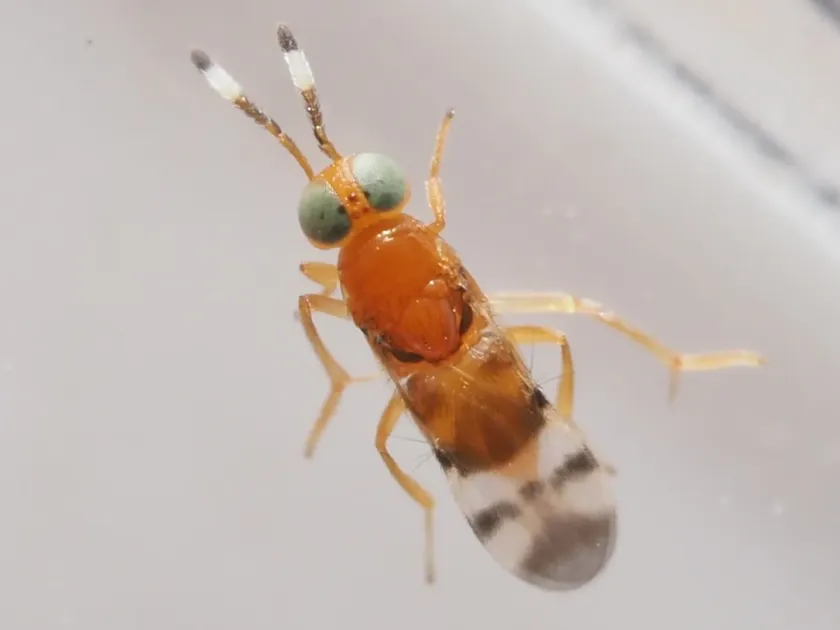
The adult wasp is extremely small, typically measuring between 1 to 2 mm in length. Its body exhibits a yellowish-brown coloration, which provides excellent camouflage while moving across the leaves and stems of host plants.
The life cycle involves the female wasp laying eggs inside the body of a host scale insect. The developing larva consumes the internal contents of the scale, passing through several stages of metamorphosis until it pupates within the host's hardened shell.
Proper identification usually requires microscopic analysis of wing venation and antennal structures. Distinguishing M. flavus from other encyrtids is essential for professionals involved in Integrated Pest Management (IPM).
As a specialized biological agent, this wasp demonstrates high host specificity, making it an excellent candidate for sustainable pest control programs in greenhouses and orchards.
What it damages
Microterys flavus does not damage plants; rather, it is a beneficial organism that parasitizes harmful scale insects, most notably the soft scale (Coccus hesperidum). By killing the scale, it protects the plant from sap-sucking injury.
The primary hosts for this wasp include various scale species that infest citrus trees, ornamental shrubs, and indoor plants like ficus or oleander. These pests are notorious for weakening plants and promoting the growth of sooty mold.
The harm to the pest population occurs when the wasp larva matures inside the host, completely destroying the scale's internal tissues. This effectively prevents the scale from reproducing and leads to the eventual collapse of the colony.
While the wasp is a beneficial entity, the "damage" to the ecosystem arises when broad-spectrum insecticides are used inappropriately, killing the wasp and causing a massive resurgence of the scale population due to the lack of natural predators.
Therefore, managing this object is about preserving its function within the ecosystem rather than combating it as a pest, ensuring a healthy balance in the cultivated area.
When it appears
The activity of Microterys flavus is highly dependent on ambient temperature and the lifecycle of its host. In temperate climates, the wasps are most active during the warmer months, from late spring through early autumn.
The wasp typically overwinters in the larval or pupal stage inside the body of a scale insect. Once temperatures rise above 15°C, the adults emerge to begin their search for new host colonies.
Throughout the growing season, the wasp can produce multiple overlapping generations, allowing it to maintain continuous pressure on pest populations throughout the summer period.
Peak activity is usually observed during periods of high humidity and warmth, which are optimal for both the parasite's reproduction and the successful development of its larvae within the host.
As autumn approaches and temperatures drop, the wasp slows its metabolism and enters a state of diapause, waiting for the return of favorable conditions in the next growing cycle.
Signs of infestation
The most reliable sign of Microterys flavus activity is the presence of small, circular exit holes on the dorsal side of the scale insects. These holes are created by the adult wasp as it leaves the host shell after metamorphosis.
Infested scale insects often exhibit structural changes; they may become paler, brittle, or shriveled compared to healthy, plump, and shiny-bodied scale insects that are still actively feeding on the plant.
A noticeable decrease in the presence of honeydew and the associated sooty mold on the leaves is a strong indirect sign that the parasitoid population is successfully managing the scale colony.
Visual observation in the early morning can reveal tiny wasps hovering near infested leaves. Their characteristic movement patterns as they "inspect" the scales for suitability for egg-laying are typical for an active population.
An absence of these signs alongside a booming population of scales indicates a lack of natural enemies, suggesting that the environment may have been negatively impacted by previous chemical interventions.
Control measures
Control strategies involving Microterys flavus are focused on preservation and enhancement. As a beneficial wasp, the goal is to create an environment where the population can thrive and control pests naturally.
- Avoid the use of non-selective, high-toxicity insecticides that are known to be lethal to beneficial Hymenoptera.
- Adopt integrated pest management practices by using soft, selective pesticides that target the scale pests while leaving the wasps unharmed.
- Implement regular monitoring to determine the percentage of parasitized scale insects before deciding on any chemical treatment.
- Encourage biodiversity in the greenhouse or orchard surroundings to provide floral nectar sources for adult wasps.
- Use physical control measures, such as pruning heavily infested branches, to reduce the overall pest load without relying on harsh chemicals.
The ultimate goal is to rely on the natural regulatory power of Microterys flavus, reducing the reliance on chemical inputs and ensuring sustainable long-term crop protection.
Taxonomy
- Latin name
- Microterys flavus
- Order
- Hymenoptera
- Family
- Encyrtidae
- EPPO code
- MIROFL
Discussion
No discussions yet — be the first.