
Metaphycus psyllidis
Metaphycus psyllidis
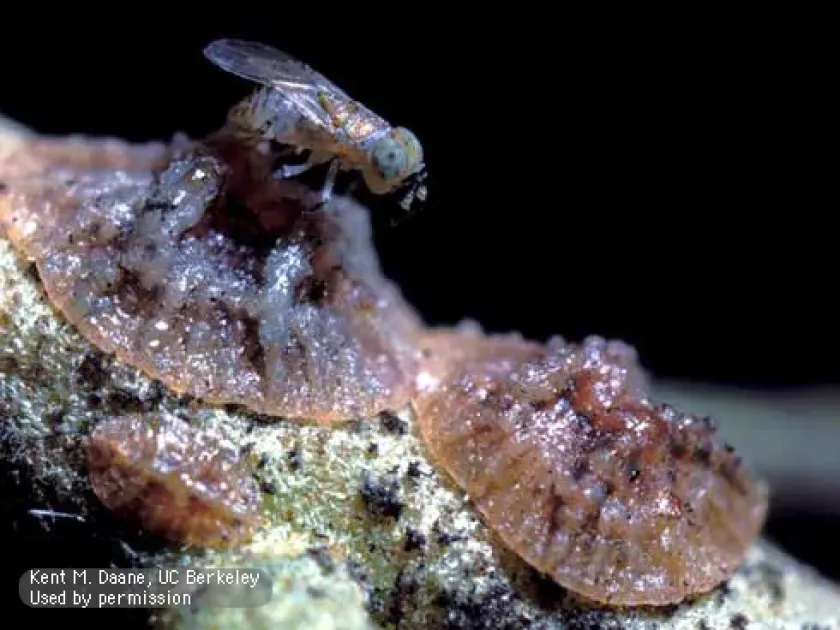
Description
How to identify
Metaphycus psyllidis is a species of parasitic wasp belonging to the family Encyrtidae, primarily known for its role as a natural enemy of psyllids.
These wasps are extremely small, often requiring magnification for accurate identification, characterized by their compact bodies and specific antenna structures.
They are not plant pests; rather, they are beneficial entomophages that spend their larval stages living inside the bodies of psyllid nymphs.
Accurate identification usually involves laboratory analysis, as field identification is difficult due to their microscopic size and similarity to other encyrtid species.
The life cycle consists of egg, three larval stages, pupa, and adult, all occurring within the host insect, which eventually leads to the host's death.
What it damages
Metaphycus psyllidis causes no direct damage to crops, as it does not consume plant tissues or sap.
Instead, it acts as a valuable biological control agent, significantly reducing populations of psyllids, which are serious pests that damage trees and shrubs.
By controlling psyllid numbers, the wasp prevents excessive sap loss and the subsequent growth of sooty mold caused by the honeydew excretion of the pests.
Their role in the ecosystem is critical for maintaining plant health and preventing outbreaks of herbivorous insects in orchards and ornamental gardens.
Misclassification as a pest can lead to unnecessary insecticide use, which disrupts the natural biological balance of the agroecosystem.
When it appears
The activity of Metaphycus psyllidis coincides with the developmental stages of its psyllid hosts throughout the spring and summer months.
Optimal environmental conditions, including moderate temperatures and sufficient humidity, trigger the start of their search for hosts during the early growing season.
They typically produce multiple generations per year, synchronizing their life cycle with the rapid breeding cycles of the psyllids they parasitize.
Overwintering occurs in the larval stage inside the dried, mummified remains of the host, providing protection during cold winters.
Monitoring the activity of hosts is the primary method for predicting the appearance and presence of the parasitoid in a specific field or orchard.
Signs of infestation
The primary sign of the presence of this parasitoid is the discovery of mummified, hardened, and swollen psyllid nymphs on the foliage.
When the adult wasp emerges, it leaves behind a tiny, perfectly round exit hole on the dorsal or ventral side of the host's carcass.
A reduction in the overall population of psyllids and a decrease in honeydew accumulation are reliable field indicators that the parasitoid is active.
In cases of high parasitization rates, the foliage appears healthier, and the typical symptoms of psyllid damage, such as leaf curling, are significantly reduced.
Using yellow sticky traps can assist in detecting adult wasps, though taxonomic confirmation is required to distinguish them from other beneficial insects.
Control measures
Conservation strategies should focus on protecting Metaphycus psyllidis by minimizing the use of broad-spectrum insecticides that harm non-target beneficial species.
Integrated Pest Management (IPM) practices recommend selecting pesticides that are compatible with biological control agents whenever a chemical intervention is necessary.
Providing nectar-rich vegetation within the agroecosystem supports adult wasps by offering supplemental food sources, which increases their longevity and search efficiency.
Proper timing of agricultural practices is essential to allow the parasitoid population to complete its life cycle and maintain control over psyllids.
Educating growers about the distinction between pests and parasitoids is a key component of sustainable agricultural development and environmental protection.
Taxonomy
- Latin name
- Metaphycus psyllidis
- Order
- Hymenoptera
- Family
- Encyrtidae
- EPPO code
- METPPS
Discussion
No discussions yet — be the first.