
Metaphycus luteolus
Metaphycus luteolus
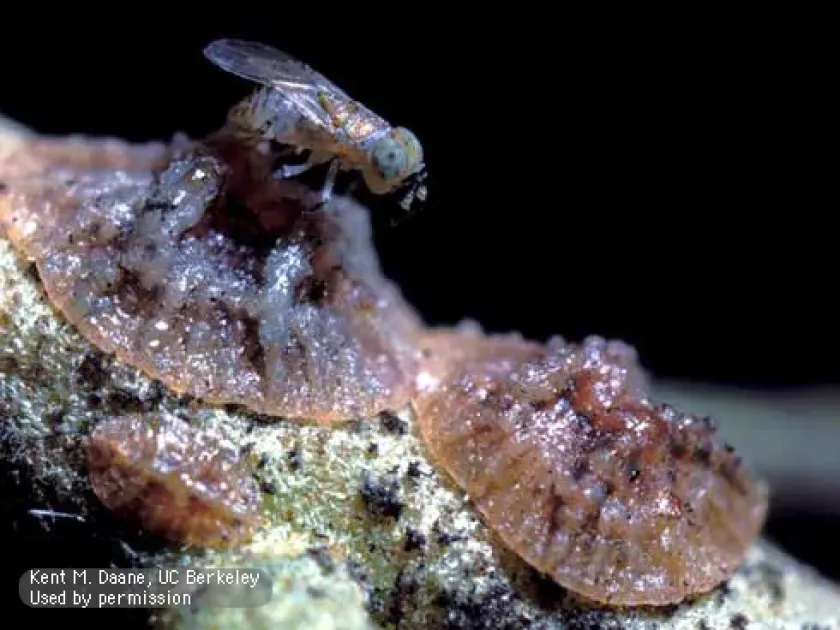
Description
How to identify
Metaphycus luteolus is a species of parasitic wasp belonging to the family Encyrtidae, order Hymenoptera. It is a tiny insect, usually measuring 1 to 2 millimeters in length, widely recognized for its role as a biocontrol agent.
The adults are characterized by a yellowish-brown coloration, which helps them blend into the foliage of host plants. Their anatomy is highly specialized for locating specific hosts within complex plant architectures.
The antennae of the females are equipped with sensitive receptors, allowing them to detect the presence of host insects even at low densities. This sensory precision is vital for the survival of the species.
These wasps lead a secretive life cycle, with the larval stage developing entirely within the body of the host. Because of this, they are often overlooked in the field unless specific monitoring techniques are used.
As a highly efficient parasitoid, Metaphycus luteolus has been extensively studied and utilized in various agricultural programs to naturally suppress populations of harmful scale insects.
What it damages
Metaphycus luteolus acts as a specialized parasitoid for soft scale insects (Coccidae). These scales are notorious pests that infest various fruit crops, particularly citrus trees.
The wasp attacks by depositing an egg into the host. The emerging larva feeds on the internal tissues of the scale, ultimately killing it before the host can reach reproductive maturity.
The host insects targeted by Metaphycus luteolus often cause significant damage by extracting plant sap and promoting the growth of sooty mold, which impairs photosynthesis.
By effectively parasitizing these scales, Metaphycus luteolus mitigates the negative impact on crop vigor, fruit quality, and overall yield, serving as a biological alternative to synthetic pesticides.
This species is specifically valued in sustainable agriculture for its ability to regulate pest populations without leaving chemical residues on the fruit.
When it appears
The activity of Metaphycus luteolus is highly dependent on ambient temperatures. Warm environments are essential for optimal reproductive cycles and search behavior.
In regions with mild climates or within protected greenhouses, the parasitoid can complete multiple generations annually, providing long-term pressure on pest populations.
Temperatures below 20 degrees Celsius often lead to a reduction in the wasp's mobility and searching efficacy, which can result in a temporary spike in the host population.
The peak activity of the parasitoid often aligns with the periods when the younger stages of scale insects are most available for infection, ensuring a high rate of successful parasitism.
Monitoring seasonal patterns is crucial for agricultural managers, as timing the release of laboratory-reared wasps can significantly enhance the effectiveness of the control program.
Signs of infestation
The most reliable sign of Metaphycus luteolus activity is the presence of scale insects that have been transformed into "mummies" with small, clean exit holes drilled in their dorsal surface.
Affected scale insects show signs of developmental failure, often appearing shriveled, discolored, or prematurely dead compared to healthy, robust individuals.
A high density of empty scale shells with distinct circular holes indicates that the parasitoid is actively suppressing the pest population within the orchard.
Field technicians can use yellow sticky traps to capture adult wasps, allowing for an accurate assessment of the parasitoid’s presence and population density in the environment.
Regular visual inspections of leaves and branches are essential to quantify the rate of parasitism and determine if further biological interventions are necessary.
Control measures
Integrated Pest Management (IPM) strategies for Metaphycus luteolus focus primarily on conserving existing populations through the careful selection of crop protection products.
To support the wasp's survival, it is necessary to avoid broad-spectrum insecticides that are toxic to beneficial insects, as these can disrupt the natural balance.
If natural populations are insufficient to control a heavy infestation, augmented biological control involving the deliberate release of laboratory-reared wasps is recommended.
Maintaining a balanced ecosystem with nectar-producing plants can provide adult wasps with additional nutrients, thereby extending their lifespan and searching capacity.
- Utilize selective, low-toxicity insecticides.
- Implement periodic releases of laboratory-reared parasitoids.
- Maintain monitoring using traps and field surveys.
- Preserve non-crop vegetation as a refuge for beneficials.
Taxonomy
- Latin name
- Metaphycus luteolus
- Order
- Hymenoptera
- Family
- Encyrtidae
- EPPO code
- METPLU
Discussion
No discussions yet — be the first.