
Metaphycus inviscus
Metaphycus inviscus
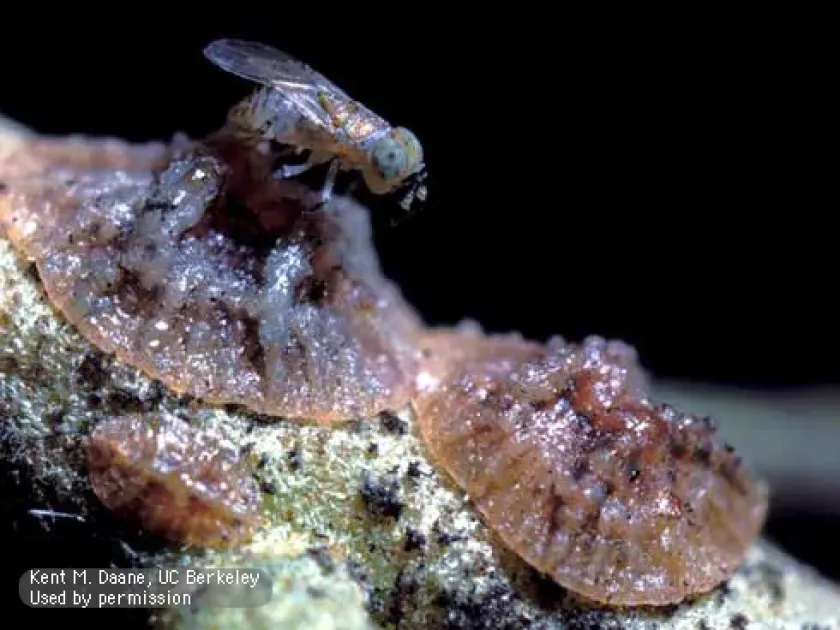
Description
How to identify
Metaphycus inviscus is a specialized parasitic wasp belonging to the Encyrtidae family within the order Hymenoptera.
Adult insects are extremely small, typically measuring between 1 and 2 millimeters in length, requiring magnification for accurate identification.
The body coloration is generally dark brown or black, often displaying a faint metallic luster characteristic of many encyrtid species.
They possess transparent wings with reduced venation patterns, which are vital features for taxonomists to distinguish this species from related wasps.
The larval stages develop internally within the bodies of host insects, making the larvae difficult to observe in field conditions without dissection.
What it damages
Although Metaphycus inviscus is not a phytophagous pest, it is closely associated with soft scales and mealybugs, which are major threats to various crops.
The wasp acts as a primary parasitoid, specifically targeting scale insects that derive nutrition from sap-sucking on plant tissues.
The indirect impact on plants occurs as these host scales deplete plant resources, leading to stunted growth and the spread of sooty mold due to honeydew excretion.
Economic damage is often linked to the scale population density, which this parasitoid helps to regulate, though effectiveness varies by region.
Sensitive crops include citrus, various ornamental shrubs, and diverse greenhouse plants prone to heavy infestations of coccids.
When it appears
The seasonal activity of Metaphycus inviscus is strictly synchronized with the life cycles of its primary scale insect hosts.
Adult emergence typically begins in early spring, following the warming of temperatures and the start of host metabolic activity.
Population peaks are generally recorded during mid-to-late summer, corresponding with the highest density of developing host generations.
The species is capable of completing multiple generations per season, allowing for rapid numerical responses to host availability.
Activity gradually declines toward autumn, as hosts enter diapause and environmental conditions become less favorable for parasitoid flight.
Signs of infestation
The presence of this parasitoid is most easily identified by observing small exit holes on the dorsal side of the host scale covers.
Affected scale colonies often show discoloration, shriveling, or atypical shape changes, indicating internal development of the wasp larva.
A reduction in the number of live, healthy scales per leaf or branch provides evidence of active parasitism by beneficial wasps.
Decreased presence of honeydew and secondary sooty mold growth serves as a strong indicator that the host population is being suppressed.
- Distinct circular emergence holes on scale shells
- Distorted and discolored host shields
- Lack of viable eggs or nymphs inside examined scales
- Measurable decline in host colony density
Control measures
Effective management strategies must prioritize the preservation of natural parasitoid populations by avoiding non-selective insecticide use.
Integrated Pest Management (IPM) protocols should be adopted, emphasizing biological control and selective, soft-chemical pesticide applications.
Maintaining floral strips or hedgerows provides essential nectar resources that enhance the lifespan and fecundity of adult Metaphycus inviscus.
Monitoring programs should be established to assess the parasitism rate before implementing any chemical control measures.
When chemical interventions are necessary, timing must be optimized to minimize mortality among beneficial Hymenoptera species during their peak activity windows.
Taxonomy
- Latin name
- Metaphycus inviscus
- Order
- Hymenoptera
- Family
- Encyrtidae
- EPPO code
- METPIN
Discussion
No discussions yet — be the first.