
Metaphycus helvolus
Metaphycus helvolus
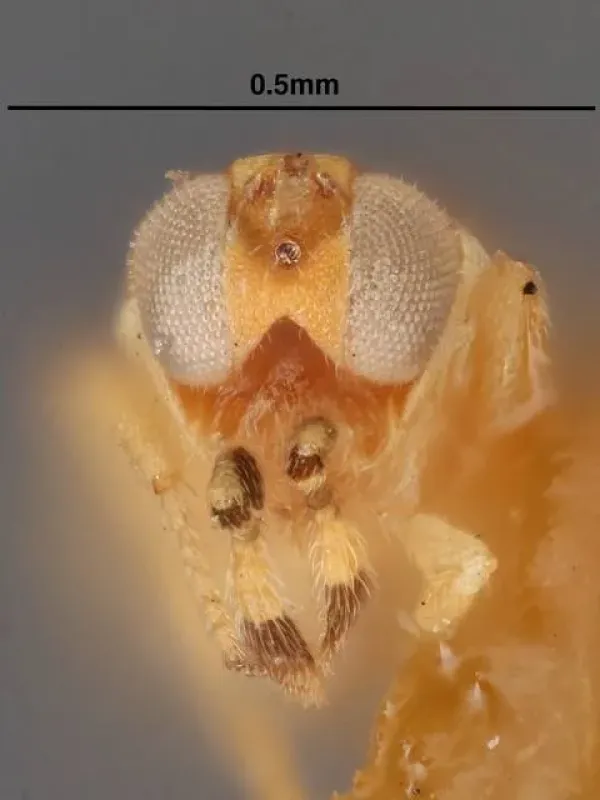
Description
How to identify
Metaphycus helvolus is a small parasitoid wasp from the Encyrtidae family. Measuring only 1–1.5 mm, these wasps are yellowish-brown in color and are highly specialized hunters.
This species is considered a beneficial insect rather than a pest, as it is primarily used in agricultural programs to suppress scale insect populations.
The female wasp uses its antennae to detect the presence of host larvae, demonstrating exceptional searching ability within citrus orchards and glasshouses.
Once a suitable host is found, the female oviposits inside the scale, eventually leading to the death of the pest as the wasp larva matures.
Its role as a biological agent is well-documented in integrated pest management (IPM) for fruit crops and ornamental plants.
What it damages
Although it does not damage crops, Metaphycus helvolus is specifically utilized to combat the black scale (Saissetia oleae), a destructive pest for citrus and olives.
The black scale pest damages plants by feeding on phloem sap, which causes leaf yellowing, shoot deformation, and significant drops in overall yield.
Heavy infestations of scale insects result in the secretion of honeydew, which promotes the growth of sooty mold, further interfering with plant photosynthesis.
Without the natural regulation provided by the wasp, scale insect populations can overwhelm trees, leading to severe branch dieback and decreased tree health.
By effectively parasitizing the scale larvae, the wasp prevents these severe outcomes, protecting the integrity of the host plant.
When it appears
The activity of Metaphycus helvolus is temperature-dependent, with optimal biological performance occurring between 20°C and 25°C.
In greenhouses or climates with mild winters, the wasp can remain active for long periods, providing continuous control over the pest population.
Cooler temperatures tend to slow down the metabolism and reproduction cycles of the wasp, requiring careful management during winter months.
Strategic timing of releases is essential to match the vulnerable life stages of the host population, usually during the spring and summer months.
Proper environmental management in controlled spaces ensures that the wasp population stays at levels capable of suppressing any potential outbreak.
Signs of infestation
The most reliable sign of Metaphycus helvolus success is the presence of small, circular exit holes on the dorsal side of dead scale insect bodies.
Upon inspection, parasitized scales often appear hollowed out and exhibit a lack of the waxy shine typical of healthy, active pests.
A noticeable decrease in the sticky honeydew deposits on leaves serves as a biological indicator that the scale population is being successfully managed.
Adult wasps can be observed patrolling the foliage, displaying active searching behavior that confirms their presence in the ecosystem.
If these signs are present, the scale infestation is likely under control, and secondary chemical interventions should be avoided to protect the wasp.
Control measures
The primary control method involves the intentional release of the wasps into areas where scale insect pressure is high, a practice known as augmentation.
It is vital to maintain a landscape free from broad-spectrum insecticides, as these chemicals are highly toxic to beneficial parasitic wasps.
Integrated Pest Management (IPM) strategies, including constant monitoring of pest density, help determine the correct timing for wasp releases.
Creating favorable microclimates in greenhouses, such as maintaining appropriate humidity, can enhance the searching efficiency of the wasps.
- Monitoring pest density through regular plant inspections.
- Avoidance of harmful pesticides to prevent killing the beneficial population.
- Timely introduction of lab-reared wasps during the peak of scale activity.
Taxonomy
- Latin name
- Metaphycus helvolus
- Order
- Hymenoptera
- Family
- Encyrtidae
- EPPO code
- METPHE
Discussion
No discussions yet — be the first.