
Metaphycus flavus
Metaphycus flavus
Description
How to identify
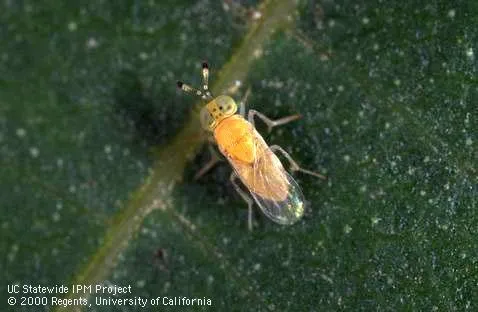
Metaphycus flavus is a small parasitic wasp belonging to the Encyrtidae family, known primarily for its role as a natural regulator of scale insect populations.
Adult insects are tiny, measuring roughly 1 to 1.5 millimeters in length, and possess a distinct yellowish-brown coloration that helps them blend into plant foliage.
This species operates as an endoparasitoid, meaning it completes its life cycle inside the bodies of its hosts, specifically soft scales and cushion scales.
Identifying this insect in the field often requires specialized equipment, such as a hand lens, due to the cryptic nature of their life cycle within the host's scale.
Entomologists often identify the presence of this wasp by examining the dead scales on the plant, which exhibit neat, circular exit holes made by the emerging adults.
What it damages
The primary concern regarding plants is not always the direct damage from Metaphycus flavus, but rather the infestation of scale insects that serve as their hosts.
Scale insects damage plants by piercing the plant tissue and extracting phloem sap, leading to stunted growth, leaf chlorosis, and reduced fruit yields.
The presence of scales often results in the excretion of honeydew, which creates a sticky surface prone to the development of sooty mold, blocking essential sunlight.
In heavy infestations, the sheer volume of sap withdrawal can cause branches to wither and die, significantly weakening the plant's overall structural integrity.
Understanding the host-parasitoid relationship is critical, as managing the pest effectively requires identifying when the scale population poses an economic threat.
Signs of infestation
Signs of an infestation include the appearance of rounded or oval scales attached to the stems and the undersides of leaves on citrus or ornamental plants.
The emergence of tiny holes in the shells of dead scale insects is a clear indicator that a parasitoid, such as this wasp, has been actively reducing the pest population.
Sticky residue on leaves and stems, often accompanied by a black, powdery substance, serves as a major red flag for the presence of scale-producing pests.
Weakened plant health, characterized by yellowing leaves or premature leaf drop, typically signals that the infestation has reached a damaging level.
- Presence of scale covers on bark.
- Sticky honeydew secretions.
- Sooty mold on foliage.
- Perforated scales on leaves.
Control measures
Integrated pest management (IPM) is the most effective approach, focusing on maintaining natural parasitoid populations while managing host numbers.
Horticultural oils and insecticidal soaps can be utilized to treat scale outbreaks without causing significant harm to the beneficial parasitoid wasp populations.
Sanitation practices, including the removal and destruction of heavily infested limbs, help significantly reduce the density of pests during the early season.
Monitoring programs using pheromone traps allow growers to pinpoint the timing of peak pest activity, ensuring applications are precise and environmentally friendly.
Maintaining healthy trees through proper irrigation and fertilization creates a robust environment that supports the survival and efficacy of natural insect enemies.
Taxonomy
- Latin name
- Metaphycus flavus
- Order
- Hymenoptera
- Family
- Encyrtidae
- EPPO code
- METPFS
Discussion
No discussions yet — be the first.