
Leptomastix epona
Leptomastix epona
Description
How to identify
Leptomastix epona is a species of hymenopteran insect belonging to the Encyrtidae family. While members of this family are often known as parasitoids, certain species within the group can interact with plants in ways that lead to damage, requiring attention from agricultural professionals.
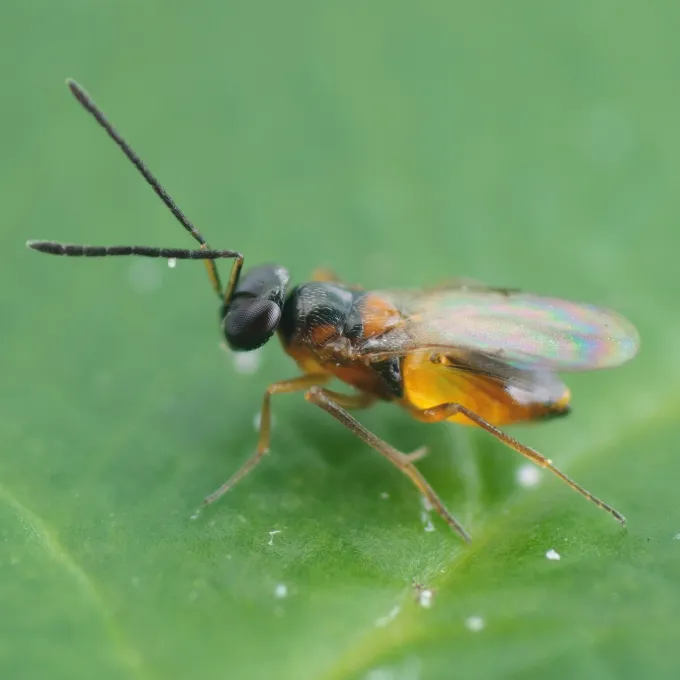
Adult specimens are small, measuring roughly 1 to 2 millimeters in length. Their bodies typically exhibit dark colors with a metallic sheen. Transparent wings facilitate their movement, and their morphology is highly adapted for locating hosts and navigating complex plant structures.
The life cycle involves multiple developmental stages, including egg, larval instars, and pupal phase. The larvae are often hidden within plant tissues or hosts, making early detection a significant challenge for farmers and field scouts during routine inspections.
Reproduction is efficient, with females possessing specialized structures for oviposition. This allows them to penetrate plant tissues or other substrates effectively, ensuring the survival of their offspring even under varying environmental conditions.
Identification in the field is best performed using specialized traps, such as sticky cards or light traps. Due to the high similarity between this species and other encyrtids, precise identification often requires professional laboratory analysis and microscopic examination.
What it damages
This pest causes damage to various agricultural and ornamental crops by feeding or oviposition activities. The primary injury occurs when the insect disrupts the integrity of plant tissues, leading to a visible decline in plant health.
Plants affected by Leptomastix epona often exhibit growth retardation and stunted development. The injury sites can cause nutrient transport issues, as the plant redirects resources to repair the mechanical damage inflicted by the pest.
In many cases, the damage sites serve as entry points for secondary pathogens, including bacteria and fungi. This synergistic effect can lead to localized rot, wilting, and, in severe cases, the death of affected plant organs or entire plants.
For ornamental plants, the aesthetic damage is a critical factor, as deformed leaves or flowers significantly reduce their commercial value. Farmers often face yield losses and increased culling rates at harvest due to these visible defects.
The chronic stress imposed by this pest weakens the plant's natural defense systems. This makes the crop more susceptible to environmental stressors, such as drought or heat waves, which are common in many agricultural production regions.
Control measures
Integrated Pest Management (IPM) is the most effective approach for controlling Leptomastix epona. A combination of monitoring, cultural practices, and biological control agents provides the best protection for the crop throughout the growing season.
Cultural methods focus on the disruption of the pest's life cycle. Removing and destroying crop residues immediately after harvest is essential, as these residues often harbor pupae that would otherwise overwinter and emerge the following season.
Biological control involves encouraging natural predators and other parasitoids to enter the field environment. By maintaining biodiversity and avoiding broad-spectrum insecticides, farmers can allow natural enemies to keep the population of this pest under control.
Chemical control should be applied as a last resort when monitoring indicates the population has exceeded the economic threshold. Selecting selective, low-toxicity products ensures minimal impact on the local ecosystem while effectively reducing pest numbers.
- Regular monitoring with pheromone or sticky traps.
- Proper disposal of infested plant material.
- Enhancement of soil health to support vigorous plant growth.
- Implementation of crop rotation to break pest cycles.
Taxonomy
- Latin name
- Leptomastix epona
- Order
- Hymenoptera
- Family
- Encyrtidae
- EPPO code
- LPTXEP
Discussion
No discussions yet — be the first.