
Leptomastix dactylopii
Leptomastix dactylopii
Description
How to identify
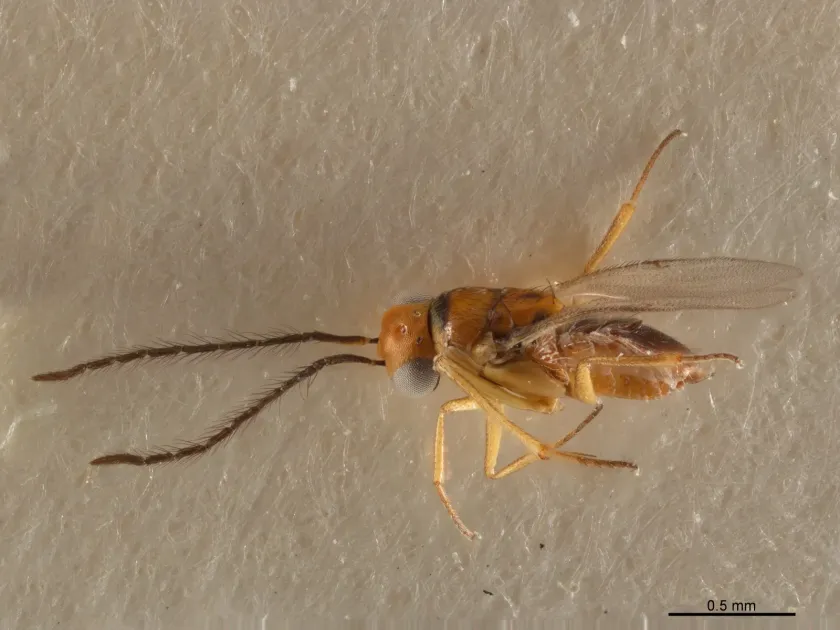
Leptomastix dactylopii is a specialized parasitic wasp belonging to the Hymenoptera order and the Encyrtidae family. It is a vital agent in biological pest control programs.
The adult wasp is tiny, measuring approximately 1.5 to 2 millimeters in length. Its body is primarily reddish-brown with a distinct metallic luster on the thorax.
Females are highly active searchers. They utilize their sensory organs to locate the presence of the citrus mealybug (Planococcus citri) by detecting the honeydew and pheromones left by the pest.
Once a suitable host is found, the female wasp uses her ovipositor to insert a single egg into the body of the young mealybug larva or adult female.
The wasp larva feeds internally on the mealybug, eventually killing it and causing the host to turn into a tan-colored, hardened shell known as a mummy.
What it damages
Leptomastix dactylopii is not a plant pest; it is a highly beneficial insect used to manage populations of the citrus mealybug which causes significant agricultural damage.
The citrus mealybug damages plants by extracting sap, which leads to stunted growth, leaf yellowing, and the promotion of sooty mold growth due to the honeydew excretion.
By effectively parasitizing the mealybugs, Leptomastix dactylopii reduces the need for chemical intervention, which is particularly crucial for greenhouse crops and organic fruit production.
The wasp is highly effective in warm, enclosed environments where the citrus mealybug thrives and poses a constant threat to year-round production cycles.
This biocontrol agent acts specifically against the citrus mealybug, making it a safe choice for integrated pest management (IPM) strategies without harming non-target organisms.
Control measures
Successful implementation of Leptomastix dactylopii in greenhouse settings depends on maintaining optimal temperatures between 22 and 28 degrees Celsius for maximum activity.
It is strictly recommended to avoid the use of broad-spectrum insecticides during the release period, as these chemicals can be lethal to the wasp population.
Frequent, low-dose releases are generally more effective than a single massive introduction, especially when attempting to establish a population at the onset of mealybug sightings.
Growers should monitor for the presence of mummified mealybugs as an indicator that the wasp has successfully established itself and is actively reducing the pest population.
- Maintain high humidity levels to support wasp activity.
- Avoid chemical pesticides that leave toxic residues.
- Monitor pest density regularly using yellow sticky cards.
- Combine with other beneficials like Cryptolaemus montrouzieri.
Taxonomy
- Latin name
- Leptomastix dactylopii
- Order
- Hymenoptera
- Family
- Encyrtidae
- EPPO code
- LPTXDA
Discussion
No discussions yet — be the first.