
Leptomastidea bifasciata
Leptomastidea bifasciata
Description
How to identify
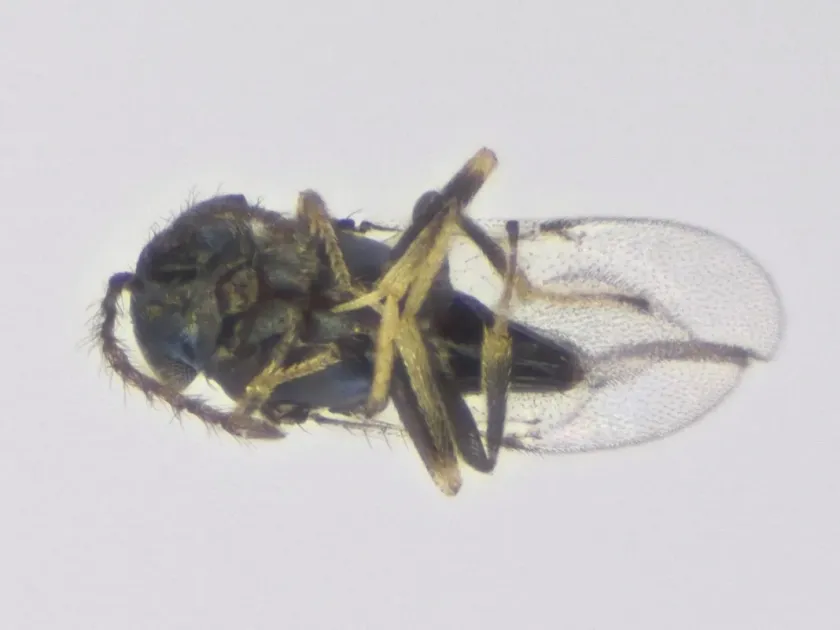
Leptomastidea bifasciata is a microscopic parasitoid wasp belonging to the family Encyrtidae and the order Hymenoptera.
Adult specimens are characterized by their small size, yellowish-brown body coloration, and distinct dark transverse bands across their wings.
This species is well-recognized in entomological circles as a specialized parasitoid, primarily targeting various species of mealybugs.
Morphologically, they possess specialized sensory organs that allow them to locate their hosts within dense vegetation or bark crevices.
Identification often requires taxonomic expertise or a microscope, as these insects are tiny and frequently confused with other species of encyrtids.
What it damages
The primary host for Leptomastidea bifasciata is the citrus mealybug, Planococcus citri, which is a major pest in agricultural and horticultural settings.
These pests affect a wide range of plants, including citrus, grapes, ornamental flowers, and various greenhouse crops.
The feeding activity of the mealybug causes plant vigor decline, leaf yellowing, and the excretion of honeydew which facilitates sooty mold growth.
While the wasp acts as a biological control agent, the presence of these wasps indicates that the host population of mealybugs is already established.
The economic impact is primarily caused by the mealybugs, whereas the parasitoid plays a vital role in keeping these pest populations under control.
When it appears
The seasonal activity of this wasp is closely linked to the lifecycle and population density of the mealybug host.
In greenhouses and climate-controlled facilities, reproduction can occur continuously throughout the year if temperatures remain stable.
Warmer temperatures significantly shorten the developmental cycle from egg to adult, leading to multiple generations during a single growing season.
Overwintering typically occurs in the larval stage, protected within the mummified remains of the host insect on the plant.
As external temperatures rise in the spring, the wasps emerge to locate new hosts, synchronizing their emergence with the pest's life cycle.
Signs of infestation
The most visible sign of Leptomastidea bifasciata activity is the presence of mummified mealybug corpses on the plant surface.
Upon closer inspection, these mummies often show a small, clean exit hole where the adult wasp has emerged after pupation.
Infested plants show typical signs of mealybug attack, including white, waxy, cotton-like masses clustered along the veins of leaves and stems.
Stunted growth and premature leaf drop are frequently observed in heavily infested areas, signaling the need for intervention.
The occurrence of these wasps serves as a biological indicator that natural suppression of the mealybug population is currently underway.
Control measures
Effective management requires an Integrated Pest Management (IPM) approach that prioritizes biological control over chemical applications.
Broad-spectrum insecticides should be avoided to prevent the destruction of these beneficial wasps, which help suppress pest populations naturally.
Quarantine and strict sanitation protocols are essential for preventing the introduction of mealybugs into new areas or nurseries.
Cultural practices, such as pruning infected plant parts and ensuring proper airflow, can significantly reduce the habitat suitable for mealybugs.
- Promoting the presence of natural enemies in the crop system.
- Monitoring mummified mealybugs to assess parasitism rates.
- Targeted use of selective pesticides that are safe for beneficial wasps.
- Regular inspection of incoming plant materials.
- Implementation of biological control release programs where appropriate.
Taxonomy
- Latin name
- Leptomastidea bifasciata
- Order
- Hymenoptera
- Family
- Encyrtidae
- EPPO code
- LPTMBI
Discussion
No discussions yet — be the first.