
Leptomastidea abnormis
Leptomastidea abnormis
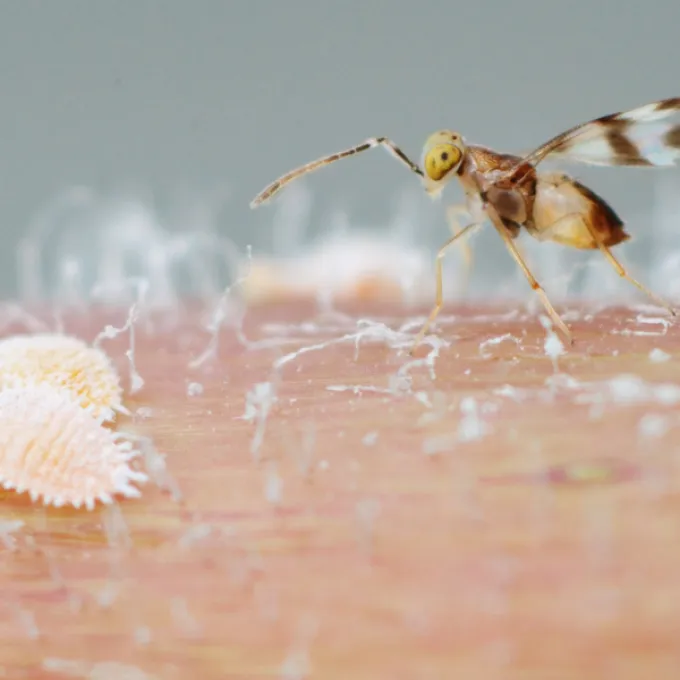
Description
How to identify
Leptomastidea abnormis is a parasitic wasp belonging to the family Encyrtidae. It is widely recognized in agronomy as a specialized natural enemy of various mealybug species, particularly the citrus mealybug.
The adult insect is a small wasp, typically measuring approximately 1 mm in length. Its body exhibits a metallic sheen, a common feature of many Encyrtids that serve as parasitoids in agroecosystems.
This species is classified under the order Hymenoptera, a group that contains the most significant biological control agents used in greenhouse and field crop production.
Unlike many other insects encountered by farmers, this species is strictly beneficial and does not pose any threat to plants, fruits, or the health of the host crops.
Identification of the species is usually performed in laboratory settings using taxonomic keys, as its minute size makes field identification difficult for untrained observers.
What it damages
This insect causes zero damage to plant tissues. It is an endoparasitoid, meaning it completes its larval development entirely within the body of a host mealybug.
The wasp is an essential component of integrated pest management (IPM) programs, functioning to keep populations of Planococcus citri under control.
By effectively parasitizing the pest, the wasp prevents the typical damage caused by mealybugs, such as the excretion of honeydew and the subsequent development of sooty mold.
The host range is narrow, ensuring that the presence of these wasps does not disrupt the balance of other beneficial arthropods in the garden or greenhouse.
Agronomists view this species as a reliable partner in production, capable of reducing the dependency on synthetic pesticides significantly.
When it appears
The presence and activity of Leptomastidea abnormis are directly correlated with the life cycle of its host. In warmer climates or greenhouses, the wasp is active throughout the year.
During the spring and summer seasons, when mealybug populations tend to increase rapidly, the wasp actively seeks out new hosts to parasitize.
In temperate zones, the wasp may experience reduced activity during winter, overwintering inside the dried "mummies" of parasitized mealybugs until the return of warmer weather.
Strategic releases of this biological agent are typically conducted at the onset of the growing season to ensure that the parasite population establishes well before the pest outbreak peaks.
Regular environmental monitoring is advised to synchronize the arrival of the wasp with the vulnerable life stages of the mealybug population.
Signs of infestation
The primary sign of the presence of Leptomastidea abnormis is the observation of mummified mealybugs. These carcasses are often slightly discolored or hardened compared to healthy individuals.
Exit holes, small circular openings in the cuticle of the host, indicate that an adult wasp has successfully emerged after completing its larval development.
Field scouting shows a gradual decline in the number of active mealybug colonies as the parasitic activity intensifies across the treated area.
Sticky traps can be used to monitor the density of adult wasps, providing data to determine if additional releases are necessary for adequate control.
The absence of live mealybugs on previously infested plant parts is a positive indicator of the biological control agent's effectiveness.
Control measures
To successfully integrate this species into a farm program, it is crucial to avoid the use of broad-spectrum insecticides that would inadvertently kill the wasps.
When chemical intervention is required, use selective, soft pesticides that have a minimal residual impact on beneficial insect populations.
Establishing "refugia" or planting flowering hedgerows can support the longevity of adult wasps by providing essential nectar sources for their nutrition.
If natural populations are insufficient, mass-reared wasps should be released early in the pest life cycle to provide an immediate suppressive effect.
Maintain proper climate control in greenhouses to ensure optimal conditions for the wasp's survival and reproductive success throughout the growing cycle.
Taxonomy
- Latin name
- Leptomastidea abnormis
- Order
- Hymenoptera
- Family
- Encyrtidae
- EPPO code
- LPTMAB
Discussion
No discussions yet — be the first.