
Gyranusoidea tebygi
Gyranusoidea tebygi
Description
How to identify
Gyranusoidea tebygi is a species of mealybug belonging to the family Pseudococcidae, order Hemiptera. It is a highly specialized agricultural pest that has become a major concern for mango producers across various tropical and subtropical regions of the world.
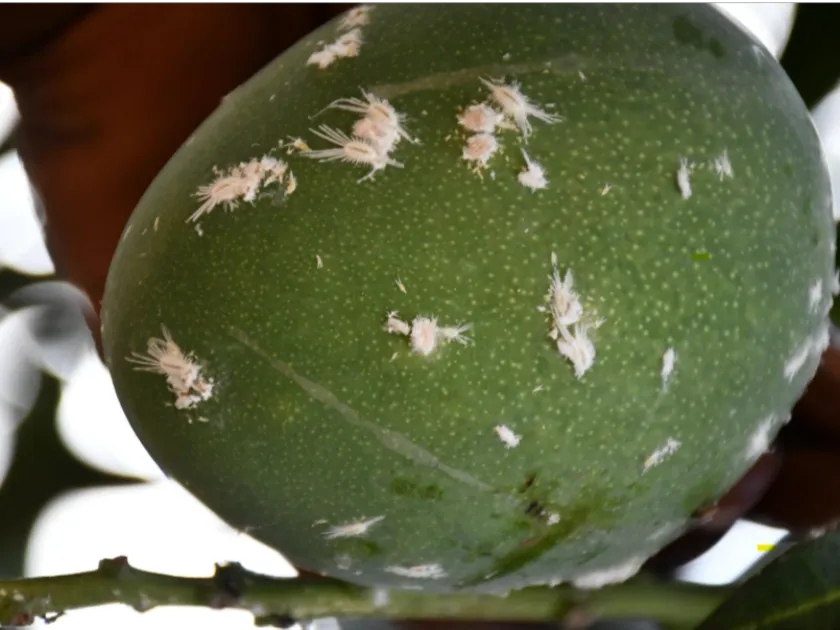
Adult females are characterized by an oval body covered with a white, waxy secretion. This layer acts as a protective shield against desiccation and environmental stressors, making it difficult for contact-based control agents to affect them directly.
The reproduction strategy involves laying eggs within waxy ovisacs. The first-instar nymphs, commonly referred to as crawlers, are highly mobile and are the primary agents of dispersal, moving across the plant canopy or being carried by wind to neighboring trees.
The life cycle of Gyranusoidea tebygi is closely tied to climatic conditions. In tropical climates, the species can produce multiple generations annually, leading to rapid population explosions that can quickly overwhelm a tree's defense systems.
Proper identification often requires microscopic examination of adult females, as morphological traits can be subtle. Differentiating this species from other sympatric mealybugs is crucial for implementing the correct biological control strategies.
What it damages
The primary host of this pest is the mango tree (Mangifera indica). Gyranusoidea tebygi prefers to colonize the most actively growing parts of the tree, including succulent shoots, young leaves, and tender inflorescences, where nutrient concentrations are highest.
As the insects feed by inserting their stylets into plant tissues, they extract vast amounts of sap. This feeding process causes severe leaf distortion, chlorosis, and premature senescence, which significantly reduces the tree's photosynthetic capacity.
Inflorescence damage is particularly detrimental to farmers, as it disrupts the fertilization process and fruit set. Heavy infestations often lead to fruit drop or the development of stunted, undersized fruits that lack commercial value.
Like other mealybugs, this species excretes honeydew, a sugar-rich waste product. This substance serves as a primary substrate for the growth of sooty mold, which creates a thick, black coating on leaves and fruit, further hindering photosynthesis.
Under heavy pest pressure, the combined effects of sap depletion and sooty mold coverage can severely stress the host plant. Over time, this leads to twig dieback, reduced vigor, and in extreme cases, the death of young or weakened trees.
Control measures
Classical biological control is the gold standard for managing Gyranusoidea tebygi. The introduction and mass rearing of parasitoid wasps, such as Anagyrus mangicola, have proven to be highly effective in suppressing populations to manageable levels.
Chemical control measures are often considered less effective due to the insect's protective waxy coating. When chemicals are used, they must be applied with high precision and only when populations exceed established economic thresholds to avoid damaging natural enemy populations.
Good agricultural practices, such as pruning and removing heavily infested branches, help manage the pest. Improving tree structure ensures better spray coverage if chemicals are necessary and promotes air circulation within the canopy.
Strict phytosanitary regulations are essential to prevent the spread of this pest via infested nursery stock. Movement controls are the first line of defense in protecting uninfested mango-growing regions from this destructive insect.
An Integrated Pest Management (IPM) approach remains the best strategy. By combining biological monitoring, the release of natural enemies, and judicious cultural practices, growers can maintain pest populations at low levels while preserving the ecosystem balance.
Taxonomy
- Latin name
- Gyranusoidea tebygi
- Order
- Hymenoptera
- Family
- Encyrtidae
- EPPO code
- GYRNTE
Discussion
No discussions yet — be the first.