
Ginsiana
Ginsiana
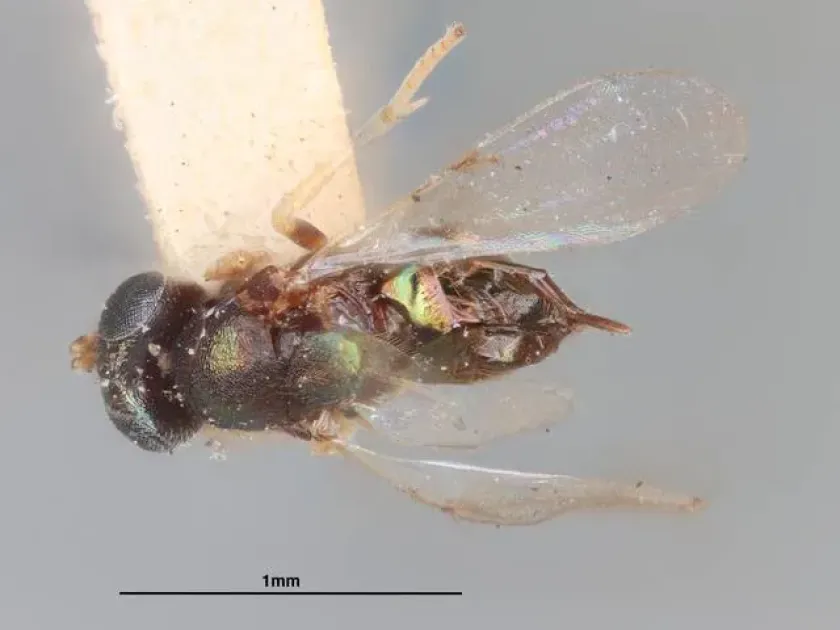
Description
How to identify
Ginsiana is a genus of parasitoid wasps belonging to the family Encyrtidae, order Hymenoptera. These tiny insects serve as essential biological control agents in various agricultural ecosystems, particularly in orchards and ornamental gardens.
The adults are small, often exhibiting a metallic luster. Their morphology, characterized by a specific wing venation and antennal structure, is the primary key for identification by entomologists studying parasitoid biodiversity.
Larval stages are endoparasitic, meaning they develop inside the host insect. They primarily target soft and armored scale insects (coccids), which are common pests of woody plants and citrus trees.
Because of their small size and cryptic habits, Ginsiana wasps are often overlooked in field surveys unless specialized sampling methods like yellow sticky cards or limb shaking are employed.
Accurate species-level identification usually requires microscopic examination, as many encyrtid wasps share similar external features, making in-field identification challenging for non-specialists.
What it damages
Ginsiana does not cause any direct damage to crops. On the contrary, it provides ecosystem services by suppressing pest populations, thereby reducing the need for chemical intervention.
The potential harm is entirely indirect; if populations of these wasps are decimated by broad-spectrum insecticides, the pest insects they naturally control, such as scales, can experience a population explosion.
Their host range includes various coccids that infest citrus, fruit trees, and ornamental shrubs. By parasitizing these pests, Ginsiana helps maintain a healthy ecological balance.
Farmers who protect these natural enemies often find that they can significantly lower their annual expenditure on synthetic insecticides while maintaining high quality in their fruit production.
Therefore, Ginsiana is considered a valuable ally in integrated pest management programs, and its presence is generally welcomed by agronomists focused on sustainable farming.
When it appears
Ginsiana activity is linked to the growing season of plants, coinciding with the life cycles of their hosts. Peak adult emergence usually occurs in late spring and continues through the summer.
The life cycle is synchronized with the environmental temperature. Warm weather favors rapid development, allowing for multiple generations within a single growing season.
Overwintering typically happens within the mummified remains of host insects, often tucked away in bark crevices or protected foliage, where they remain until spring temperatures rise.
Activity levels can be tracked by monitoring the density of scale insect mummies on tree branches, which show small exit holes where the adult wasp has emerged.
During hot summer months, the metabolic rate of these wasps increases, making them more efficient at locating and parasitizing new host generations as they appear on the plant.
Signs of infestation
The most visible sign of Ginsiana presence is the presence of "mummies" — scale insect shells that appear slightly different in color or texture, often with a small, neat circular hole on the surface.
Adult wasps may be observed moving quickly over leaf surfaces or along stems during calm, warm days, searching for suitable hosts to lay their eggs.
A notable decrease in the sticky honeydew secreted by scale insects is a positive sign that a parasitoid population is effectively regulating the pest numbers.
Over time, the absence of new scale insect settlements and the lack of associated sooty mold growth suggest successful biocontrol by the Ginsiana complex.
Field inspections that reveal a high percentage of emerged host mummies provide evidence of the parasitoid's impact on the local pest population.
Control measures
Conservation biological control is the best approach to supporting Ginsiana populations. This involves reducing insecticide use to protect the wasps during their most active periods.
When chemical control of other pests is necessary, selective products that spare natural enemies should be prioritized over broad-spectrum chemicals.
Providing nectar-rich floral resources around the perimeter of orchards can provide the necessary sustenance for adult wasps, increasing their longevity and reproductive success.
Managing attendant ant populations is crucial, as ants often protect scale insects from parasitoids like Ginsiana to secure their supply of honeydew.
- Implement integrated pest management (IPM) practices.
- Reduce broad-spectrum insecticide spray applications.
- Plant flowering hedgerows to support beneficial wasps.
- Regularly monitor host populations before taking action.
Taxonomy
- Latin name
- Ginsiana
- Order
- Hymenoptera
- Family
- Encyrtidae
- EPPO code
- GINSSP
Discussion
No discussions yet — be the first.