
Encyrtus varicornis
Encyrtus varicornis
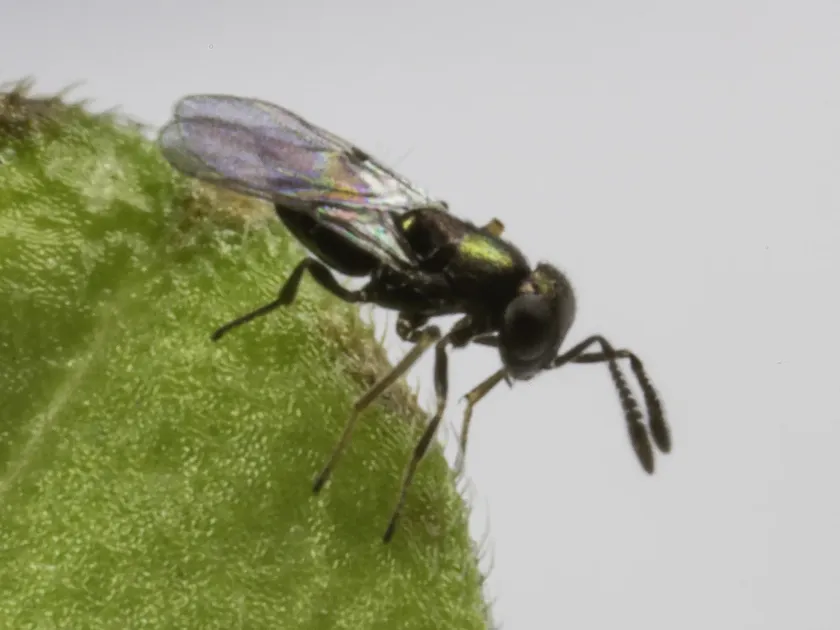
Description
How to identify
Encyrtus varicornis is a species belonging to the Encyrtidae family within the order Hymenoptera. These are minute parasitic wasps that are frequently observed in agricultural ecosystems.
The morphology of the adult stage consists of a small body with distinctive wing venation patterns typical for this taxonomic group, often requiring microscopic examination for precise identification.
Taxonomically, this species is noted for its complex life cycle, as it often develops within or on other insects, which are termed hosts.
Field identification is challenging and usually relies on trapping methods to monitor population trends throughout the growing season.
Entomologists distinguish this species by specific hair patterns and antennal structures, which differentiate it from other non-pest Hymenoptera present in the field.
What it damages
The damage caused by Encyrtus varicornis is largely indirect, as its presence is often tied to outbreaks of sap-sucking insects like scales or mealybugs.
When these primary pests infest crops, they weaken the plants, leading to reduced turgor, chlorosis, and impaired metabolic functions.
In cases of high infestation, the overall health of the crop suffers, leading to reduced yields and inferior quality of harvested products.
Cereals and various industrial crops are susceptible to the complex pressure exerted by the insects that Encyrtus varicornis interacts with.
Economic losses vary significantly depending on the environmental conditions, plant stage, and the efficiency of existing natural control mechanisms.
When it appears
Seasonal activity typically commences in the spring when rising temperatures trigger the emergence of adults from overwintering sites.
The flight period of these insects is extended and highly dependent on the cumulative heat units, which drive the timing of their life cycle.
Peak populations are usually observed during the middle of the summer, coinciding with the peak activity of their insect hosts.
As autumn approaches, adult activity declines as individuals prepare for the winter phase, usually hiding in protected plant or soil micro-habitats.
Monitoring the flight activity throughout the season is essential for timing any necessary control interventions effectively.
Signs of infestation
Signs of infestation include generalized yellowing of leaves and a stunted appearance of the plants compared to healthy patches in the field.
The appearance of honeydew and subsequent sooty mold growth on stems indicates the presence of sucking insects associated with the pest complex.
Deformed leaves and necrotic spots on stems are common symptoms observed after prolonged periods of pest feeding pressure.
- Yellowing of growing points.
- Sticky substance on foliage.
- Leaf curling and deformation.
Closer inspection of the underside of leaves may reveal empty host insect cases, indicating that the development of the parasite has been completed.
Control measures
Integrated pest management strategies are crucial, focusing on maintaining strong crop health through appropriate agricultural practices.
Chemical control should be applied sparingly, based on strictly defined economic injury levels to preserve natural beneficial insect populations.
Targeting the primary sap-sucking insects using systemic insecticides remains the most effective way to manage the entire pest complex.
Crop rotation and field sanitation help minimize the build-up of overwintering populations, thereby reducing initial pest pressure in the following season.
Biological control, including the use of entomopathogenic fungi and augmenting natural predator populations, offers a sustainable alternative to traditional chemicals.
Taxonomy
- Latin name
- Encyrtus varicornis
- Order
- Hymenoptera
- Family
- Encyrtidae
- EPPO code
- ENCYVA
Discussion
No discussions yet — be the first.