
Encyrtus atomon
Encyrtus atomon
Description
How to identify
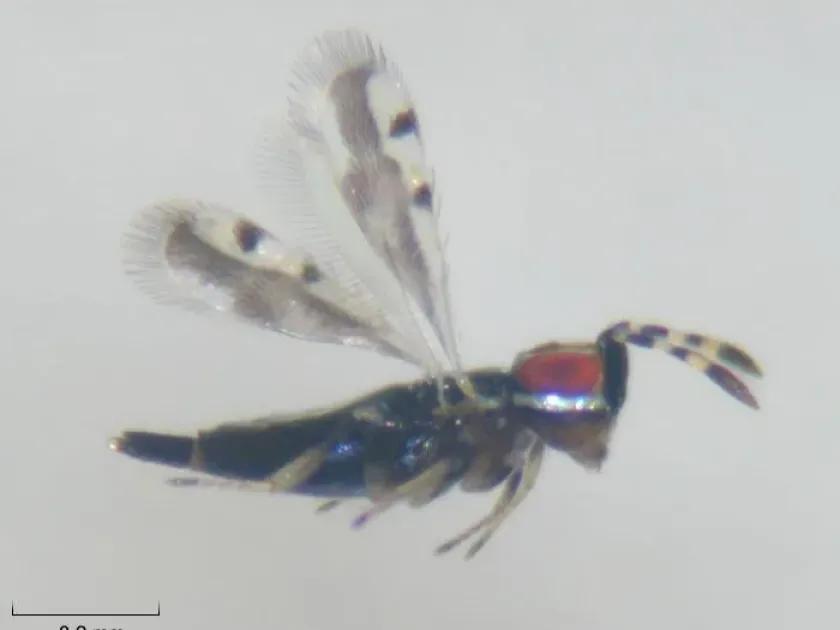
Encyrtus atomon is a small parasitic wasp belonging to the family Encyrtidae (order Hymenoptera). These insects are known for their intricate life cycles and specialized parasitoid behavior.
Adults are tiny, often only a few millimeters in length, making them difficult to observe without professional entomological equipment.
They are characterized by their metallic coloration and complex wing venation, typical of the encyrtid family, which helps in differentiating them from other hymenopterans.
As endoparasitoids, they develop inside the bodies of their hosts, which are typically scale insects or similar pests.
Monitoring the population of these wasps in the field usually requires the use of sweep nets during the warmer months when adults are active.
What it damages
Encyrtus atomon itself does not cause damage to plants. Instead, it is considered a beneficial insect due to its role as a natural regulator of pest populations.
It primarily targets scale insects and other coccids that infest various orchard trees, shrubs, and ornamental plants.
By parasitizing these pests, the wasp prevents them from causing significant damage to the plant's health, such as sap depletion and fungal growth from honeydew.
The presence of this species is an indicator of a healthy and balanced ecosystem where natural controls are functioning effectively.
Agricultural practices that support this wasp's survival can significantly reduce the need for chemical interventions against scale infestations.
When it appears
The activity period for Encyrtus atomon coincides with the warmer seasons, starting in late spring and continuing through early autumn.
Their life cycle is highly synchronized with the developmental stages of their hosts, ensuring that larvae have enough nutrition to complete their metamorphosis.
Winter is typically spent in a state of diapause, often inside the shell of the dead host insect, providing essential protection from environmental extremes.
Emergence of adults occurs when temperatures reach thresholds required for mating and host searching in the spring.
Multiple generations can occur within a single year, with the exact number depending on the local climate and host availability.
Signs of infestation
The most reliable sign of Encyrtus atomon activity is the presence of emergence holes on the shells of scale insects.
Affected colonies of pests often look withered, pale, or dried out, as the parasite consumes the internal tissues of the host.
Laboratory examination of collected samples often reveals developing pupae or larvae of the wasp inside the host body.
A gradual decline in the scale insect population, despite the lack of chemical treatments, suggests successful parasitism.
Adult wasps may sometimes be spotted on leaves or bark, although their small size and rapid movement make them hard to detect.
Control measures
The most effective strategy to manage and promote the presence of Encyrtus atomon is to minimize the use of broad-spectrum insecticides.
Adopting an Integrated Pest Management (IPM) approach ensures that chemical treatments are only used when pest populations exceed economic thresholds.
Maintaining floral borders and hedgerows around orchards provides necessary nectar sources for adult wasps, increasing their lifespan and reproductive success.
Proper pruning and orchard maintenance reduce microclimates favorable to scale insects, thereby naturally regulating their numbers in a way that supports the parasite.
- Prioritize biological control over chemical applications.
- Implement selective pesticide use if necessary.
- Conserve natural habitats to support beneficial insect populations.
Taxonomy
- Latin name
- Encyrtus atomon
- Order
- Hymenoptera
- Family
- Encyrtidae
- EPPO code
- ENCYAT
Discussion
No discussions yet — be the first.