
Cryptanusia aureiscutellum
Cryptanusia aureiscutellum
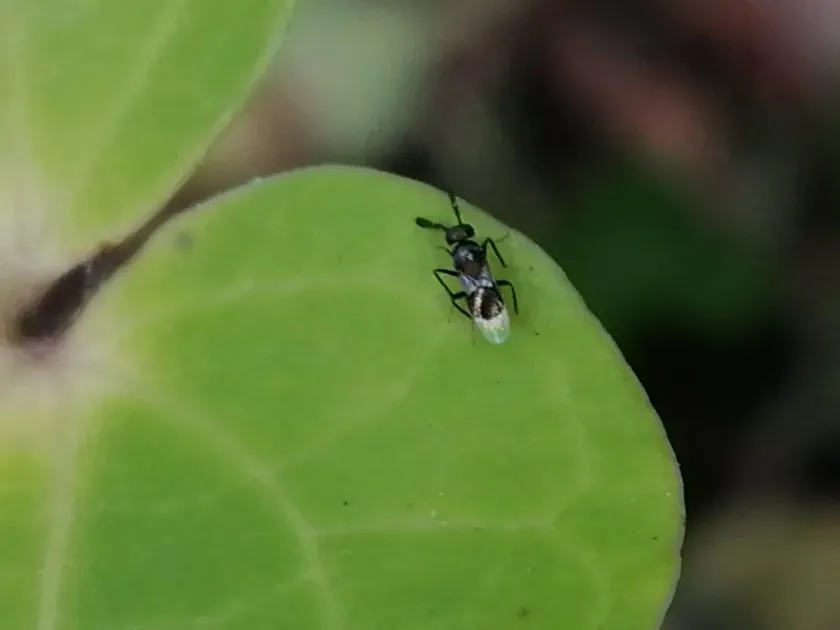
Description
How to identify
Cryptanusia aureiscutellum is a species of parasitic wasp belonging to the order Hymenoptera and the family Encyrtidae.
These small wasps act as primary parasitoids, primarily targeting specific soft scales and other scale insects in agricultural and natural environments.
The insect is characterized by a distinctive golden-colored scutellum, which provides the etymological basis for its species name.
As adults, they are highly mobile, equipped with complex sensory systems to locate their hosts through chemical and visual cues.
The females utilize a specialized ovipositor to deposit eggs inside the host, where the larvae will later develop, effectively acting as natural regulators of pest populations.
What it damages
This species does not cause direct damage to plants; rather, it provides an essential ecosystem service by parasitizing harmful scale insects.
Hosts include various coccids that feed on plant sap, causing yellowing, leaf drop, and the promotion of sooty mold growth due to honeydew secretion.
The primary concern regarding this species is the potential disruption caused by broad-spectrum pesticide applications in orchards and gardens.
By eliminating these beneficial wasps, growers often trigger secondary outbreaks of scale insects, as the natural control mechanism is removed.
Understanding the impact of Cryptanusia helps in developing Integrated Pest Management (IPM) strategies that prioritize biological control.
When it appears
The life cycle of Cryptanusia aureiscutellum is intricately linked to the developmental stages of its scale insect hosts.
Adult activity is usually observed during the spring and summer months, corresponding with the emergence and growth phases of the scale insects.
Depending on the climatic conditions, multiple generations per year are possible, allowing for continuous pressure on the host population.
Overwintering typically takes place in the larval stage within the host's body, protecting the parasitoid from harsh environmental conditions.
Monitoring efforts should be concentrated on the period when the host insects are in their most susceptible developmental stages for parasitism.
Signs of infestation
Detection of Cryptanusia is primarily achieved through the examination of scale insect colonies on branches, twigs, and leaves.
The most reliable sign of their presence is the emergence hole found on the body of the scale insect after the adult wasp has exited.
Parasitized hosts may exhibit changes in size, color, or shape, appearing "mummified" compared to healthy, sap-feeding individuals.
In research or advanced scouting, the use of yellow sticky traps or laboratory dissection of sampled scale populations can confirm the parasitoid's presence.
A sudden decline in active scale populations in the absence of chemical intervention is a strong indicator of successful parasitoid activity.
Control measures
Protecting Cryptanusia aureiscutellum requires an Integrated Pest Management approach that emphasizes the conservation of beneficial arthropods.
Avoid the use of non-selective, highly toxic insecticides, especially during the peak emergence periods of the adult wasps.
Incorporate habitat management techniques, such as maintaining flowering plants nearby, which can provide nectar sources for adult parasitoids.
Regular monitoring of pest levels is crucial to ensure that interventions are only made when the economic threshold is exceeded and are as selective as possible.
- Adopt selective pesticides that spare beneficial insects.
- Preserve biological refugia within or near orchards.
- Train staff to recognize the physical evidence of parasitized scales.
Taxonomy
- Latin name
- Cryptanusia aureiscutellum
- Order
- Hymenoptera
- Family
- Encyrtidae
- EPPO code
- KRYTAU
Discussion
No discussions yet — be the first.