
Comperiella
Comperiella aspidiotiphaga
Description
How to identify
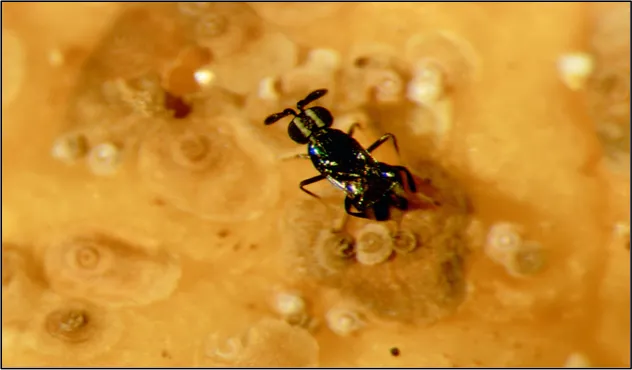
Comperiella aspidiotiphaga is a tiny parasitic wasp belonging to the family Encyrtidae and the order Hymenoptera, known for its specialized parasitic behavior.
The adult insect is extremely small, typically measuring between 1 and 1.5 millimeters in length, and is often characterized by a dark, metallic-colored body.
Its biological cycle is strictly dependent on scale insects, as the female wasp deposits her eggs inside the host, where the larvae undergo their development.
The larvae feed on the internal tissues of the scale insect, effectively killing the host and acting as a natural regulator of the pest population in orchards.
Positive identification of this species in the field is difficult due to its minute size and requires specialized equipment and expertise in microscopic entomology.
What it damages
Comperiella targets various species of scale insects, including pests that are notorious for inflicting significant damage to citrus groves and orchards.
While the wasp itself is a beneficial organism, it is often studied in the context of scale insect infestations that damage leaves, branches, and fruit bark.
Scale insects weaken plants by sap-feeding, which leads to chlorosis, stunted development, fruit drop, and significant loss of the commercial value of the crop.
Without the presence of effective natural enemies like Comperiella, scale insect populations can explode, threatening the health and vigor of entire plantations.
The wasp's contribution to agriculture is vital, as it provides sustainable management of pests that would otherwise require much heavier chemical intervention.
When it appears
The activity of the wasp is highly synchronized with the lifecycle of its host, generally peaking during the warmer months of the spring and summer seasons.
Comperiella can produce multiple generations within a single growing season, effectively following the developmental stages of the scale insect populations.
The insects typically overwinter as larvae within the remains of the scale host, which serves as a protective shell against harsh weather and environmental stress.
As temperatures rise in the spring, the larvae pupate, and the adult wasps emerge to begin searching for new hosts, continuing the cycle for the year.
The efficiency of the wasp's seasonal performance depends on moderate climates that allow for sustained reproduction and constant availability of scale hosts.
Signs of infestation
The most reliable sign of Comperiella presence is the emergence hole left in the shell of the scale insect after the adult wasp has successfully exited the host.
If orchard inspections reveal a high percentage of empty or deformed scale covers, it is a strong indicator that the parasitic wasp is actively controlling the population.
A noticeable decrease in the density of live, healthy-looking scale insects on twigs and leaves is another key sign of biological control activity in the grove.
The use of yellow sticky traps in orchards is a common method for monitoring the activity and flight patterns of the adult wasps throughout the growing season.
A lack of sticky honeydew secretions on the plant surface, often associated with heavy scale infestations, often implies that natural predators are managing the pest load.
Control measures
The primary control strategy for maintaining Comperiella populations is the implementation of Integrated Pest Management (IPM) to minimize pesticide interference.
Growers should avoid the use of broad-spectrum insecticides, especially during peak emergence periods, to prevent accidental killing of these beneficial wasps.
When chemical intervention is necessary to control other pests, products that are highly selective and safe for Hymenoptera should be prioritized to preserve the balance.
Supporting biodiversity by planting nectar-producing flora around orchards can provide essential food sources for adult wasps, thereby boosting their longevity.
In cases of severe outbreaks, bio-rational pesticides or specific horticultural oils may be used to minimize the negative impact on the parasitoid population.
Taxonomy
- Latin name
- Comperiella aspidiotiphaga
- Order
- Hymenoptera
- Family
- Encyrtidae
- EPPO code
- COMRAS
Discussion
No discussions yet — be the first.