
Coccidoxenoides perminutus
Coccidoxenoides perminutus
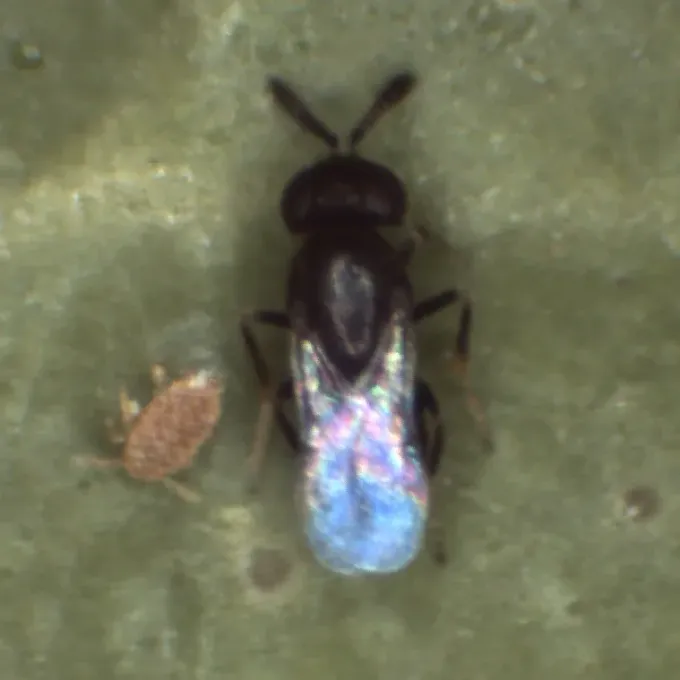
Description
How to identify
Coccidoxenoides perminutus is a minute parasitic wasp belonging to the Encyrtidae family, order Hymenoptera. It is highly valued in horticulture for its exceptional ability to locate and parasitize mealybug populations.
Adult wasps are extremely small, often overlooked by workers, but highly effective at navigating plant foliage. They are endoparasitoids, meaning they spend the larval stage of their development inside the host's body.
The morphology of this insect is optimized for finding specific hosts among dense vegetation, making it an excellent candidate for complex greenhouse environments.
They are characterized by high host specificity, focusing primarily on Planococcus species, which are notorious pests in various temperate and subtropical crops.
Because they are natural enemies of mealybugs, their presence is a positive indicator of a healthy, biodiverse ecosystem within the agricultural facility.
What it damages
Coccidoxenoides perminutus does not damage plants; it is a beneficial biocontrol agent. It helps mitigate the damage caused by the citrus mealybug (Planococcus citri), which is the primary target.
Mealybugs are serious pests that infest fruit crops, vines, and ornamental plants, causing significant economic losses through direct sap depletion and the production of honeydew.
This honeydew serves as a substrate for sooty mold, which blocks photosynthesis and reduces the market value of leaves, fruits, and flowers.
By parasitizing the younger stages of mealybugs, Coccidoxenoides perminutus halts the reproductive cycle of the pest before it can cause widespread infestation.
Using this parasitoid helps prevent the severe stunting, leaf curling, and overall plant decline typically associated with unchecked mealybug populations.
Control measures
Management of Coccidoxenoides perminutus involves inundative releases into infected areas, particularly at the early stages of a pest outbreak to gain rapid control.
Chemical intervention must be carefully managed, as many conventional insecticides are highly toxic to this parasitoid. Integrated Pest Management (IPM) is essential to preserve their population.
Greenhouse climate control is vital, with optimal humidity and temperature ranges required to maintain the searching efficiency and longevity of adult wasps.
Regular monitoring of pest populations using sticky traps or visual inspections is necessary to determine the appropriate timing and density for parasitoid releases.
Combining this wasp with other beneficial organisms creates a synergistic effect, providing a more robust and reliable shield for high-value agricultural crops.
Taxonomy
- Latin name
- Coccidoxenoides perminutus
- Order
- Hymenoptera
- Family
- Encyrtidae
- EPPO code
- PAUIPE
Discussion
No discussions yet — be the first.