
Coccidoxenoides
Coccidoxenoides
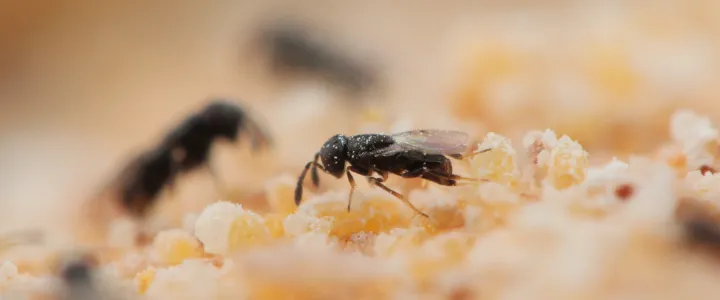
Description
How to identify
Coccidoxenoides is a genus of minute parasitic wasps belonging to the family Encyrtidae, widely recognized in agricultural science for its role as a biological control agent.
The most prominent species, Coccidoxenoides perminutus, is a specialized parasitoid that targets specific species of mealybugs.
These wasps are tiny, often difficult to observe in the field without special equipment, yet they possess a remarkable ability to locate their hosts.
They are strictly beneficial organisms and are never classified as pests, as their life cycle relies entirely on suppressing harmful insect populations.
Using this genus in greenhouse or orchard settings represents a sustainable approach to maintaining plant health and crop productivity.
What it damages
The organism does not cause any damage to plants; on the contrary, it serves as a natural enemy to the highly destructive mealybug, Planococcus citri.
Mealybugs cause significant damage by feeding on the sap of various crops, including citrus, vines, and ornamental plants in protected environments.
The feeding activity of mealybugs leads to stunted growth, leaf yellowing, deformation of fruit, and premature dropping of plant tissues.
Additionally, the honeydew secreted by mealybugs creates a substrate for sooty mold, which inhibits photosynthesis and reduces the overall vigor of the crop.
By effectively parasitizing the mealybugs, Coccidoxenoides prevents these negative impacts, acting as a natural protector for the plants.
When it appears
The activity and efficacy of these wasps are highly dependent on environmental conditions, with the ideal temperature range being between 20°C and 30°C.
In controlled greenhouse environments, the species can remain active throughout the year as long as a host population is available.
In outdoor or semi-open cultivation, their activity is seasonal, necessitating periodic releases to maintain adequate population levels.
The developmental cycle from egg to adult is relatively fast, typically taking about 3 to 4 weeks under favorable conditions.
Producers must align the release schedule with the seasonal growth patterns of the mealybug to maximize the biological control effect.
Signs of infestation
The most reliable sign that Coccidoxenoides is at work is the morphological transformation of the host insects.
Affected mealybugs stop feeding and become stationary, eventually hardening into a dark-colored "mummy" structure.
After the internal development of the parasitoid larva is complete, the adult wasp exits the mummy, leaving behind a small, characteristic emergence hole.
A reduction in the visual presence of white, cottony masses of mealybugs is the primary indicator of successful biological suppression.
Regular inspection of plant stems and leaf undersides will reveal these dark, parasitized shells, confirming the effectiveness of the control program.
Control measures
To successfully integrate this parasitoid into crop management, one must adopt a strategy that minimizes the use of toxic pesticides.
Application involves releasing the wasps directly into the infested zones, often at the earliest signs of the target pest's arrival.
Integration with other beneficial insects and selective bio-pesticides is recommended to maintain a balanced and resilient ecosystem.
Constant monitoring using sticky traps and visual checks ensures that the population of the biological agent matches the pest pressure.
- Monitor mealybug presence using yellow or blue sticky traps.
- Avoid broad-spectrum insecticides that harm beneficial insects.
- Release wasps based on the infestation density.
- Optimize climate settings in greenhouses to favor parasitoid development.
Taxonomy
- Latin name
- Coccidoxenoides
- Order
- Hymenoptera
- Family
- Encyrtidae
- EPPO code
- CCDXSP
Discussion
No discussions yet — be the first.