
Cheiloneurus swezeyi
Cheiloneurus swezeyi
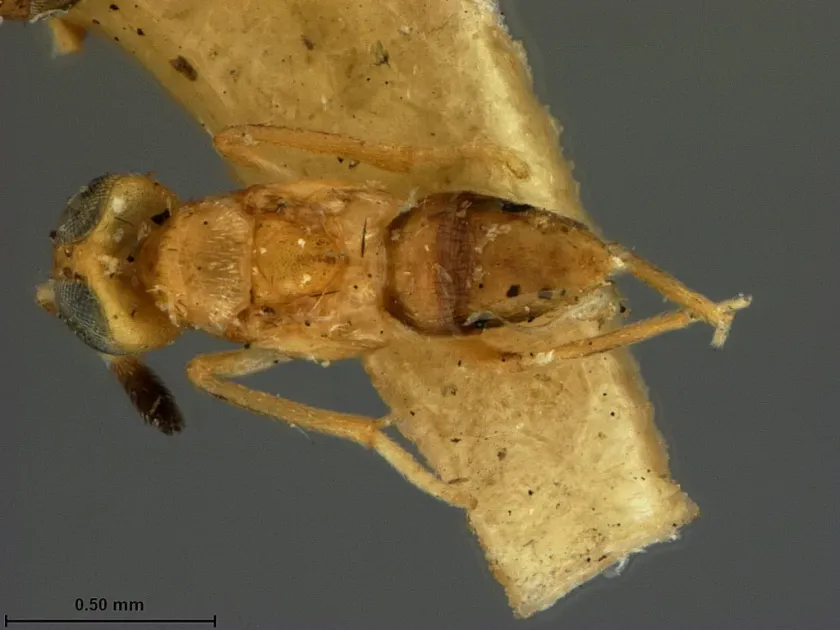
Description
How to identify
Cheiloneurus swezeyi is a minute parasitic wasp belonging to the family Encyrtidae within the order Hymenoptera.
Adult wasps are characterized by their very small size, metallic body coloration, and complex wing venation typical of chalcidoid wasps.
This species is biologically significant as a hyperparasitoid, meaning it often parasitizes other primary parasitoids of scale insects and mealybugs.
Identification of this insect requires microscopic examination of structural features, as they are nearly invisible to the naked eye in field conditions.
Understanding the presence of this species is crucial for entomologists who need to assess the overall health and stability of biological control programs.
What it damages
Cheiloneurus swezeyi does not feed on plant tissues and is not considered a direct pest of agricultural crops in the traditional sense.
Its primary impact is indirect: by parasitizing primary parasitoids, it can reduce the effectiveness of those beneficial insects in controlling scale and mealybug populations.
In managed orchards or citrus groves, a high population of this wasp might lead to an increase in pest density due to the suppression of more effective primary natural enemies.
This species is not responsible for necrotic spots, leaf curling, or any other visible physiological damage to the host plant.
Its economic importance is linked to the complex trophic interactions within the ecosystem rather than direct consumption of crop biomass.
When it appears
The activity cycle of Cheiloneurus swezeyi is closely linked to the availability and developmental stages of its hosts, such as various coccids.
These wasps are most active during the warmer months, which provide optimal environmental conditions for their reproduction and host seeking.
Multiple generations can be produced within a single season, allowing the population to quickly respond to the density of their host insects.
Overwintering typically occurs in the larval or pupal stages inside the bodies of their hosts, protected by the cuticle of the scale insect.
The emergence of adults usually follows the seasonal cycle of scale insect infestation, ensuring they have suitable hosts for egg deposition.
Signs of infestation
The presence of this parasitoid is evidenced by small exit holes on the exterior of dead scale insects or mealybugs found on plant stems and leaves.
Heavily infested colonies may show a reduced number of live pests, or paradoxically, an increase in pests if the hyperparasitism of primary beneficials is high.
There are no specific signs on the foliage, as the wasp interacts exclusively with the insects and not the vegetative parts of the plant.
Detection is best performed by collecting samples of host insects and rearing them in laboratory conditions to observe emergent adults.
Yellow sticky traps can also be utilized to monitor the adult wasp population flying within the crop canopy during the growing season.
Control measures
Direct chemical control against Cheiloneurus swezeyi is generally discouraged as it would negatively impact the entire beneficial insect community.
Integrated Pest Management (IPM) strategies should focus on maintaining a balance between primary and secondary parasitoids to ensure long-term pest suppression.
Selective use of pesticides is advised to avoid non-target mortality of beneficial wasps that provide essential ecosystem services.
Providing refugia or native plant borders can support a more diverse range of parasitoids, potentially mitigating the dominance of any single species.
Regular field scouting and laboratory analysis remain the most effective methods for managing populations of this wasp within professional agricultural setups.
Taxonomy
- Latin name
- Cheiloneurus swezeyi
- Order
- Hymenoptera
- Family
- Encyrtidae
- EPPO code
- CHEUSW
Discussion
No discussions yet — be the first.