
Cheiloneurus
Cheiloneurus
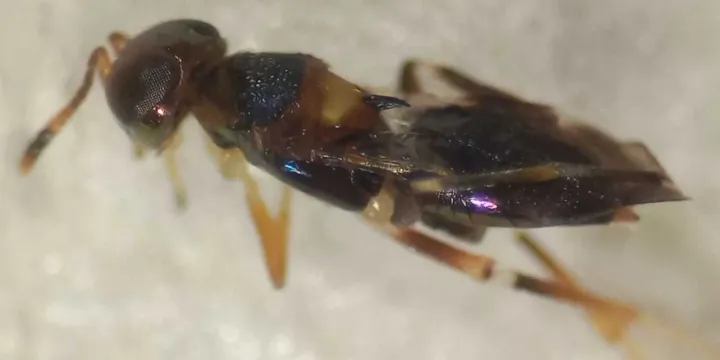
Description
How to identify
Cheiloneurus is a genus of tiny parasitic wasps belonging to the family Encyrtidae. These insects are exceptionally small, typically measuring only a few millimeters in length.
They are characterized by a metallic coloration, which can range from bronze to green, and a sophisticated wing venation pattern.
The head structure, particularly the complex eyes and antennae, is used by researchers to identify specific species within this diverse genus.
As endoparasitoids, their larval stage is completed entirely within the body of a host, which is usually another parasitic insect.
Due to their microscopic size and hidden lifestyle, they are rarely seen by farmers or gardeners during routine inspections.
What it damages
These insects are not pests of crops in the traditional sense, as they do not feed on plant tissues, fruits, or roots.
Their ecological role is that of a hyperparasitoid, meaning they parasitize the larvae or pupae of other parasitic wasps that are already attacking agricultural pests.
Their negative impact is strictly indirect, as they may reduce the population of primary beneficial insects that help keep pest outbreaks in check.
While they do not cause direct damage, their presence can complicate integrated pest management programs by disrupting natural biocontrol.
No mechanical or systemic damage to plant health is associated with the activities of this genus.
When it appears
The seasonal activity of Cheiloneurus is dictated by the phenology of their hosts, which are mainly other hymenopteran parasitoids.
Activity usually peaks during the warmer months, starting from late spring and continuing through the end of the summer season.
The speed of their development is highly temperature-dependent, allowing for multiple generations per year under favorable conditions.
They typically overwinter in a quiescent state, often inside the mummified remains of their host insect.
Their appearance coincides with the presence of target host populations in the surrounding environment.
Control measures
There are no targeted chemical control measures for Cheiloneurus, as they are not classified as economic pests requiring eradication.
Indiscriminate use of broad-spectrum insecticides should be avoided, as it can negatively impact both primary parasitoids and hyperparasitoids.
Management should focus on maintaining a stable agroecosystem where natural biological control can thrive without excessive chemical intervention.
Strategic monitoring of the entomological balance is recommended to ensure that primary parasitoids remain effective against major agricultural pests.
- Integration of selective insecticides.
- Preservation of natural habitats for beneficial insects.
- Sustainable agricultural practices.
Taxonomy
- Latin name
- Cheiloneurus
- Order
- Hymenoptera
- Family
- Encyrtidae
- EPPO code
- CHEUSP
Discussion
No discussions yet — be the first.