
Avetianella
Avetianella
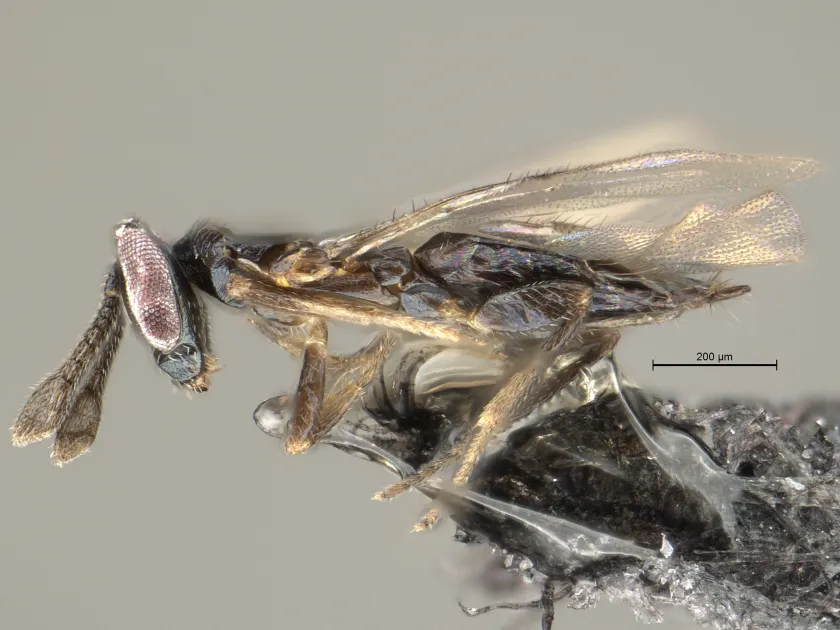
Description
How to identify
Avetianella (Avetianella longoi) is a tiny parasitic wasp belonging to the family Encyrtidae within the order Hymenoptera. This species is highly specialized as an egg parasitoid of the eucalyptus snout beetle.
The adult insect is extremely small, making it difficult to detect with the naked eye in field conditions. It possesses specialized sensory organs that enable it to locate the egg clusters of its host efficiently.
Its biological cycle is entirely dependent on the presence of the host, Gonipterus scutellatus. By laying its eggs inside the beetle's eggs, it ensures the survival of its progeny at the expense of the pest.
The wasp has been widely introduced in various regions around the world where the eucalyptus snout beetle has become an invasive threat. It is considered one of the most effective biological control agents available.
As a member of the Chalcidoidea superfamily, Avetianella exhibits complex behavioral patterns adapted to synchronize its life cycle with the reproduction of the eucalyptus beetle.
What it damages
Avetianella does not cause any damage to plants; it is an exclusively beneficial organism in forestry. Its main function is to reduce the population of the eucalyptus snout beetle, which causes severe defoliation.
The eucalyptus snout beetle is a major pest that feeds on leaves and young shoots, significantly slowing the growth of trees and potentially leading to their death. Avetianella provides a vital ecosystem service by suppressing this pest.
By parasitizing the eggs of the beetle, Avetianella effectively kills the pest before it reaches the destructive larval stage. This prevents the mechanical damage typically caused by the chewing mouthparts of beetle larvae.
The impact of this wasp significantly reduces the need for chemical insecticides, which is essential for sustainable forest management. Protecting the tree's foliage ensures optimal photosynthetic capacity and wood production.
In essence, the ecological "damage" caused by Avetianella is strictly limited to the host population, making it an invaluable ally for foresters managing eucalyptus plantations.
When it appears
The activity of Avetianella is closely tied to the reproductive season of the eucalyptus snout beetle. In mild climates, it remains active year-round as the pest continues its life cycle.
Peak emergence of the wasps usually coincides with the period when the beetles lay their eggs on the foliage of the host plants. During this time, the parasitoids are most active in searching for egg clusters.
Environmental temperatures have a direct effect on the development rate of the wasp. Optimal temperatures allow the wasp to complete its generation faster, providing a tactical advantage over the beetle population.
In cooler climates or during off-seasons, Avetianella can remain dormant inside the host's eggs. This strategy allows the population to survive unfavorable conditions and re-emerge when host availability increases.
Forest pathologists conduct monitoring throughout the season to assess the effectiveness of the natural parasitism. This helps in understanding the population dynamics of the pest and the stability of the biocontrol agent.
Signs of infestation
The most visible sign of Avetianella presence is the discoloration of the beetle's egg masses on the eucalyptus leaves. Parasitized eggs often turn dark or brownish, compared to the lighter color of healthy ones.
Microscopic examination of the eggs reveals the presence of developing wasp larvae inside. This observation is the definitive confirmation of successful biological control in the field.
The exit holes left by the adult wasps on the egg surfaces are clear indicators that the cycle of parasitism has been completed. These holes are tiny and usually require a hand lens to be observed clearly.
A reduction in leaf skeletonizing—a typical symptom of eucalyptus snout beetle infestation—is a strong indirect sign that Avetianella is effectively controlling the pest density.
Scientific monitoring programs collect leaf samples to quantify the rate of parasitism. A high percentage of parasitized eggs is the primary goal for managers aiming to prevent major outbreaks.
Control measures
The control strategy centers on promoting the population of Avetianella rather than suppressing it. It is a cornerstone of Integrated Pest Management (IPM) in eucalyptus forestry.
When the eucalyptus snout beetle invades a new area, the introduction of Avetianella is often the first step in long-term control. This method establishes a self-sustaining biological balance.
The use of broad-spectrum insecticides should be strictly minimized in areas where Avetianella is active, as these chemicals are highly toxic to the wasps. Selective, environmentally friendly pesticides are preferred if chemical intervention is necessary.
Ensuring the health of the broader forest ecosystem, including the presence of flowering plants, can support adult wasps by providing nectar sources, thereby increasing their longevity and reproductive output.
Routine monitoring of the pest and parasitoid populations allows for informed decision-making regarding supplemental releases of the wasp, ensuring that the biological protection remains robust against future pest threats.
Taxonomy
- Latin name
- Avetianella
- Order
- Hymenoptera
- Family
- Encyrtidae
- EPPO code
- AVETSP
Discussion
No discussions yet — be the first.