
Arhopoideus peregrinus
Arhopoideus peregrinus
Description
How to identify
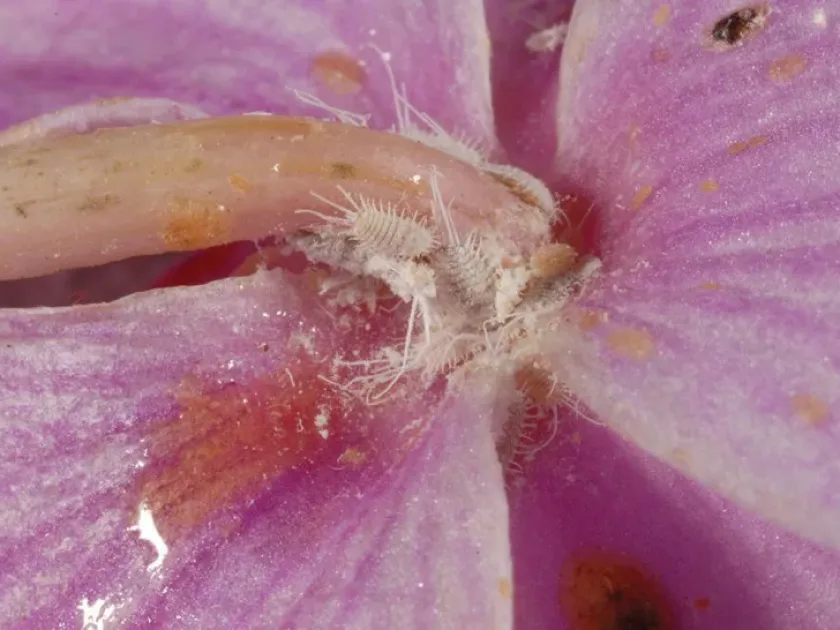
Arhopoideus peregrinus is a species of mealybug belonging to the family Pseudococcidae and the order Hemiptera. These small insects are distinguished by the white, waxy secretion that covers their bodies, providing protection against environmental stressors and many conventional chemical applications.
Adult females are typically oval-shaped, measuring 2 to 4 millimeters, and are generally sessile, remaining attached to plant surfaces to feed. Males are rarely seen; they are smaller, possess a pair of wings, and are primarily mobile, existing briefly to locate and fertilize females.
The larval stage, commonly referred to as "crawlers," represents the most active phase of the life cycle. These tiny, mobile nymphs are capable of dispersing throughout the host plant or being transported by wind, water, or agricultural activities to nearby healthy plants.
Accurate identification requires microscopic examination of structural features, such as the arrangement of wax-secreting pores and the number of antennal segments. This precision is necessary because Arhopoideus peregrinus can often be misidentified as other related mealybug species.
The species demonstrates a rapid reproductive rate, which allows populations to explode in favorable environments, particularly within glasshouses or temperate regions. Understanding the biological cycle of the pest is crucial for effective timing of intervention measures.
What it damages
The primary hosts of this pest include citrus species such as lemons, oranges, and mandarins. Beyond citrus, the insect also infests a variety of ornamental plants, making it a significant concern for both professional orchards and greenhouse horticulturalists.
The mealybug utilizes its piercing-sucking mouthparts to penetrate plant tissues. They prefer to settle in secluded areas like leaf axils, bark crevices, and the underside of leaves, where they extract nutrient-rich sap, causing significant metabolic strain on the host.
Damage manifests as stunted growth, leaf deformation, and premature yellowing or senescence. In cases of high infestation, the plant loses significant vitality, leading to poor flower development and fruit drop, which directly impacts overall agricultural productivity.
A notable secondary damage is the production of honeydew, a sticky substance that serves as a medium for the growth of sooty mold. This dark fungal layer covers the leaf surface, severely inhibiting the plant's ability to undergo photosynthesis and reducing growth vigor.
Economic impact includes both the immediate reduction in yield quantity and the degradation of fruit quality. The presence of sooty mold often makes the harvest unmarketable, necessitating costly cleaning or causing total loss in severe infestation scenarios.
Signs of infestation
Visual confirmation of an infestation often begins with the discovery of cottony, white masses on stems or along leaf veins. These clusters are actually the waxy ovisacs produced by females, which contain numerous eggs and provide shelter during the early stages of development.
The accumulation of black sooty mold on the foliage is a distinct indicator of a chronic infestation. This fungal growth thrives on the honeydew excreted by the mealybugs, signaling that the pests have been present on the plant for a significant amount of time.
General signs of distress, such as leaf wilting, yellowing, and leaf drop, are common symptoms of heavy feeding. If new shoots appear malformed or exhibit abnormal development patterns, it is a strong indicator that the mealybugs are targeting the most tender parts of the plant.
An increased presence of ants on the plant may serve as a warning sign. Ants frequently exhibit a symbiotic relationship with mealybugs, protecting them from predators in exchange for the sugary honeydew they produce.
- White, waxy, cottony clusters
- Sticky residue on foliage
- Black sooty mold growth
- Leaf yellowing and deformation
- Increased ant activity around stems
Control measures
Managing Arhopoideus peregrinus effectively requires an integrated pest management (IPM) approach. Regular scouting is essential to identify the pest at the early onset, which allows for smaller, more targeted interventions rather than broad-spectrum sprays.
Cultural practices are the first line of defense. This includes maintaining plant vigor through balanced fertilization and pruning affected branches to reduce the pest population density. It is critical to ensure proper spacing to improve airflow, as humidity favors the rapid expansion of these colonies.
Biological control is highly effective for this species. Introducing natural predators, such as the mealybug destroyer (Cryptolaemus montrouzieri), can substantially suppress infestation levels, especially in protected environments like nurseries and greenhouses.
Chemical control should prioritize systemic insecticides that are absorbed by the plant, ensuring that the pest ingests the poison during feeding. Because the waxy covering protects the insects from contact sprays, systemic products are generally more reliable for long-term control.
When applying pesticides, thorough coverage is required to reach the hidden areas where the insects congregate. It is also advised to rotate active ingredients to prevent the development of pesticide resistance in the population, maintaining the long-term effectiveness of the management program.
Taxonomy
- Latin name
- Arhopoideus peregrinus
- Order
- Hymenoptera
- Family
- Encyrtidae
- EPPO code
- ARHPPE
Discussion
No discussions yet — be the first.