
Arhopoideus
Arhopoideus
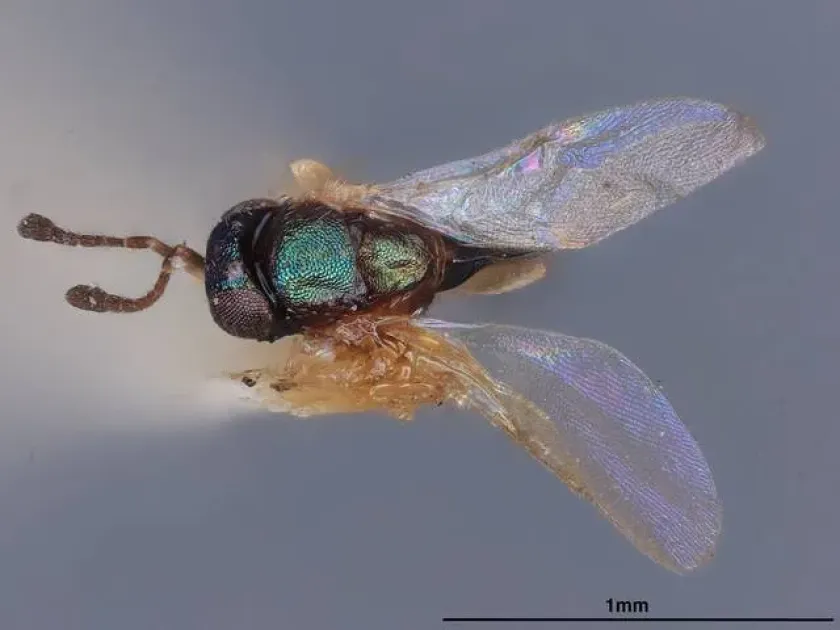
Description
How to identify
Arhopoideus is a genus belonging to the order Hymenoptera and the family Encyrtidae. These are minute insects, many of which act as primary parasitoids of various scale insects.
Adult specimens are characterized by a morphology typical of parasitic wasps. They possess developed wings with simplified venation and often display a metallic sheen on their bodies.
Accurate species identification requires microscopic examination, as they resemble many closely related genera within the Encyrtidae family. Classification is based on antennal structure and the ovipositor shape in females.
The biology of these insects is intimately tied to the lifecycle of mealybugs and scale insects. Adult insects are active, searching for suitable hosts to lay their eggs.
The lifecycle encompasses egg, larva, prepupa, and pupa stages, which generally occur inside the host's body, completing the metamorphosis by consuming the tissues of the host insect.
What it damages
Arhopoideus individuals do not damage plants directly as phytophages. Their impact on agriculture is primarily that of an entomophage, helping to keep pest populations under control.
The main targets they parasitize are various Coccidae species, including mealybugs. This makes them valuable agents in biological control programs.
In agroecosystems, their presence aids in suppressing populations of dangerous pests on citrus and fruit trees, where scale insects are commonly found.
However, in certain scenarios, excessive activity of these parasitoids could disrupt the balance of integrated pest management (IPM) programs if they target beneficial insect species.
Direct damage to agricultural crops is virtually non-existent, as adult feeding is limited to nectar or honeydew secretions from the host insects.
When it appears
Seasonal activity is directly correlated with the development cycles of their hosts. They typically emerge during the warmer months, starting from late spring.
The flight period of adults is prolonged and may encompass multiple generations, depending on the regional climate and the development rate of the scale insect population.
Activity peaks often coincide with periods of mass reproduction of Coccidae, as these moments provide the best opportunity for females to find suitable substrates for infestation.
Overwintering of this genus generally occurs in the larval or pupal stage inside the mummified host body, providing protection from adverse environmental factors.
In greenhouse settings, generations may overlap, ensuring nearly year-round presence of the insects, provided a sufficient food base is available.
Signs of infestation
The primary indicator of this entomophage's presence in an agroecosystem is the discovery of mummified scale insects on leaves and branches.
Upon close inspection of the parasitized host, one can often find a characteristic exit hole through which the adult Arhopoideus wasp has emerged.
A reduction in the overall infestation level of crops by scale insects without the use of chemical insecticides often signals the effective work of these natural regulators.
The appearance of the infested pest changes: it loses mobility, changes color, and becomes rigid, which is easily noticeable during routine phytosanitary inspections.
The absence of typical damage marks, such as leaf discoloration or physical deformation, confirms that the insect is a parasite rather than a crop pest.
Control measures
Protection measures regarding these beneficial organisms focus on preserving their natural populations. The primary rule is to minimize or eliminate the use of broad-spectrum pesticides.
If chemical control is required, preference should be given to selective products that are safe for beneficial entomofauna to avoid killing natural enemies.
Maintaining ecological corridors and strips of flowering plants provides essential supplemental food sources for adult parasitic Hymenoptera.
Agronomic practices aimed at promoting plant health also indirectly support entomophage populations, as healthy plants can better withstand pest pressures.
Monitoring the abundance of Arhopoideus helps to more accurately time other crop protection measures, integrating natural enemies into a comprehensive management strategy.
Taxonomy
- Latin name
- Arhopoideus
- Order
- Hymenoptera
- Family
- Encyrtidae
- EPPO code
- ARHPSP
Discussion
No discussions yet — be the first.