
Anagyrus pseudococci
Anagyrus pseudococci
Description
How to identify
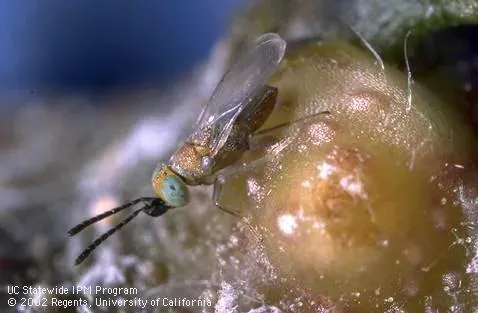
Anagyrus pseudococci is a tiny parasitic wasp belonging to the family Encyrtidae, order Hymenoptera. Adult wasps are typically very small, measuring approximately 1.5 to 2 millimeters in length.
The body coloration is generally yellowish-brown. There is a distinct sexual dimorphism: males are usually darker and possess long, hairy antennae, while females have shorter, differently structured antennae.
The larvae of this wasp are endoparasitoids, meaning they develop inside the body of their host, the mealybug. This lifestyle makes them highly effective at suppressing pest populations from within.
They are widely recognized in agricultural entomology as a key beneficial agent used to control various mealybug species, particularly the citrus mealybug.
Due to their microscopic nature, identifying them in the field requires specialized entomological equipment or, more commonly, observing the specific signs of parasitism on their hosts.
What it damages
Anagyrus pseudococci is not a plant pest; it is a highly beneficial insect that serves as a natural enemy to mealybugs, specifically Planococcus citri.
The targets for this parasitoid include various crops such as citrus orchards, vineyards, and ornamental plants kept in greenhouses or nurseries.
Mealybugs, which this wasp helps control, feed on plant sap. Their feeding causes stunted growth, leaf yellowing, fruit drop, and general plant stress, which can lead to significant yield losses.
In addition to direct feeding damage, mealybugs secrete honeydew, which serves as a substrate for sooty mold, severely reducing the aesthetic and market value of the produce.
By effectively parasitizing these pests, the wasp prevents the buildup of mealybug colonies, thereby protecting the overall health and productivity of the host crops.
When it appears
The biological activity of this wasp is highly dependent on ambient temperature. It thrives in warm conditions, with optimal development occurring between 22 and 28 degrees Celsius.
In greenhouse settings, where temperatures can be tightly regulated, the wasp can remain active and reproduce throughout the year, providing continuous biological control.
In outdoor environments, the activity period of Anagyrus pseudococci aligns with the growing season, typically starting in late spring and continuing until mid-autumn.
Because their generation time is shorter than that of the mealybug, the wasp population can expand rapidly when pest populations increase, making it a responsive control agent.
While the wasp can survive winter in some temperate climates by remaining inside the host mummies, in colder regions, it often requires regular re-introduction during the spring.
Signs of infestation
The most reliable sign of the presence and effectiveness of Anagyrus pseudococci is the formation of mealybug "mummies." The parasitized host stops feeding, turns brown, and becomes hardened.
Upon close inspection of these mummies, one can identify a small, circular exit hole, which indicates that the adult wasp has successfully emerged after completing its development.
A noticeable decrease in the white, waxy, cotton-like secretions typically left by mealybugs on leaves and stems is a strong indicator of successful biological control.
Professional growers often use yellow sticky traps to monitor for the presence of adult wasps, allowing them to assess whether the parasitoid population is sufficient to control the infestation.
Overall, improved plant vigor and the absence of sooty mold on the foliage suggest that the wasp is successfully managing the mealybug colony in the area.
Control measures
As Anagyrus pseudococci is a beneficial parasitoid, "control" measures actually refer to enhancing its effectiveness and protecting its population in the field.
Growers should minimize the use of broad-spectrum insecticides, as these chemicals are often lethal to beneficial wasps and can disrupt the natural biological balance.
If chemical pest control is absolutely necessary, it is crucial to select selective, low-toxicity products that have a minimal impact on parasitoid populations.
To support a healthy population of the wasp, planting nectar-producing flowers around the crop perimeter can provide essential supplemental food for adult wasps, increasing their longevity.
Implementing an Integrated Pest Management (IPM) program that includes the release of Anagyrus pseudococci at recommended ratios is the most effective way to sustain long-term control.
Taxonomy
- Latin name
- Anagyrus pseudococci
- Order
- Hymenoptera
- Family
- Encyrtidae
- EPPO code
- ANAYPS
Discussion
No discussions yet — be the first.