
Anagyrus mirzai
Anagyrus mirzai
Description
How to identify
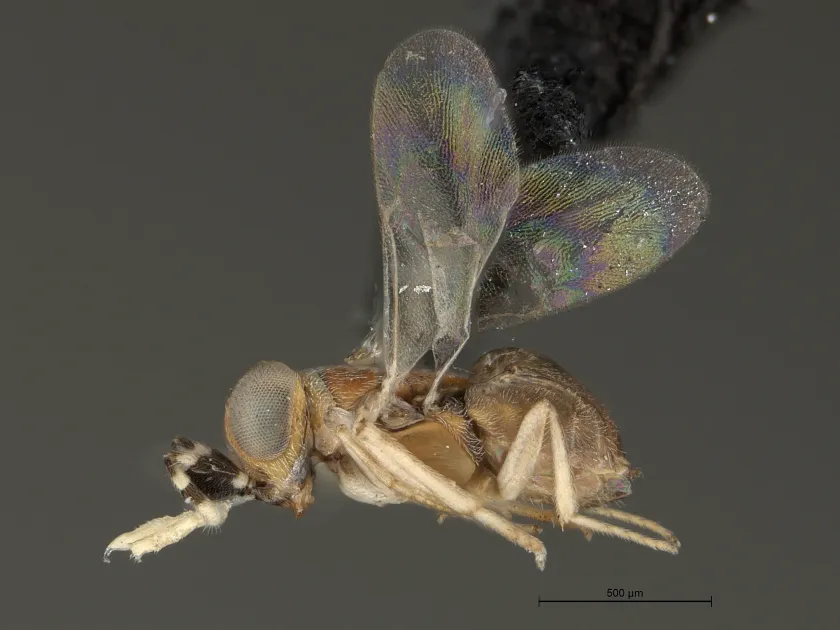
Anagyrus mirzai is a tiny parasitic wasp belonging to the Encyrtidae family, widely recognized for its efficacy as a biological control agent against various mealybug species.
Adult specimens are very small, typically measuring between 1 and 2 millimeters in length, which allows them to easily navigate through the dense wax secretions of their hosts.
As a member of the Hymenoptera order, this species is highly specialized. It functions as an endoparasitoid, meaning its larvae develop entirely inside the host's body.
Female wasps possess highly sensitive antennae that enable them to detect mealybug infestations, even when those pests are hiding in protected plant areas.
The life cycle of the wasp is perfectly synchronized with its host, allowing the parasite to significantly suppress pest populations in controlled environments.
What it damages
It is crucial to clarify that Anagyrus mirzai is a beneficial organism and causes no damage to crops. It is strictly a natural predator of harmful scale insects and mealybugs.
The primary targets for this parasitoid are mealybugs (family Pseudococcidae), which frequently infest citrus, ornamental, and various vegetable crops in greenhouse settings.
The damage caused by mealybugs themselves includes nutrient depletion, stunt growth, leaf distortion, and the secretion of honeydew which promotes sooty mold growth.
By deploying these parasitoids, growers can effectively manage pest numbers without resorting to harsh chemical treatments, thus supporting sustainable agricultural practices.
The wasp's activity helps to restore plant health, allowing the crop to recover from the negative impacts of mealybug colonization.
When it appears
The biological activity of Anagyrus mirzai is highly dependent on ambient temperature and light conditions. Ideal development occurs at temperatures ranging from 22 to 28 degrees Celsius.
In greenhouses, where climate control is available, the wasp can remain active throughout the year, provided there is a constant supply of hosts available for its reproduction.
In outdoor environments, the population of this parasitoid peaks during the late spring and summer months, aligning with the reproductive cycles of mealybugs.
Under optimal conditions, the wasp can complete multiple generations in a single season, leading to a rapid reduction in the pest population.
Cold weather significantly limits their activity, often pushing the insects into a state of diapause until more favorable environmental conditions return.
Signs of infestation
The presence of Anagyrus mirzai can be identified by the appearance of mummified mealybugs on the affected plants, which serve as a clear sign of successful parasitism.
These mummies appear as dark, hardened, and immobile bodies that have lost their original white, powdery, or waxy appearance characteristic of living mealybugs.
Upon close inspection with a hand lens, you can observe small, circular exit holes in the bodies of the mummies, indicating where the adult wasp has emerged.
A secondary sign is the noticeable decline in sticky honeydew deposits on the foliage and a marked reduction in the overall pest population density.
Monitoring for these signs during routine crop inspections allows agronomists to evaluate the effectiveness of the biological control program currently in place.
Control measures
Integrating Anagyrus mirzai into an Integrated Pest Management (IPM) program is a highly effective strategy for greenhouse crop protection.
The most important control measure regarding the wasps themselves is the total avoidance or very limited use of broad-spectrum pesticides, which are fatal to beneficial insects.
When chemical intervention is necessary for other pests, agronomists should select bio-rational or selective insecticides that have minimal impact on parasitoid populations.
Maintaining stable greenhouse conditions, specifically controlling humidity and preventing extreme temperature fluctuations, is essential for the wasp's survival and search success.
Regular release schedules based on real-time pest monitoring data ensure that the wasp population is sufficient to combat mealybug surges effectively.
Taxonomy
- Latin name
- Anagyrus mirzai
- Order
- Hymenoptera
- Family
- Encyrtidae
- EPPO code
- ANAYMI
Discussion
No discussions yet — be the first.