
Anagyrus kamali
Anagyrus kamali
Description
How to identify
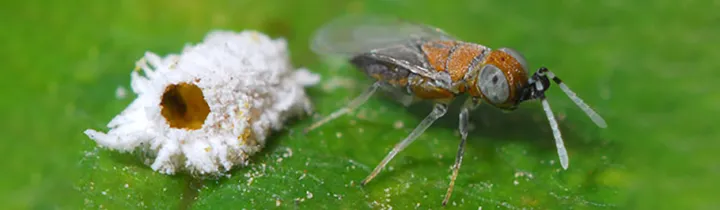
Anagyrus kamali is a tiny parasitoid wasp belonging to the family Encyrtidae, widely recognized for its efficacy in the biological control of mealybugs. These wasps are microscopic in size, usually measuring less than 2 mm, which allows them to effectively navigate through dense mealybug colonies.
The female wasp is equipped with an ovipositor, a specialized organ used to penetrate the waxy layers of the mealybug's body. They use chemical signals, specifically kairomones, to detect their hosts from a distance, making them highly efficient hunters.
Adult wasps typically exhibit dark brown to black coloration. While they are difficult to spot with the naked eye in large agricultural fields, their presence is often confirmed through laboratory analysis of host mummies.
These wasps are highly specialized, targeting specific species of mealybugs, most notably the hibiscus mealybug (Maconellicoccus hirsutus). This specificity ensures that they do not harm other beneficial insect populations within the ecosystem.
Monitoring programs use sticky traps and visual inspection of infested leaves to determine the activity levels of these parasitoids in the field.
What it damages
It is important to clarify that Anagyrus kamali is not a plant pest; rather, it is a highly beneficial parasitoid wasp. It acts as a natural enemy to the hibiscus mealybug, which is a devastating pest for many crops.
The hibiscus mealybug causes significant damage to various plants, including citrus, grapes, and hibiscus. The pest sucks sap from young shoots, leaves, and fruits, leading to severe plant deformation and reduced crop yields.
Infestation symptoms include stunted growth, leaf curling, and the production of honeydew. This honeydew promotes the growth of sooty mold, which blocks sunlight and hinders photosynthesis, further weakening the host plant.
Anagyrus kamali manages this damage by laying eggs inside the mealybug body. The wasp larva consumes the host from the inside, preventing it from reproducing and eventually killing it, which serves as a natural population suppressor.
By effectively suppressing the mealybug population, Anagyrus kamali protects the aesthetic and commercial value of plants, making it a cornerstone of integrated pest management strategies.
When it appears
The biological activity of Anagyrus kamali is strictly temperature-dependent. The wasps perform best under warm conditions, typically in the range of 25°C to 30°C, which is consistent with the optimal environment for mealybug development.
In greenhouse settings, where temperatures can be regulated, the wasp can maintain multiple overlapping generations, providing year-round control of the target pest.
Cooler temperatures significantly reduce the metabolic rate of the parasitoids, limiting their foraging range and ability to oviposit. During such periods, the effectiveness of natural control may decrease significantly.
The seasonal emergence of these wasps is usually synchronized with the population explosion of the hibiscus mealybug. This synchronization is crucial for the success of biological control efforts.
Maintaining floral strips or hedgerows that provide nectar sources is essential for the survival of adult wasps, especially during periods when the host density might be lower.
Control measures
Effective management using Anagyrus kamali involves deliberate release strategies into areas with early-stage pest infestation. Rapid deployment upon the detection of the first signs of mealybugs is vital for success.
The use of broad-spectrum insecticides is highly discouraged when using this biological agent, as chemical applications can be lethal to the wasp population. Integrated Pest Management (IPM) guidelines must be strictly followed.
Agricultural practices should prioritize the use of selective, compatible pest control agents if additional chemical intervention is required to manage other pests.
- Continuous monitoring using pheromone or sticky traps.
- Strategic releases of wasps based on the infestation density.
- Provision of habitat diversity to support adult wasp longevity.
- Avoidance of toxic pesticide residues near release sites.
By integrating Anagyrus kamali into the crop protection strategy, growers can achieve sustainable pest suppression, reducing the need for chemical inputs and fostering a healthier, balanced agricultural environment.
Taxonomy
- Latin name
- Anagyrus kamali
- Order
- Hymenoptera
- Family
- Encyrtidae
- EPPO code
- ANAYKA
Discussion
No discussions yet — be the first.