
Anagyrus antoninae
Anagyrus antoninae
Description
How to identify
Anagyrus antoninae is a highly effective parasitic wasp belonging to the family Encyrtidae, order Hymenoptera, known for its role in suppressing mealybug populations.
These tiny parasitoids are specialized natural enemies, having evolved specific physiological adaptations to detect and infest their hosts within dense colonies.
The life cycle involves complete metamorphosis, where the larval stage is completed internally within the host insect, effectively consuming it from the inside.
Adults possess specialized antennae and sensory organs that allow them to locate mealybugs hidden in crevices or beneath waxy secretions of the host.
As a biocontrol agent, this species is essential in sustainable agriculture, helping to maintain ecological balance in both field and greenhouse environments.
What it damages
While the wasp itself is beneficial, its host—the mealybug (Pseudococcidae)—is a significant agricultural pest that causes substantial damage to crops.
Mealybugs feed by extracting sap from plant tissues, which causes yellowing, leaf drop, stunted growth, and in severe cases, plant death.
They also produce honeydew, which leads to the growth of sooty mold, blocking photosynthesis and significantly reducing the market value of fruits and flowers.
By parasitizing these pests, Anagyrus antoninae prevents the physiological stress and damage typically caused by large mealybug infestations.
Effective control by this wasp mitigates the need for aggressive chemical interventions, thereby preserving the overall plant health and ecosystem integrity.
When it appears
The activity and population density of this parasitoid are dictated by ambient temperature and the availability of their specific host species.
In temperate climates, peak activity occurs during the spring and summer months, aligning with the life cycle of the mealybug population.
Under controlled greenhouse conditions, the wasp can remain active throughout the year, provided temperatures are optimal for both the parasite and the host.
Their life cycle is relatively short, allowing for multiple overlapping generations that can quickly respond to sudden spikes in mealybug numbers.
Seasonal environmental factors, such as humidity and light, also influence the wasp’s dispersal ability and its success in establishing effective control.
Signs of infestation
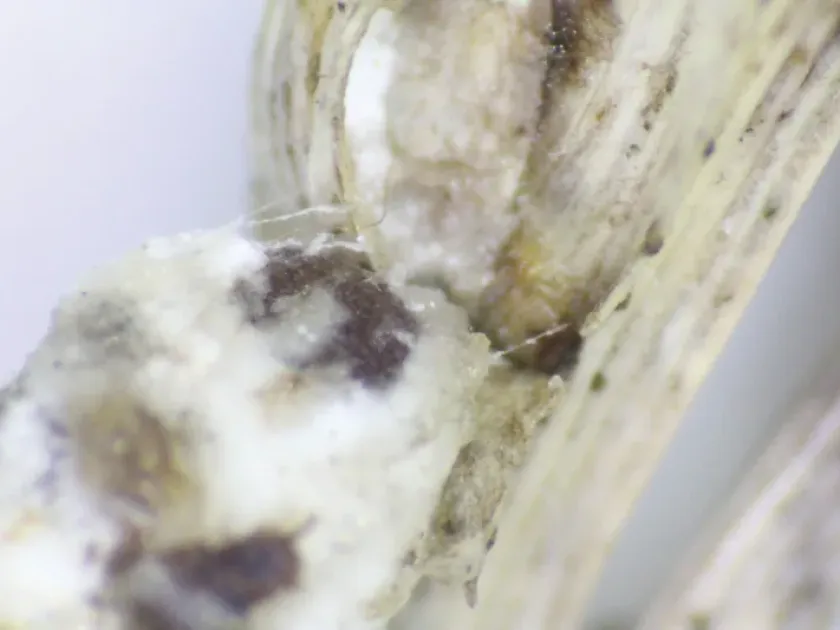
One of the most reliable indicators of the parasitoid's presence is the occurrence of "mummified" mealybugs on the infested plant tissues.
Parasitized mealybugs often exhibit a change in texture and color, eventually becoming rigid and immobile as the wasp larva matures inside.
Close inspection may reveal small, circular exit holes in the carcasses of the host, which serve as clear evidence of a successful parasitoid emergence.
A reduction in the visual presence of waxy, white cotton-like deposits (characteristic of mealybugs) is a primary indicator of successful biocontrol.
Monitoring for these signs is essential for agronomists to determine if existing populations of the wasp are sufficient to control the pest pressure.
Control measures
The primary control strategy involves fostering an environment conducive to the survival and reproduction of Anagyrus antoninae.
It is vital to avoid broad-spectrum insecticides that eliminate beneficial parasitoids and disrupt the natural pest-predator balance.
Integrated Pest Management (IPM) practices, such as the use of selective biorational pesticides, are recommended when chemical intervention becomes necessary.
Conservation biological control methods, including providing nectar sources for adult wasps, can significantly enhance their efficacy in the field.
- Minimize pesticide applications during peak activity periods.
- Introduce mass-reared populations in high-infestation areas.
- Maintain buffer zones and biodiversity to support natural enemies.
Taxonomy
- Latin name
- Anagyrus antoninae
- Order
- Hymenoptera
- Family
- Encyrtidae
- EPPO code
- ANAYAT
Discussion
No discussions yet — be the first.