
Anagyrus aligarhensis
Anagyrus aligarhensis
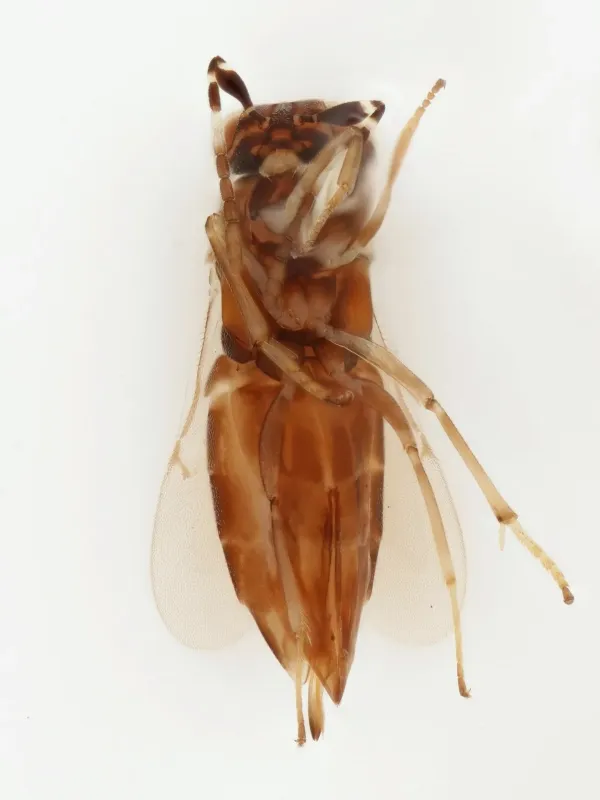
Description
How to identify
Anagyrus aligarhensis is a species of parasitic wasp belonging to the family Encyrtidae, order Hymenoptera, known for its role as a biocontrol agent.
Physically, it is a tiny insect with specialized antennae that are highly sensitive to the pheromones and kairomones emitted by mealybug hosts.
These wasps are highly mobile, enabling them to search for hosts over large areas of foliage within a greenhouse or field environment.
Taxonomically, it is classified within the group of encyrtid parasitoids, which are widely recognized for their high host specificity.
The morphology of this insect is adapted for efficient searching and oviposition, allowing it to penetrate the waxy layers of its host.
What it damages
It is critical to distinguish that Anagyrus aligarhensis is a beneficial insect, not a pest; it provides a vital service by suppressing mealybug populations.
Mealybugs (such as Ferrisia species) damage plants by sucking sap, injecting toxins, and excreting honeydew that fosters sooty mold growth.
By parasitizing the larval stages of these mealybugs, Anagyrus aligarhensis kills the pest before it can reach maturity and reproduce.
The presence of this parasitoid prevents the accumulation of heavy mealybug infestations that would otherwise compromise crop yield and quality.
Consequently, the economic impact of this insect is purely positive, as it reduces the need for synthetic chemical pesticides in agriculture.
When it appears
The activity of Anagyrus aligarhensis is strongly influenced by ambient temperature and the availability of viable hosts within the local ecosystem.
They are most active during warm months when the metabolic rate of mealybugs is high and their populations are rapidly expanding.
In greenhouse settings, managers can manipulate environmental conditions to favor the continued activity of this parasitoid throughout the growing season.
Development from egg to adult is temperature-dependent, usually taking several weeks under ideal conditions (20–30°C).
During winter months or cold snaps, populations may decline unless protected in climate-controlled environments.
Signs of infestation
Monitoring for the presence and efficacy of this parasitoid involves looking for specific signs of successful infestation in mealybug colonies.
- Mummified mealybug bodies, which appear hardened and darker than healthy individuals.
- Distinctive exit holes in the dorsal surface of the mummies where the adult wasp has emerged.
- A noticeable decline in the density of mealybug colonies over a 2–3 week period.
- Reduced presence of honeydew and black sooty mold on leaves.
- Direct observation of small, metallic-colored wasps patrolling the underside of leaves.
Control measures
To successfully integrate Anagyrus aligarhensis into an IPM program, the use of broad-spectrum insecticides must be strictly avoided.
If chemical intervention is necessary, growers should select selective pesticides with minimal toxicity to Hymenopteran parasitoids.
Release programs should be timed based on the first sighting of mealybugs to prevent the pest from establishing a major colony.
Providing nectar-producing plants around the field perimeter can significantly improve the longevity and fecundity of the adult wasps.
Regular scouting and sampling of plant foliage are essential to evaluate the parasitism rate and determine if supplemental releases are required.
Taxonomy
- Latin name
- Anagyrus aligarhensis
- Order
- Hymenoptera
- Family
- Encyrtidae
- EPPO code
- ANAYAL
Discussion
No discussions yet — be the first.