
Anagyrus agraensis
Anagyrus agraensis
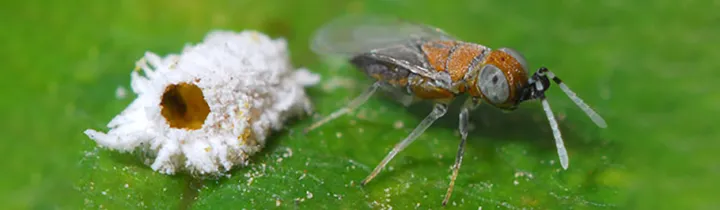
Description
How to identify
Anagyrus agraensis is a tiny parasitic wasp belonging to the family Encyrtidae. These insects are microscopic and specialized, serving as essential components of the ecosystem in various agricultural landscapes.
Physically, the adult wasps appear as small, yellowish-brown insects. Their morphology, particularly the structure of their antennae and wings, allows them to navigate effectively through dense foliage and reach hidden mealybug colonies.
Taxonomically, they fall under the order Hymenoptera. Unlike typical agricultural pests that damage plant tissues, this species is highly regarded by agronomists for its role as a natural enemy of various mealybug species.
Identification often requires a professional entomological assessment. However, their presence is easily detected by observing the impact they have on the population of their host insects during regular field inspections.
The species is highly adaptive, capable of thriving in both greenhouse conditions and open fields, making it a valuable tool in integrated pest management (IPM) programs worldwide.
What it damages
It is crucial to clarify that Anagyrus agraensis is not a plant pest; it is a primary parasitoid. Its "damage" is exclusively directed toward mealybugs (Pseudococcidae), which are detrimental to agricultural productivity.
The wasp lays its eggs inside the body of the mealybug. As the wasp larva develops, it consumes the host from within, effectively neutralizing the pest before it can cause further damage to the crop's vascular system.
Crops frequently protected by this species include citrus trees, vineyards, and various ornamental greenhouse plants. By targeting these pests, the parasitoid prevents leaf deformation and fruit drop.
The mealybugs targeted by the wasp are responsible for sucking plant sap and secreting honeydew, which promotes sooty mold growth. By reducing the mealybug density, Anagyrus agraensis indirectly cleanses the plant.
Therefore, this insect is a beneficial biological asset. Its presence helps maintain the health of the plant by breaking the pest life cycle naturally, without the need for synthetic chemicals.
When it appears
The activity cycle of Anagyrus agraensis is closely synchronized with the life cycle of its hosts. In climates with year-round warmth, the parasitoid can maintain overlapping generations if a host population is present.
In temperate regions, the peak of their activity occurs during the spring and summer months, corresponding with the massive development of mealybug colonies on host plants.
The temperature range between +20°C and +30°C is generally optimal for their metabolism and reproductive success. Excessive heat can negatively impact their lifespan, while cold temperatures induce a state of dormancy.
The development from egg to adult is relatively fast, allowing for multiple generations throughout the growing season. This quick turnaround time is essential for the rapid suppression of pest outbreaks.
Field monitoring during the vegetative phase allows agronomists to predict the surge of parasitoid activity, ensuring that biocontrol efforts remain consistent with the pest's population dynamics.
Signs of infestation
The most visible sign of Anagyrus agraensis activity is the occurrence of mummified mealybugs. These hosts appear rigid, often changing color, and are clearly distinct from healthy, mobile individuals.
Close inspection will reveal tiny, circular exit holes on the bodies of the mummies. These are the emergence points where adult wasps have successfully completed their development and departed to find new hosts.
A decline in honeydew secretions is a strong indicator of successful parasitism. As the internal organs of the mealybug are consumed by the wasp larva, the pest stops feeding and excreting, leading to cleaner foliage.
Observing small, active wasps moving across leaves and stems in areas infested by mealybugs provides definitive visual proof of biological control in action.
- Mummified, hardened mealybug bodies.
- Small exit holes on the dorsal side of the host.
- Reduced honeydew and sooty mold on leaves.
- Presence of small Hymenoptera adults in infested areas.
Control measures
To protect Anagyrus agraensis, the most critical step is to avoid the use of broad-spectrum insecticides. These chemicals are highly toxic to parasitoid wasps and can disrupt the natural balance, leading to secondary outbreaks.
If chemical intervention is unavoidable for other pests, use highly selective products with short residual activity. Always follow the guidelines provided by biological control suppliers regarding re-entry intervals.
Enhancing the habitat by planting floral strips or nectar-producing plants near crops provides essential resources for adult wasps. This simple practice significantly boosts their longevity and search efficiency.
In large-scale operations, controlled releases of lab-reared wasps are a standard practice. This augmentation strategy ensures that the population density of the parasitoid is high enough to handle sudden pest pressure.
Regular scouting and threshold monitoring are essential. By understanding the ratio of mummies to live pests, agronomists can make informed decisions about whether natural control is sufficient or if manual intervention is required.
Taxonomy
- Latin name
- Anagyrus agraensis
- Order
- Hymenoptera
- Family
- Encyrtidae
- EPPO code
- ANAYAG
Discussion
No discussions yet — be the first.