
Anagyrus aberiae
Anagyrus aberiae
Description
How to identify
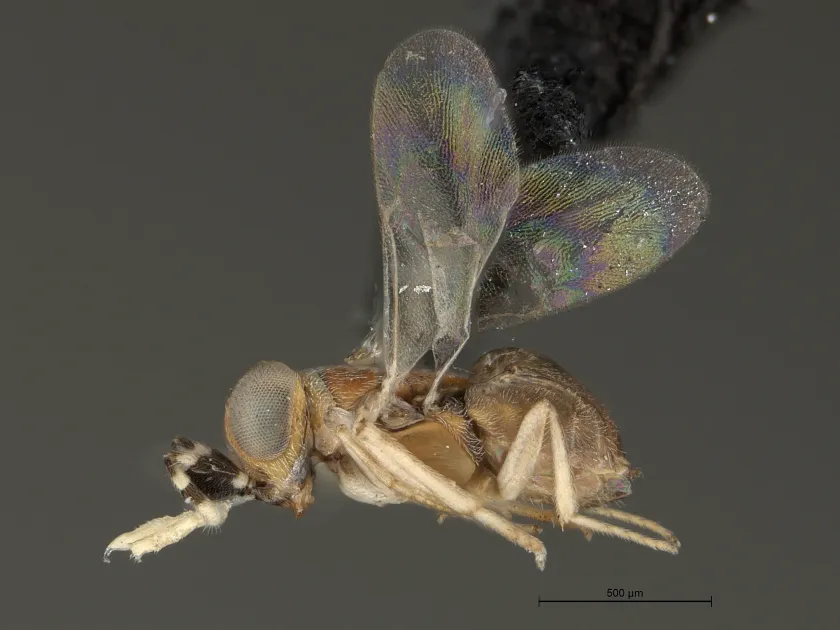
Anagyrus aberiae is a tiny parasitic wasp belonging to the Encyrtidae family. It is primarily known for its role in the ecosystem as a specialized parasitoid of various mealybug species that infest citrus plants.
The adult insects are extremely small, often difficult to observe without technical equipment, and possess a distinct metallic coloration typical of their family members.
Their anatomy is highly specialized for locating and ovipositing into their hosts, which are often concealed under the protective waxy secretions of mealybugs.
The identification of this species in the field usually requires careful inspection of the infested foliage and the collection of samples for laboratory confirmation.
Understanding the presence of this insect is vital for integrated pest management, as it directly impacts the population dynamics of the mealybugs on citrus crops.
What it damages
The primary concern regarding Anagyrus aberiae is its association with mealybug infestations, which cause significant damage to citrus species including lemons, oranges, and grapefruits.
Plants infested by these pests experience reduced vitality, characterized by yellowing of the foliage, leaf drop, and stunted growth of young shoots.
The honeydew produced by the mealybugs serves as a substrate for sooty mold, which blocks sunlight from the leaves, further reducing the tree's photosynthetic capability.
Fruit quality is significantly compromised; damaged trees often yield smaller or deformed fruit, leading to substantial economic losses for citrus growers.
Long-term infestation without proper management can lead to the overall decline and eventual death of young citrus saplings.
When it appears
The life cycle of this insect is closely linked to the climatic conditions of the citrus-growing regions, with activity peaking during the warmer months of the year.
In Mediterranean-type climates, the development is nearly continuous, though the most significant population increases occur during spring and early autumn.
Periods of extreme heat may slow down reproduction, but the shaded and protected environment within the citrus canopy provides a safe haven for the population.
Winter survival is typically achieved through the overwintering of cocoons inside the remains of the host, awaiting warmer temperatures to resume their cycle.
Effective scouting for this pest should begin during the early stages of flower budding and continue throughout the fruit development period.
Signs of infestation
The most visible sign of infestation is the presence of heavy white, waxy deposits on the leaves, stems, and fruits, which indicate an underlying mealybug colony.
Leaves often appear shiny or sticky due to the accumulation of honeydew, which quickly turns black as sooty mold begins to colonize the surface.
Growth distortion of new terminal shoots is a common symptom, accompanied by premature leaf shedding as the plant struggles to distribute nutrients.
The presence of parasitized mealybug mummies, characterized by a small, perfectly round exit hole, confirms the activity of the parasitic wasps in the area.
- White waxy cottony masses on foliage.
- Sticky residue on leaves and fruit.
- Sooty mold growth on bark and branches.
- Deformed and curled young leaves.
Control measures
The primary management strategy for this pest involves integrated pest management (IPM) practices that prioritize the preservation of natural enemies.
Chemical intervention should be strictly regulated to avoid eliminating beneficial parasitoids that naturally assist in maintaining the pest population below thresholds.
Sanitation practices, including the strategic pruning of infested branches, are highly effective in reducing the total number of pests in the orchard canopy.
Maintaining optimal tree vigor through balanced irrigation and fertilization is essential to help the citrus trees withstand the stress caused by pest feeding.
When necessary, the application of narrow-range horticultural oils can create a protective barrier on the plant surface, effectively disrupting the pest's habitat.
Taxonomy
- Latin name
- Anagyrus aberiae
- Order
- Hymenoptera
- Family
- Encyrtidae
- EPPO code
- ANAYAB
Discussion
No discussions yet — be the first.