
Anagyrus
Anagyrus
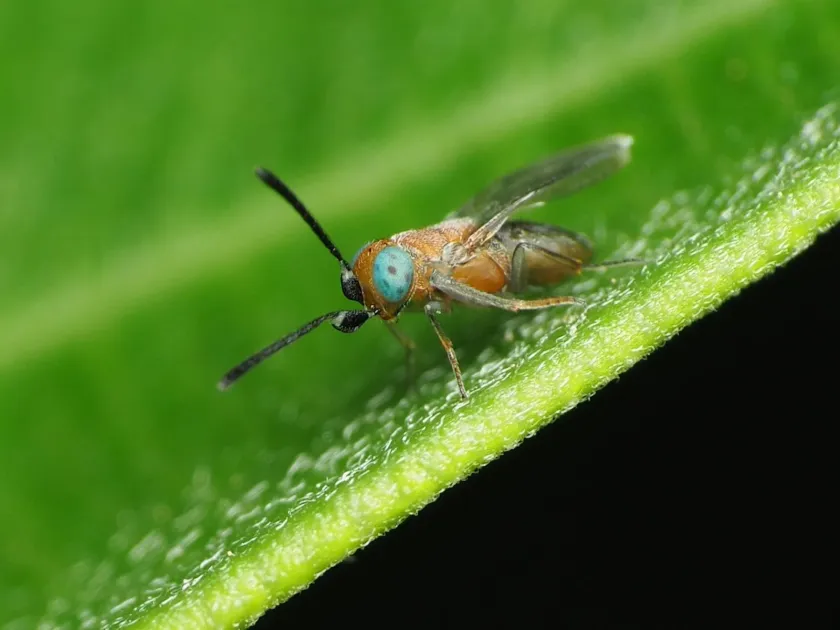
Description
How to identify
Anagyrus is a genus of parasitic wasps within the family Encyrtidae (order Hymenoptera). It is not a plant pest, but rather a vital beneficial insect used in sustainable agriculture.
These wasps are very small, typically measuring between 1 and 2 millimeters in length. Despite their size, they are highly efficient at finding hosts.
The female wasp possesses specialized antennae designed to detect volatile signals emitted by mealybugs, allowing her to locate them even in dense foliage.
Anagyrus undergoes a complete lifecycle from egg to adult inside the host's body. The adult female lays a single egg into a mealybug nymph or adult.
The development time of the wasp is highly dependent on ambient temperature, with 22°C to 28°C being the optimal range for the fastest population growth.
What it damages
Anagyrus wasps do not feed on or damage plants. Their ecological role is strictly that of a predator/parasitoid of mealybugs (Pseudococcidae).
They are highly effective against several notorious pests, including the citrus mealybug (Planococcus citri) and various grape mealybug species.
By parasitizing the pest, Anagyrus kills the mealybug, which stops the pest's ability to feed on the plant and secrete honeydew that promotes sooty mold.
In greenhouses and orchards, these wasps are used as the primary biological control agent to protect high-value crops from mealybug infestations.
Their ability to seek out low-density pest populations makes them a key component of Integrated Pest Management (IPM) programs worldwide.
When it appears
In protected greenhouse environments, Anagyrus can be released and sustained throughout the year, provided there is a food source for the pest.
In field settings, the seasonal activity of Anagyrus is naturally synchronized with the emergence of mealybug generations during the warmer months.
Activity levels typically peak during late spring and summer as rising temperatures facilitate the searching behavior of the adult females.
During winter or cold spells, the activity of the wasp significantly decreases, necessitating careful timing of greenhouse introductions.
Effective management involves monitoring the pest population levels and deploying the wasps exactly when the mealybugs are at their most vulnerable life stages.
Signs of infestation
The primary visual indicator of successful Anagyrus activity is the presence of "mummified" mealybugs on the plant tissues.
A mummy appears as a darkened, hardened, and slightly inflated shell of the former mealybug, where the wasp's pupa has developed.
When the adult wasp emerges from the mummy, it leaves behind a small, distinct, and perfectly circular exit hole on the shell.
Finding a significant number of these empty mummies indicates that the wasp population is established and actively controlling the pest.
- Darkened, rigid, and stationary mealybug shells.
- Small, perfectly round exit holes on the dorsal side of the mummy.
- A gradual decline in the number of healthy, mobile mealybugs on the plants.
Control measures
Since Anagyrus is a biological control agent, the main goal of management is to ensure its survival and efficacy within the crop environment.
The use of broad-spectrum insecticides should be strictly avoided or prohibited, as they are toxic to these beneficial wasps.
If chemical intervention for other pests is necessary, growers should select selective pesticides with minimal residual toxicity to natural enemies.
Maintaining proper greenhouse conditions, such as temperature and relative humidity, is essential for maximizing the lifespan and searching capacity of the wasp.
Regular monitoring using sticky traps and visual inspection is recommended to assess the parasitism rate and the overall health of the wasp population.
Taxonomy
- Latin name
- Anagyrus
- Order
- Hymenoptera
- Family
- Encyrtidae
- EPPO code
- ANAYSP
Discussion
No discussions yet — be the first.