
Ageniaspis
Ageniaspis
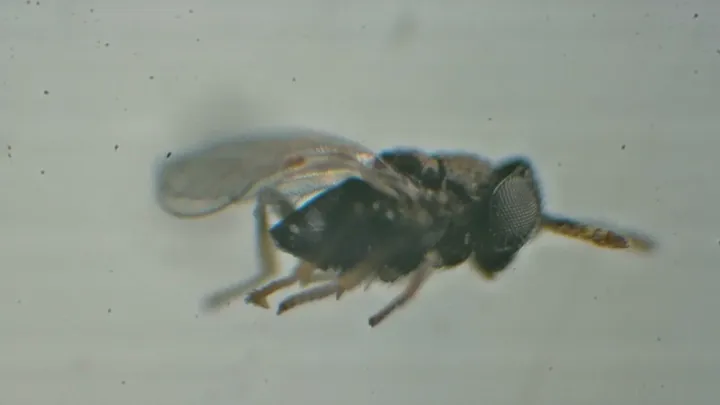
Description
How to identify
Ageniaspis is a genus of parasitic wasps belonging to the family Encyrtidae within the order Hymenoptera. In agricultural science, these insects are classified as highly beneficial entomophages rather than pests.
The adults are extremely small, typically measuring between 1 and 2 millimeters in length. They often possess a dark body with a metallic sheen, making them difficult to detect without specialized equipment.
Their life cycle is specialized to target leafmining moths. The female wasp inserts her eggs into the eggs or larvae of the host, initiating a complex process of development inside the host's body.
A notable biological trait of this genus is polyembryony, where a single egg produces a large number of offspring, ensuring a high level of population control against the pest.
Finding these wasps in an orchard is a positive sign of a healthy agroecosystem where natural enemies are actively suppressing pest populations.
What it damages
Ageniaspis is not a plant pest; it does not consume leaves, fruit, or roots. Consequently, no control measures are required to combat the wasp itself, as it is a valuable asset to fruit production.
The primary hosts of this parasitoid are various species of leafmining moths (such as those in the genus Phyllocnistis), which damage fruit trees by tunneling through the leaf tissues, leading to reduced photosynthetic capacity.
Mistaking this beneficial wasp for a pest and applying unnecessary insecticides can cause significant ecological imbalance, leading to outbreaks of the very pests the wasps are designed to manage.
By parasitizing leafminers on apple, pear, and other orchard trees, these wasps help maintain canopy health and vigor throughout the growing season.
The economic impact of Ageniaspis is strictly positive, as it reduces the need for expensive chemical interventions by providing free and efficient biological control.
When it appears
The activity of Ageniaspis adults aligns closely with the phenology of their hosts. They are most active during the spring and summer months when moth populations begin to emerge and lay eggs.
Several generations of the wasp can occur throughout the growing season, providing sustained suppression of leafminer populations from early spring through autumn.
They typically overwinter inside the mummified remains of the host larvae, often hidden within fallen leaves or bark crevices, emphasizing the need for careful orchard management.
The synchronization between the wasp's life cycle and the host's development ensures that the parasite is present exactly when the pest is most vulnerable to attack.
Agrometeorological conditions influence the timing of emergence, and monitoring for the presence of these wasps is essential for integrated pest management programs.
Control measures
The best approach to managing Ageniaspis is to protect its population by reducing the use of harmful pesticides in the orchard environment.
When chemical control is necessary for other pests, growers should select narrow-spectrum or biological insecticides that minimize impact on beneficial insects and natural predators.
Maintaining floral resources around the orchard provides adult wasps with nectar, which is vital for their survival and reproductive success in the field.
Integrated Pest Management (IPM) strategies should prioritize the preservation of these natural enemies over routine preventive spraying.
- Prioritize selective over broad-spectrum pesticides.
- Minimize disturbance to overwintering sites in leaf litter.
- Monitor pest levels to justify any treatment.
- Establish nectar-rich strips to support beneficial wasp populations.
Taxonomy
- Latin name
- Ageniaspis
- Order
- Hymenoptera
- Family
- Encyrtidae
- EPPO code
- AGENSP
Discussion
No discussions yet — be the first.