
Acerophagus maculipennis
Acerophagus maculipennis
Description
How to identify
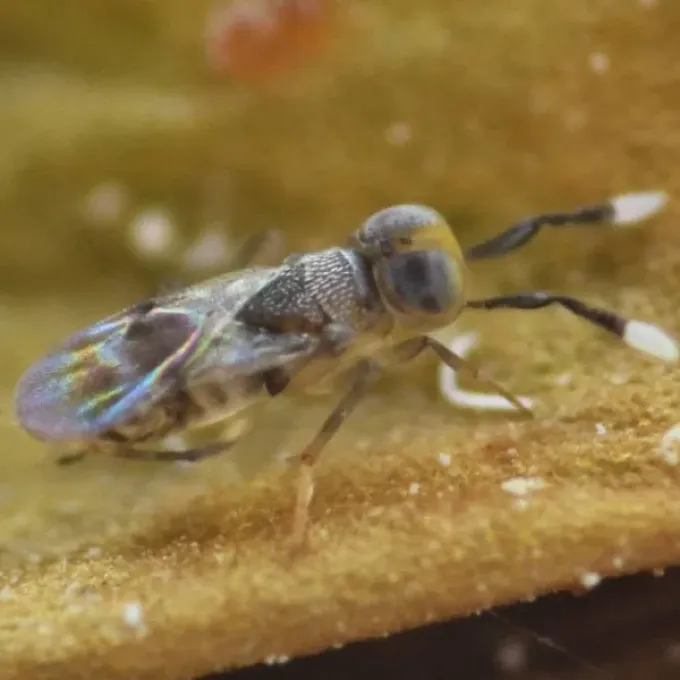
Acerophagus maculipennis is a tiny parasitic wasp belonging to the family Encyrtidae, widely recognized for its role in the natural control of mealybug populations.
The adult wasp is characterized by specific dark patterns on its wings, which serves as a key diagnostic feature for entomologists and researchers.
Measuring only a few millimeters in length, these insects are difficult to spot with the naked eye, requiring yellow sticky traps for effective population monitoring.
The life cycle involves the female wasp laying eggs inside the host, specifically targeting various species of mealybugs (Pseudococcidae) commonly found on agricultural crops.
Understanding their taxonomy and morphology is essential for accurate identification when implementing biological control programs in greenhouses or orchards.
What it damages
The primary damage is caused by the mealybugs that these wasps parasitize; they feed on the phloem sap, leading to plant dehydration and nutrient loss.
Symptoms of infestation include chlorosis, stunted growth, and leaf curling, which eventually lead to a significant decrease in overall yield quality.
The secretion of honeydew by mealybugs promotes the growth of sooty mold, a fungus that covers leaves and interferes with essential photosynthesis.
If not addressed in time, severe infestations can result in the complete death of sensitive ornamental plants or fruit-bearing trees.
While the wasp acts as a natural enemy, its presence is a clear indicator that the crop is currently suffering from a significant pest pressure.
When it appears
The activity of Acerophagus maculipennis typically aligns with the seasonal development of its host populations, peaking during warmer months.
In climate-controlled greenhouses, the reproduction of these insects can occur throughout the year, posing a continuous threat if left unmonitored.
Warmer temperatures accelerate the metabolic rate of both the pest and the parasite, often leading to rapid population outbreaks in spring and summer.
Monitoring efforts should intensify as the growing season progresses and environmental conditions become favorable for insect reproduction.
Late autumn often marks a transition period where populations begin to search for overwintering sites, though indoor environments bypass this cycle.
Signs of infestation
Visible white, cotton-like masses on the stems, leaves, and junctions of plants are the most prominent signs of a mealybug infestation.
Sticky, shiny surfaces on the foliage, caused by honeydew, indicate the active presence of sucking pests that attract the parasitoid wasps.
Yellowing of foliage and general plant decline are indicative of the sap-sucking activity that Acerophagus maculipennis is attempting to suppress.
The presence of wasps can sometimes be confirmed by finding emergence holes on the dried, mummified bodies of dead mealybugs on the plant.
Observing an increase in the number of small, dark, winged insects on sticky traps is a clear sign that a parasitic population is active in the vicinity.
Control measures
Effective management requires an integrated approach that balances chemical interventions with biological control methods to preserve the beneficial wasp population.
Selective insecticides should be used carefully to target the pest without causing harm to the natural enemies that help regulate the population.
Sanitation practices are critical, including the prompt removal of infected plant materials to stop the spread of the colony.
- Regular inspection of incoming nursery stock for hidden pests.
- Maintenance of optimal environmental conditions to discourage pest outbreaks.
- Usage of sticky traps for early detection and population tracking.
- Implementation of biological control agents where appropriate.
Strategic chemical rotation and adherence to threshold-based spraying protocols are recommended to minimize environmental impact and sustain crop health.
Taxonomy
- Latin name
- Acerophagus maculipennis
- Order
- Hymenoptera
- Family
- Encyrtidae
- EPPO code
- PSUDMC
Discussion
No discussions yet — be the first.