
Acerophagus angelicus
Acerophagus angelicus
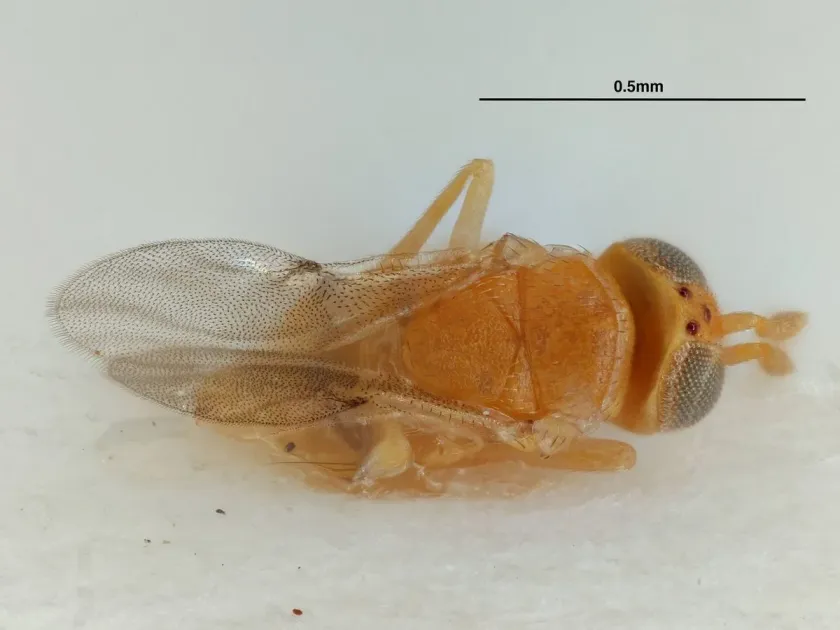
Description
How to identify
Acerophagus angelicus is a tiny insect belonging to the order Hymenoptera and the family Encyrtidae. While many members of this family are known as primary parasitoids, this species is frequently involved in complex interactions within pest populations.
Adults are extremely small, often requiring magnification for identification. They typically possess a dark-colored body, which often displays a metallic luster, a common trait among many species of the Encyrtidae family.
The wings are clear and feature specific venation patterns characteristic of the group. Antennae are highly developed, playing a crucial role in the insect's ability to locate hosts and mates, with structures varying significantly between sexes.
Identifying this species in the field is a challenging task that requires specialized entomological training. Often, detailed laboratory examination of morphological structures, including genitalia, is necessary for precise species confirmation.
The insect undergoes a complete metamorphosis. Its life cycle consists of the egg, larval, prepupal, pupal, and adult stages, with each phase exhibiting unique physiological and ecological requirements.
What it damages
This species is associated with the infestation of various mealybug species (Pseudococcidae). It is frequently found in agroecosystems where mealybugs impact ornamental plants, citrus orchards, and greenhouse crops.
The insect acts as a parasite, developing inside the host's body. The larvae feed on the internal tissues of the mealybug, eventually causing the host's death upon the completion of the parasite's development cycle.
The primary agricultural impact arises from the disruption of ecological balances. In some cases, the suppression of natural predatory populations can lead to outbreaks of mealybug infestations, which cause significant plant damage.
Affected plants are often more susceptible to secondary infections entering through feeding wounds. This leads to stunted growth, leaf deformation, and a significant reduction in overall plant productivity and crop quality.
The economic impact is contingent upon the severity of the mealybug infestation. Regular assessment of the phytosanitary situation is essential to mitigate potential damage during the growing season.
When it appears
The activity of this insect is directly tied to environmental temperature. In temperate regions, mass emergence of adults typically occurs in late spring and continues throughout the summer months.
In greenhouses or controlled environments, the life cycle can continue year-round, provided that temperature conditions remain stable and hosts are present, making it a persistent threat to indoor crop production.
Population density typically peaks in synchronization with the highest activity levels of mealybugs. High humidity levels often facilitate the successful emergence of adults from their pupal cases.
Activity decreases as temperatures drop in autumn. Depending on the geographical zone, the species may overwinter as a diapausing larva or pupa within the remains of its host.
Climate change and milder winter conditions are enabling this species to extend its geographic range, allowing it to survive in regions where it previously could not overwinter outdoors.
Control measures
Effective management requires a comprehensive approach, combining agrotechnical, biological, and chemical strategies to manage the pest population effectively.
Maintaining strict phytosanitary standards in greenhouse facilities is fundamental: early detection and removal of infested plant material are critical to preventing widespread outbreaks.
Biological control focuses on preserving natural enemies. Growers should avoid the excessive use of broad-spectrum insecticides that may negatively impact beneficial insect populations in the field.
When chemical intervention is necessary, growers should prioritize the use of systemic products with selective action. Treatments should be timed based on rigorous population monitoring data.
- Frequent monitoring of crops for signs of mealybug activity.
- Deployment of sticky traps to track adult population dynamics.
- Balanced fertilization to improve overall plant health and resilience.
- Integration of biological control agents based on entomopathogenic fungi.
Taxonomy
- Latin name
- Acerophagus angelicus
- Order
- Hymenoptera
- Family
- Encyrtidae
- EPPO code
- PSUDAN
Discussion
No discussions yet — be the first.