
Acerophagus
Acerophagus
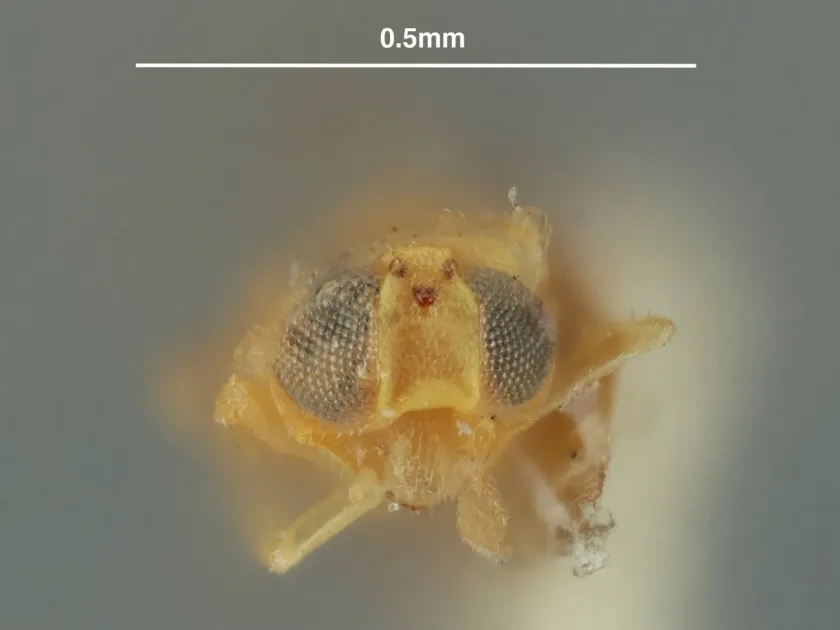
Description
How to identify
Acerophagus is a genus of parasitic wasps belonging to the family Encyrtidae, order Hymenoptera. These tiny insects are highly specialized parasitoids that function as natural enemies of various scale insects and mealybugs.
Adult specimens are extremely small, usually ranging from 1 to 2 millimeters in length. Their bodies often exhibit dark coloration with a faint metallic luster, a typical characteristic of many encyrtid wasps.
The most important morphological feature for identification is their sensory antenna structure, which is finely tuned to detect the chemical cues and pheromones emitted by their hosts, the mealybugs.
They possess transparent wings with a distinct venation pattern, allowing them to fly effectively within greenhouse environments in search of host colonies.
Distinguishing specific species of Acerophagus often requires expert taxonomic assessment, including microscopic examination of the genitalia and wing characteristics to ensure proper identification.
What it damages
It is crucial to note that Acerophagus is not a plant pest; it is a beneficial insect used in integrated pest management (IPM) to control mealybug populations, which are significant threats to agriculture.
The larvae of Acerophagus are internal parasitoids of mealybugs (Pseudococcidae), a group of sap-sucking insects that cause significant damage to fruit, ornamental, and vegetable crops by injecting toxins and promoting sooty mold.
The development of the larva occurs entirely inside the body of the host. As the larva grows, it consumes the internal tissues of the mealybug, eventually leading to its death.
By effectively parasitizing these harmful pests, Acerophagus helps maintain the health of the host plant, preventing the stunted growth, leaf yellowing, and fruit deformation typically associated with mealybug infestations.
The use of this biological agent significantly reduces the reliance on synthetic chemical pesticides, promoting a more sustainable and environmentally friendly approach to crop protection.
When it appears
The activity of Acerophagus is highly dependent on environmental conditions, particularly temperature and humidity. In greenhouse conditions with stable temperatures, they can remain active throughout the year.
In outdoor settings, their seasonal activity typically aligns with the emergence and growth phases of mealybug populations, usually starting in the spring when temperatures rise above 15 degrees Celsius.
The total lifecycle, including the egg, three larval stages, pupa, and adult stage, usually lasts between two to three weeks under optimal conditions, allowing for multiple generations per year.
During colder months or periods of environmental stress, the wasps may enter a state of diapause, often remaining within the protective "mummy" of the host until conditions become favorable again.
Successful biological control programs involve timed releases of Acerophagus to ensure the parasitoid population is established just before the peak reproductive period of the mealybugs.
Signs of infestation
The primary indicator of successful Acerophagus activity is the presence of "mummies"—the dried, darkened, and rigid remains of parasitized mealybugs—within the infested plant canopy.
Tiny, circular exit holes on the surface of the mealybug remains signify that the adult wasp has successfully completed its development and emerged from the host.
A visible reduction in the white, waxy, cottony secretions typical of mealybug colonies is a strong sign that the population is being successfully suppressed by the parasitoids.
Overall plant vigor improvement, characterized by the recovery of foliage and the cessation of new infestations, indicates effective pest regulation by the biological agent.
Routine scouting of the undersides of leaves, stems, and plant crevices allows growers to observe the density of mummies and assess the level of control achieved without disturbing the plants.
Control measures
In the context of Acerophagus, "control" refers to the management strategies employed by farmers to protect and encourage the wasp population rather than fighting against it.
The most important practice is to eliminate or strictly limit the use of broad-spectrum insecticides, as these chemicals are often more toxic to the parasitic wasps than to the pests themselves.
When pest pressure exceeds the threshold that biological control can manage, it is advisable to use selective, "soft" pesticides that have minimal residual impact on Hymenoptera species.
Providing nectar-producing plants in or near the growing area provides necessary sugar sources for adult wasps, increasing their lifespan and enhancing the fecundity of the female parasitoids.
- Avoidance of toxic broad-spectrum pesticides.
- Regular monitoring of host and parasitoid levels.
- Integration with other biological agents if necessary.
- Maintenance of nectar-rich plant buffers.
Taxonomy
- Latin name
- Acerophagus
- Order
- Hymenoptera
- Family
- Encyrtidae
- EPPO code
- PSUDSP
Discussion
No discussions yet — be the first.