
Rose stem sawfly
Syrista
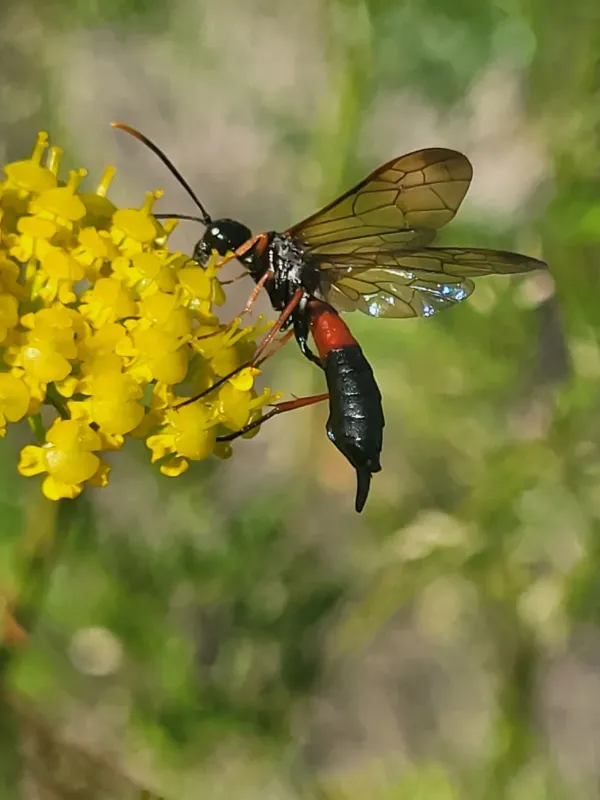
Description
How to identify
The rose stem sawfly (Latin: Syrista parreyssi) is a hymenopteran insect belonging to the Tenthredinidae family. The adult is a slender, black-bodied insect measuring about 10–12 mm in length.
The wings are transparent with a faint dark tint, and the legs are primarily black. The female features a sharp, saw-like ovipositor used to cut into the epidermis of young rose shoots to deposit eggs.
The larvae are yellowish-white and can grow up to 15 mm. They have a distinct brown head and a slightly curved, legless body, which is a characteristic feature of this specific sawfly group.
Identification is easiest in late spring during the flight period of the adults, which are most active in warm, sunny weather conditions.
Confirming the presence of Syrista requires inspecting the stems for entry holes. The characteristic internal galleries bored by the larvae are the definitive sign of an infestation.
What it damages
The primary hosts for this pest are various rose species, including hybrid teas and park roses. Occasionally, wild rose bushes growing nearby may also be attacked.
Damage is caused by both adults and larvae. The female creates structural damage while laying eggs, while the larvae feed internally on the soft tissues of the stem.
The feeding activity of the larvae disrupts the vascular system, preventing nutrient flow to the shoot tip, which subsequently causes the plant to wilt and die.
Severe infestations lead to the loss of flower buds and a significant reduction in the overall vigor and aesthetic appeal of the rose bush.
If left unchecked, the larvae can compromise the structural integrity of the stems, making them brittle and prone to breaking during windy weather.
When it appears
Adult sawflies emerge in the second half of spring, typically in May, coinciding with the rapid growth of new rose shoots which serve as ideal egg-laying sites.
The egg-laying period is extended, with the female placing single eggs under the stem epidermis at intervals along the succulent upper parts of the shoots.
Larval development takes place throughout the summer, lasting between 30 and 50 days depending on local climatic conditions and temperatures.
The larvae overwinter in the lower parts of the stem or the root crown, forming an overwintering chamber where they pupate early in the following spring.
This species typically produces one generation per year, meaning that timely intervention in the spring can effectively manage the population.
Signs of infestation
The most prominent sign is the sudden wilting and drooping of young rose shoot tips in early summer, often resembling a hook shape.
Close inspection of the stem below the wilted part reveals tiny, spirally arranged punctures or small slits made by the adult sawfly's ovipositor.
When the affected stem is split lengthwise, one can see a hollow channel filled with frass (larval excrement), confirming the internal damage.
The tips often turn black and brittle as they die off, making them easy to spot against the healthy, vibrant green foliage of the rest of the bush.
A lack of flower development on these specific stems is a strong indicator that a larva is consuming the internal tissues and preventing normal bud formation.
Control measures
The most reliable control method is the physical removal and destruction of infested shoots as soon as wilting is observed, preventing larvae from reaching the root crown.
Pruning should be performed 2–3 cm below the visible damage to ensure the larva is removed along with the infested portion of the stem.
Proper sanitation, including the collection and burning of all pruned material, is essential to stop the life cycle and reduce the local population of the pest.
Systemic insecticides can be applied during the adult flight period to prevent egg-laying, although this is usually reserved for severe infestations.
- Prune and burn infested stems immediately.
- Deep soil cultivation in autumn to disrupt overwintering sites.
- Use systemic insecticides containing imidacloprid if necessary.
Taxonomy
- Latin name
- Syrista
- Order
- Hymenoptera
- Family
- Cephidae
- EPPO code
- SYRSSP
Discussion
No discussions yet — be the first.