
Wheat stem sawfly
Cephus cinctus
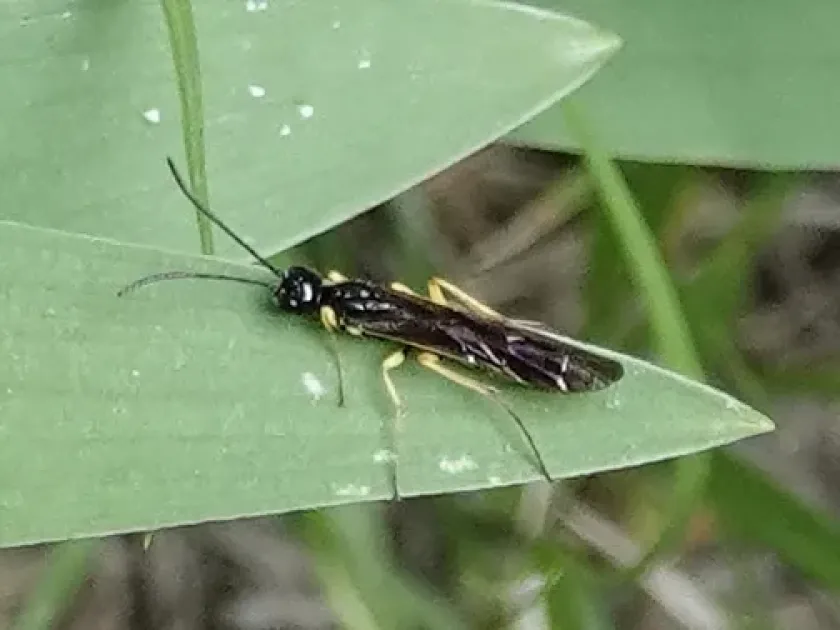
Description
How to identify
The adult wheat stem sawfly is a small, wasp-like insect about 10 mm long, with a slender, shiny black body marked with yellow patterns on the abdomen.
The larva is the damaging stage, characterized by a creamy-white color, a curled S-shaped appearance, and a distinct brownish head capsule.
It belongs to the Hymenoptera order, specifically the family Cephidae, known for its larvae residing within the stems of plants.
The insect undergoes complete metamorphosis, including egg, larval, pupal, and adult stages within the cereal plant environment.
Adults are weak fliers and typically survive for only about one week, focusing their limited lifespan on mating and egg-laying.
What it damages
This pest primary attacks wheat, including both hard and soft varieties, but also impacts barley, rye, and occasionally wild grasses.
Wild host plants like smooth brome and crested wheatgrass often serve as reservoirs for the pest, maintaining populations near crop fields.
Damage is caused by larvae boring through the internal tissues of the stem, specifically the pith, which disrupts nutrient flow to the grain.
As the plant nears maturity, the larva severs the stem at the base, creating a weakness that causes the wheat to lodge or fall over.
Severe infestations result in significant yield losses due to lodging, which prevents effective harvesting by combine machinery.
When it appears
The wheat stem sawfly typically completes one generation per year, overwintering as a mature larva inside the stubble at the base of the plant.
Pupation occurs in early spring as temperatures rise, and the adults emerge from the stems during late May or early June.
The timing of adult flight is synchronized with the booting and heading stages of wheat, making these stages critical for monitoring.
Females insert eggs directly into the hollow stem of the host plant, where they hatch into larvae within approximately 7 to 10 days.
Larvae develop throughout the summer, feeding downwards inside the stem and eventually creating a hibernation chamber near the crown.
Signs of infestation
The most noticeable sign is widespread lodging of the wheat crop shortly before harvest, appearing as if the crop has been flattened by wind.
Inside the stems, the larval tunneling leaves behind a trail of fine, sawdust-like frass that occupies the cavity of the internodes.
Heads of infested plants may appear white or prematurely ripened, often resulting in shriveled kernels and reduced weight.
Upon closer inspection, the base of the stem often displays a clean, saw-like cut made by the larva before it prepares for dormancy.
- Stems cut off near ground level.
- Presence of frass within the stem cavity.
- Premature whitening of the wheat heads.
- High percentage of lodged plants in the field.
Control measures
Deep plowing following harvest is the most effective cultural practice, as it buries the overwintering larvae deep enough to prevent adult emergence.
Stubble management, including burning or shallow tillage shortly after harvest, can disrupt the habitat and increase larval mortality.
Implementing a crop rotation cycle that includes non-host crops like legumes or oilseeds significantly reduces the risk of population buildup.
Selecting solid-stemmed wheat varieties provides mechanical resistance, as these stems are less favorable for larval feeding and development.
Chemical control is rarely effective against larvae once they are inside the stem, so insecticides must be timed to target adults before egg-laying occurs.
Taxonomy
- Latin name
- Cephus cinctus
- Order
- Hymenoptera
- Family
- Cephidae
- EPPO code
- CEPHCI
Discussion
No discussions yet — be the first.