
Tropical grain mite
Suidasia pontifica
Description
How to identify
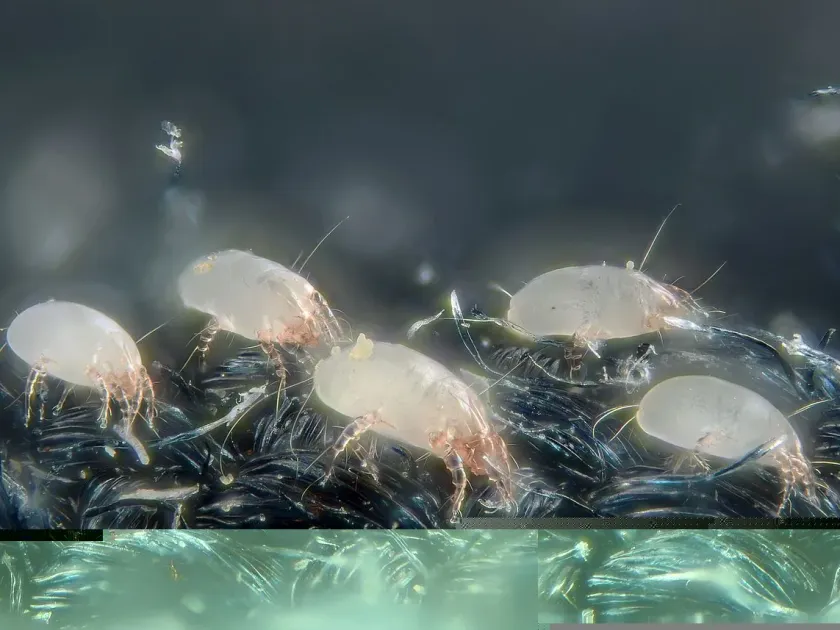
The Suidasia pontifica, commonly known as the tropical grain mite, belongs to the family Suidasiidae. It is a tiny arthropod with an adult body size usually ranging between 0.3 and 0.4 mm in length.
The mite has a soft, translucent, and oval-shaped body, which makes it nearly invisible to the naked eye when present in small numbers.
The species is taxonomically classified within the order Acariformes and thrives in environments where organic debris and moisture are present.
Its life cycle consists of egg, larva, protonymph, and adult stages, with the ability to enter a dormant state called hypopus under stress.
Identification is typically confirmed by experts using light microscopy, as the mite is often mistaken for other common storage mites without proper analysis.
What it damages
Suidasia pontifica is a significant pest of stored grain, cereals, oilseeds, flour, and various animal feed products found in warehouse environments.
The mite prefers high-moisture commodities, feeding on the endosperm and causing direct physical damage that reduces the nutritional quality of the stored food.
Infestation leads to the buildup of mite carcasses, exuviae, and excrement, which contaminate the grain and make it unsuitable for human or animal consumption.
Damage to the seed coat and embryo significantly impacts germination rates, which is a major concern for those storing high-value planting seeds.
In addition to feeding, their presence often creates micro-climates that support the rapid growth of storage fungi and mycotoxin production.
When it appears
The tropical grain mite is active throughout the year in indoor storage facilities where temperature and relative humidity remain stable.
Optimal conditions for rapid population expansion include temperatures around +25°C to +30°C and a relative humidity level exceeding 70%.
In temperate climates, the mite's activity in unheated warehouses decreases significantly during winter, though the population survives in a dormant state.
In tropical and subtropical regions, or in heated warehouse facilities, the mite exhibits continuous reproduction without clear seasonal pauses.
Rapid generational turnover, which can occur in less than two weeks under ideal conditions, allows the pest to reach explosive numbers in a short timeframe.
Signs of infestation
One of the primary indicators of a Suidasia pontifica infestation is a noticeable sweet, moldy, or musty odor emanating from the bulk grain.
The appearance of a greyish, dusty layer on the surface of the stored product is a clear sign that a mite colony has established itself.
Infested product often exhibits clumping or caking, where particles are stuck together due to the mites' secretions and webbing-like presence.
Heat spots within the grain mass are common symptoms caused by the metabolic activity of a massive population of these mites and associated fungi.
- Musty or sour odor
- Dusty, grey surface film
- Localized heating in grain piles
- Clumping of flour or feed
- Reduced viability of seeds
Control measures
The most effective management strategy is to maintain grain moisture levels below 13%, which prevents the mites from surviving and reproducing.
Warehouse hygiene is critical, including the removal of grain residues, dust, and spillages that serve as reservoirs for mite populations between harvests.
For severe infestations, chemical fumigation using phosphine gas is the standard procedure to achieve total mortality of all life stages throughout the grain mass.
Regular monitoring of storage conditions and the use of aeration systems help to keep grain temperatures low, which is unfavorable for mite development.
Empty storehouses should be thoroughly cleaned and treated with appropriate contact insecticides before the introduction of new grain lots to prevent cross-contamination.
Taxonomy
- Latin name
- Suidasia pontifica
- Order
- Mites
- Family
- Ebertiidae
- EPPO code
- SUIDPO
Discussion
No discussions yet — be the first.