
Arctoseius cetratus
Arctoseius cetratus
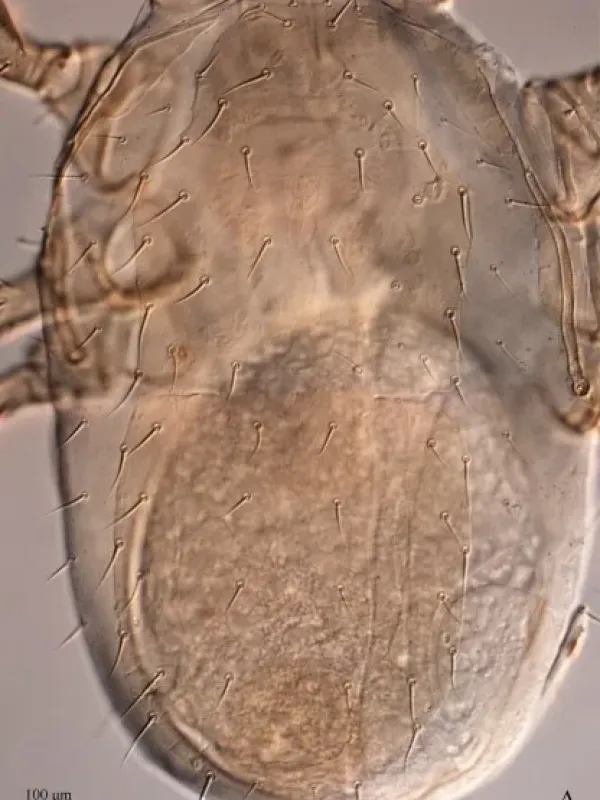
Description
How to identify
Arctoseius cetratus is a soil-dwelling mite belonging to the Ascidae family within the Mesostigmata order. It is commonly found in greenhouse substrates and organic matter-rich soils.
Adult mites are oval-shaped and typically measure between 0.4 and 0.5 mm in length. Their coloration ranges from pale yellow to brownish, making them difficult to spot without magnification.
The life cycle involves egg, larva, protonymph, deutonymph, and adult stages. Under optimal humidity and temperature conditions, this mite can reproduce rapidly within the substrate.
Arctoseius cetratus thrives in moist, humus-rich environments, which makes professional nursery substrates like peat or coconut coir ideal habitats for its proliferation.
Although these mites can behave as predators in some ecological niches, their high density in agricultural settings often leads to unwanted interactions with plant root systems.
What it damages
The primary damage caused by Arctoseius cetratus occurs when high populations directly attack the delicate root hairs of young vegetable seedlings and transplants.
By grazing on root tissues, the mites impair the plant's ability to absorb water and essential nutrients, leading to stunted growth and reduced vigor in commercial crops.
Vegetable crops such as cucumbers, tomatoes, and peppers are particularly vulnerable during their initial growth stages when the root system is not yet fully established.
The feeding activity of the mites creates microscopic lesions on roots, which serve as entry points for various soil-borne pathogens, including bacteria and fungi.
Consequently, the secondary damage often manifests as severe root rot, resulting in wilting, yellowing of leaves, and potential plant collapse in greenhouse modules.
Signs of infestation
Early symptoms of infestation include a noticeable lack of uniformity in plant height and vitality among seedlings grown under identical conditions.
When examining the root system, one may observe patches of necrosis, brown discoloration, and a reduced number of healthy white root tips.
Plants affected by these mites frequently exhibit signs of drought stress, such as leaf wilting and chlorosis, even when irrigation levels are sufficient.
A detailed inspection of the substrate may reveal the presence of small, fast-moving mites when water is applied or when substrate samples are washed.
Advanced signs of damage include the softening of the root collar and the development of secondary fungal infections that compromise the plant's vascular system.
Control measures
The most effective strategy for managing Arctoseius cetratus is the sterilization of growth media through steam treatment or chemical fumigation prior to planting.
Implementing a strict irrigation management plan to avoid waterlogging the substrate can create an environment less hospitable to mite population explosions.
Biological control agents, such as entomopathogenic fungi (e.g., Beauveria bassiana), can be applied to the substrate to reduce the number of active mites.
Maintaining high hygiene standards in the greenhouse, including cleaning tools and disinfecting footwear, is crucial to prevent the spread of mites between production zones.
Regular monitoring of plant roots and the implementation of prophylactic treatments for seedling pots can prevent outbreaks that might otherwise cause significant yield losses.
Taxonomy
- Latin name
- Arctoseius cetratus
- Order
- Mites
- Family
- Ascidae
- EPPO code
- ARCUCE
Discussion
No discussions yet — be the first.