
Anystis agilis
Anystis agilis
Description
How to identify
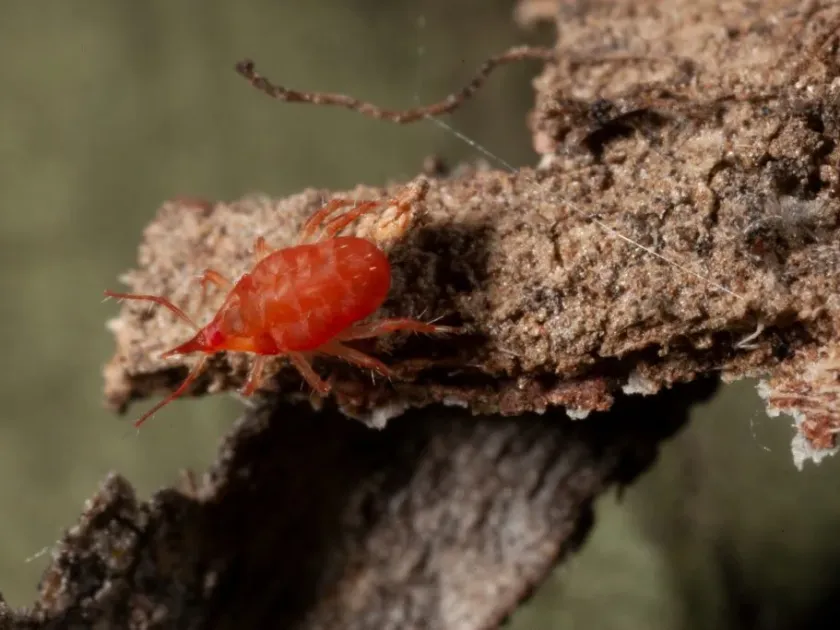
Anystis agilis is a member of the Anystidae family, belonging to the Trombidiformes order. These mites are renowned for their vivid red color and extreme agility.
Adult mites have a globular or pear-shaped body with relatively long legs, which allows them to move rapidly across plant surfaces while patrolling for potential prey.
They are generally recognized as beneficial predatory mites that hunt other small arthropods, including aphids and various species of plant-feeding mites.
The life cycle encompasses several developmental stages, including eggs, larvae, and nymphs, all of which exhibit high activity levels throughout the growing season.
In many agricultural environments, they act as natural control agents, maintaining the balance of mite populations within the crop canopy.
What it damages
While Anystis agilis is primarily a predator, it may occasionally damage plant tissues if its primary food source is scarce or unavailable.
In such instances, the mites may pierce plant cells to extract sap, leading to small necrotic spots or minor chlorosis on leaves and young shoots.
This type of damage is typically negligible and happens only under extreme population imbalances or lack of alternative prey species.
Crops most affected include various fruit trees, grapevines, and occasionally sensitive vegetable varieties in open or protected ground.
The ecological benefit provided by these mites as predators usually far outweighs any incidental damage caused during food shortages.
When it appears
The activity of Anystis agilis begins in the early spring as temperatures rise, allowing them to emerge from their overwintering sites.
Peak population levels are typically achieved during the mid-summer months when food availability is highest due to the proliferation of various garden pests.
These mites remain active throughout the entire vegetative period, constantly moving through the foliage of the host plants.
As autumn approaches and temperatures decrease, the mites seek shelter in crevices, bark, or leaf litter to survive the winter season.
Due to their rapid reproductive cycle, multiple generations can occur within a single season, ensuring their presence in the ecosystem until the cold weather sets in.
Signs of infestation
Identification is primarily based on observing the quick, erratic movements of bright red mites on the undersides of leaves.
Visible signs of plant stress, such as stippling or spotting, should be carefully examined to ensure they are not caused by more harmful pests like spider mites.
The absence of fine silk webbing is a key diagnostic feature, as Anystis agilis does not produce webbing like many herbivorous mite species do.
A high density of these mites is a strong indicator of the presence of other small prey, suggesting an underlying infestation of pests that the predator is feeding upon.
Magnification tools are essential for accurate identification, as the small size of the mites makes them difficult to distinguish with the naked eye.
Control measures
Management strategies should focus on conservation biological control, emphasizing the reduction of broad-spectrum insecticide usage.
If chemical intervention is necessary, growers should select selective acaricides that minimize harm to beneficial predatory populations.
Maintaining good agricultural practices, such as proper irrigation and fertilization, helps keep host plants healthy and less prone to primary pest attacks.
Regular scouting of fields and gardens is crucial to prevent unnecessary treatments and to verify the presence of beneficial species before taking action.
- Avoid the use of pyrethroids and other harsh chemicals during peak activity.
- Encourage natural habitats to sustain beneficial populations.
- Implement integrated pest management (IPM) to maintain ecological balance.
Taxonomy
- Latin name
- Anystis agilis
- Order
- Mites
- Family
- Anystidae
- EPPO code
- ANYSAG
Discussion
No discussions yet — be the first.