
Anystis
Anystis
Description
How to identify
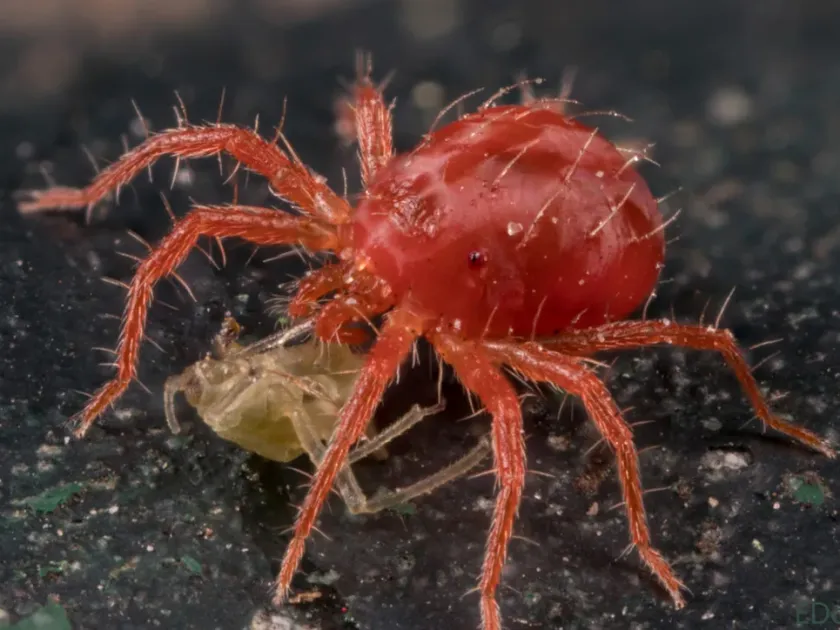
Mites of the genus Anystis belong to the family Anystidae, within the order Trombidiformes. These are typically predatory mites, recognized by their bright red or orange bodies and long legs.
They are known for their extreme speed and agility, often moving rapidly across leaf surfaces. Unlike many other mite species, they are highly active, which makes them very noticeable even to the naked eye.
The adult body shape is generally pear-like or spherical, with a size range of 0.5 to 1 mm. Their vivid coloration is a primary identifier during field scouting and crop monitoring.
Their life cycle consists of several stages: egg, larva, several nymphal instars, and the adult stage. This complex development allows them to adapt to various environmental conditions.
They typically inhabit the underside of leaves or areas around leaf veins, where they seek refuge and a microclimate with stable humidity levels for survival.
What it damages
While many Anystis species are considered beneficial predators, some can cause damage to plant tissues if their primary prey is scarce, leading to accidental herbivory on crops.
They affect a wide range of cultures, including vegetables, fruit trees, berries, and ornamental plants. Greenhouse environments are particularly susceptible due to high plant density.
By piercing and sucking plant cell sap, these mites disrupt photosynthesis and general plant metabolism. This process leads to localized necrosis and weakened overall plant vitality.
Severe infestations manifest as spotted leaves, stunted growth, and potential premature leaf drop. The aesthetic and physiological health of the plant is significantly compromised.
Young shoots and growth points are most vulnerable, as these areas provide the softest tissues for the mites to feed upon, resulting in the most noticeable damage.
When it appears
The activity of Anystis mites begins in the spring as temperatures rise. Their population peaks during the mid-to-late summer months when hot and dry conditions are most prevalent.
Overwintering occurs in the adult stage within soil crevices, under plant debris, or in the bark of trees, where they remain in diapause until environmental conditions become favorable.
In greenhouses, the development cycle can continue throughout the year if the indoor climate is kept warm and stable, posing a constant risk to year-round production.
Migration onto plants typically occurs once air temperatures exceed 15-20 degrees Celsius, triggering their emergence from hibernation and the initiation of feeding activities.
The number of generations per season is highly dependent on climate and moisture; in optimal conditions, their population can expand rapidly, creating sudden outbreaks.
Signs of infestation
Initial signs of infestation appear as tiny light or brownish spots on the leaf surface, which are caused by the mites piercing the plant cells and draining their contents.
Over time, the foliage loses its green pigment, develops a mottled or pale appearance, and may begin to curl or wilt due to the loss of cell turgor pressure.
Using a magnifying glass, one can observe the mites themselves moving quickly across the leaves, which is a distinctive behavior compared to slow-moving spider mites.
The presence of eggs and exuviae (cast-off skins) on the underside of leaves are early indicators of an established population and active reproduction on the host plant.
Significant infestations lead to a decline in fruit quality, reduced yield, and a loss of marketability, which is particularly concerning for commercial produce.
Control measures
Effective management of Anystis mites requires an integrated approach that combines cultural practices with the strategic application of chemical control agents.
Maintaining proper humidity and irrigation levels is essential, as dry, stressed plants are more likely to support large mite populations and suffer significant damage.
- Application of specialized acaricides for mite control.
- Weed management to eliminate alternative host plants and reservoirs.
- Use of biological control agents that target predatory mite populations.
- Post-harvest cleaning and destruction of infested plant materials.
When applying chemicals, it is important to select products specifically labeled as acaricides, as standard insecticides are often ineffective against these organisms.
Regular scouting and early intervention are the most successful strategies for preventing population explosions and minimizing economic impact on agricultural enterprises.
Taxonomy
- Latin name
- Anystis
- Order
- Mites
- Family
- Anystidae
- EPPO code
- ANYSSP
Discussion
No discussions yet — be the first.