
Feather mite
Megninia cubitalis
Description
How to identify
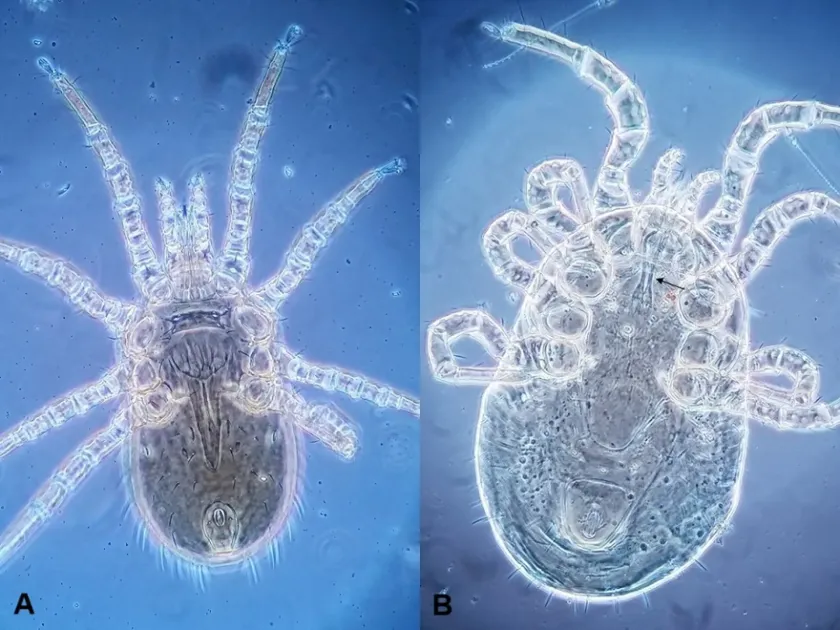
The feather mite Megninia cubitalis belongs to the order Acariformes and the family Analgidae, specifically adapted to live on the plumage of domestic and wild birds.
These mites are microscopic, flattened ectoparasites designed to navigate through the microscopic structure of bird feathers with ease using specialized adhesive suckers on their legs.
The entire life cycle occurs on the host, moving through egg, larva, protonymph, deutonymph, and adult stages, remaining tethered to the feather surface throughout their existence.
Development is tightly regulated by the host's microclimate, specifically requiring stable humidity and temperature found within the bird's feathers to complete their reproductive cycles.
Detection is difficult due to their translucent appearance and minute size, often requiring laboratory equipment to distinguish this specific species from other avian mites.
What it damages
While Megninia cubitalis is not a crop pest, it is a significant economic burden in the poultry industry, causing distress and physical deterioration in flocks.
These mites feed on cutaneous secretions and feather debris, causing mechanical damage to the barbs and barbules, which results in the structural degradation of the feathers.
Severe infestations lead to frayed, brittle, and broken feathers, impairing the bird's insulation and flight capabilities, which increases energy expenditure and stress.
The resulting constant irritation causes significant discomfort, leading to reduced feed conversion rates, stunted growth, and a noticeable drop in egg production.
The presence of these mites can compromise the skin's barrier, leading to dermatitis and increasing the susceptibility of the flock to secondary bacterial or fungal infections.
Signs of infestation
A primary indicator of infestation is the unkempt appearance of the feathers, which may look ruffled, dull, or exhibit visible splitting along the vane.
Birds infected with the mite will display behavioral changes, such as persistent preening, restlessness, and excessive scratching to alleviate the intense itching.
Close physical inspection of the primary flight feathers and tail feathers often reveals characteristic damage, including thinning of the feather structure.
In cases of heavy infestation, the birds may become lethargic and lose condition, showing visible signs of health degradation that cannot be attributed to dietary factors.
Confirmation of the presence of Megninia cubitalis is achieved through diagnostic microscopy of feather samples taken from the affected areas of the bird.
Control measures
Effective management requires a combination of direct chemical treatment of the flock and rigorous sanitation protocols for the housing facilities.
The use of approved acaricides, administered through topical sprays or powders, is the standard practice for eliminating mite populations directly on the birds.
Biosecurity measures, including the strict isolation of new birds, are essential to prevent the entry and spread of the parasite within an established flock.
Environmental management, such as maintaining appropriate humidity levels, helps to create a less favorable environment for the rapid multiplication of the mites.
- Application of specialized acaricidal treatments compliant with veterinary safety standards.
- Thorough cleaning and disinfection of nesting areas and perches.
- Encouraging dust-bathing behavior in poultry to naturally reduce parasite populations.
Taxonomy
- Latin name
- Megninia cubitalis
- Order
- Mites
- Family
- Analgidae
- EPPO code
- MGNICU
Discussion
No discussions yet — be the first.