
Feather mite
Megninia
Description
How to identify
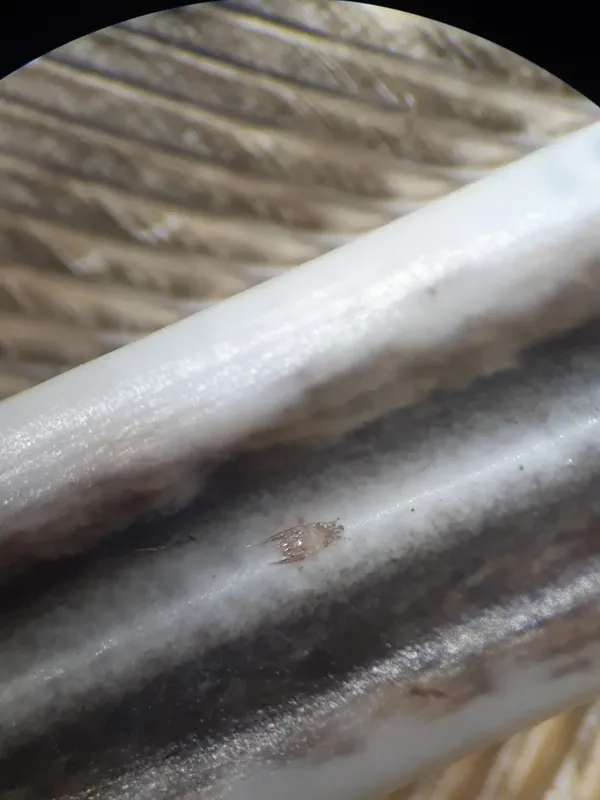
The feather mite, specifically of the genus Megninia, is a microscopic ectoparasite belonging to the order Sarcoptiformes and the family Analgidae. These mites are highly specialized to live within the feather structure of avian hosts, where they complete their entire life cycle.
Due to their tiny size and flattened, translucent bodies, they are difficult to spot without magnification. They reside on the surface of feathers or within the barbs, feeding on feather debris, oils, and skin cells, which makes them permanent residents on the host's body.
What it damages
These mites primarily infest poultry, including chickens and turkeys, causing significant damage to the plumage. By feeding on the feather structure, they cause the feathers to become brittle, frayed, and damaged, which compromises the bird's thermoregulation and physical condition.
The economic impact of a feather mite infestation includes decreased egg production, slowed growth rates in young birds, and a general decline in the vitality of the flock. Constant irritation from the mites leads to chronic stress, making the birds more susceptible to other diseases.
When it appears
Feather mites do not have a strict seasonality, as modern poultry housing provides a constant environment suitable for their survival throughout the year. However, high humidity and poor ventilation within the coop significantly accelerate their reproductive cycle and population growth.
Outbreaks are most common when sanitation standards are neglected, allowing the mite population to expand rapidly. Once established in a coop, these mites can persist indefinitely unless active control measures are implemented to break their reproductive cycle.
Signs of infestation
Key symptoms include damaged and broken feathers, particularly on the wings and tail. Birds may appear disheveled and often show signs of restlessness, frequent preening, and self-pecking as they attempt to relieve the irritation caused by the mites.
A closer inspection of the feathers may reveal a white, powdery residue, which consists of mite debris and eggs. Heavily infested birds will show noticeable weight loss, lethargy, and a reduction in overall activity levels compared to healthy members of the flock.
Control measures
Controlling feather mites requires a comprehensive strategy focusing on both host treatment and environmental hygiene. It is essential to treat infested birds with approved acaricidal products and ensure that the coop environment is regularly disinfected to eliminate hiding spots.
- Thorough cleaning and disinfection of coops and equipment.
- Regular provision of dust baths for the birds to assist in natural grooming.
- Isolation and treatment of new or infected birds before introducing them to the main flock.
- Maintaining optimal humidity levels and proper ventilation in poultry houses.
Taxonomy
- Latin name
- Megninia
- Order
- Mites
- Family
- Analgidae
- EPPO code
- MGNISP
Discussion
No discussions yet — be the first.