
Acarapis
Acarapis
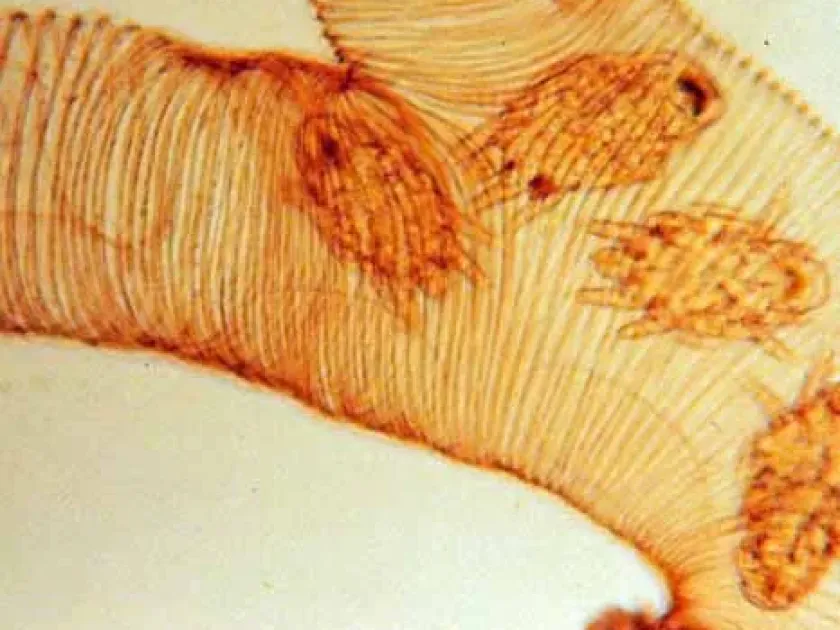
Description
How to identify
Acarapis (specifically Acarapis woodi) is a microscopic endoparasitic mite belonging to the Tarsonemidae family. An adult specimen has an oval, flattened body, approximately 0.1–0.2 mm in length, and possesses four pairs of legs equipped with suckers.
The life cycle of this parasite occurs exclusively within the respiratory system of the honey bee. The female mite lays eggs in the large thoracic tracheae of the insect, where larvae hatch and feed on the host's hemolymph.
This mite is an obligate parasite and cannot survive for long periods outside the host organism. Transmission between bees typically occurs through direct contact, most commonly during the winter cluster when bees are tightly packed.
The development of one generation of the parasite takes about 14–21 days, depending on environmental temperature and the overall health status of the bee colony. Dozens of mites can infest a single bee simultaneously.
Visual identification of the parasite is impossible without laboratory assistance due to its minute size. Accurate diagnosis requires microscopic examination of the thoracic tracheae.
What it damages
Acarapis exclusively infects honey bees (Apis mellifera). Other insect species are not natural hosts for this parasite, which limits the scope of disease outbreaks.
The primary damage is inflicted upon adult bees: workers, drones, and the queen. The infestation occurs inside the anterior thoracic trachea, where the mites feed on hemolymph by piercing the walls of the tracheal tubes with their specialized mouthparts.
The activity of the parasite results in the blockage of airways, leading to respiratory distress in the insect. This significantly reduces the lifespan of the bees and severely impairs their foraging ability.
Heavy mite infestations often lead to the total collapse of the bee colony, particularly during the winter and spring periods. Weakened colonies are unable to maintain the necessary hive climate or process food stores.
Beyond physical damage, the mite’s saliva and waste products trigger inflammatory responses in the bee’s tissues, causing metabolic disturbances and suppressing the insect's overall immune system.
When it appears
The parasite reproduces most actively during the colder months when bees form a dense winter cluster. The warmth and high humidity inside the cluster provide optimal conditions for the mite's rapid reproductive cycle.
In spring, as foraging begins, a peak in disease transmission is observed. Older, infested bees that leave the hive often become too weak to return, potentially spreading the mite to younger bees encountered during hive cleaning.
During summer, the intensity of the infestation tends to decrease as bees remain in constant motion and are exposed to solar radiation, which is lethal to the mites once they are outside the host's body.
Autumn brings an increased risk of infection as the colony prepares for winter and transitions to the final generation of bees. Increased hive density during this time facilitates the migration of female mites to younger individuals.
The end of winter is considered the most critical season for the apiary, as a large number of bees may have died from acarine disease, acting as a reservoir for further infection throughout the apiary.
Signs of infestation
A typical sign of infestation is the presence of "crawling" bees on the landing board or in front of the hive on calm days. These bees are unable to fly due to damage to their thoracic flight muscles.
Infected bees often exhibit abnormal wing positions, such as wings splayed outwards, pointing upwards, or crossed, a condition often referred to as "K-wing" or disjointed wings.
During the winter, increased agitation or an unusual humming sound from within the hive can be an indicator of a heavily infested colony suffering from respiratory distress.
If a colony appears weak or exhibits high mortality in spring, the beekeeper should monitor flight activity carefully. Significantly reduced foraging activity compared to healthy neighboring hives warrants diagnostic testing.
- Loss of coordination in bee movement.
- Inability to take flight at warm temperatures.
- Characteristic changes in wing angle and posture.
- High mortality rates post-winter.
Control measures
The primary method of control involves the use of specialized acaricide treatments, typically administered via fumigation within the hive interior.
Treatments using essential oils (such as thymol or menthol) and formic acid are effective, as they target the mites within the bees' respiratory pathways.
Maintaining strong colonies and strictly following sanitation protocols in the apiary are essential preventive measures. Strong colonies possess better immune resilience, which helps suppress the development of an infestation.
If an infestation is confirmed, a quarantine should be imposed, and all equipment must be thoroughly disinfected. Replacing old queens with young ones from healthy colonies is recommended to renew the population.
Regular monitoring and timely diagnostic checks of bee samples enable the detection of the pest at early stages, preventing widespread colony loss throughout the apiary.
Taxonomy
- Latin name
- Acarapis
- Order
- Mites
- Family
- Acarapidae
- EPPO code
- ACASSP
Discussion
No discussions yet — be the first.