
Marsh crane fly
Tipula vernalis
Description
How to identify
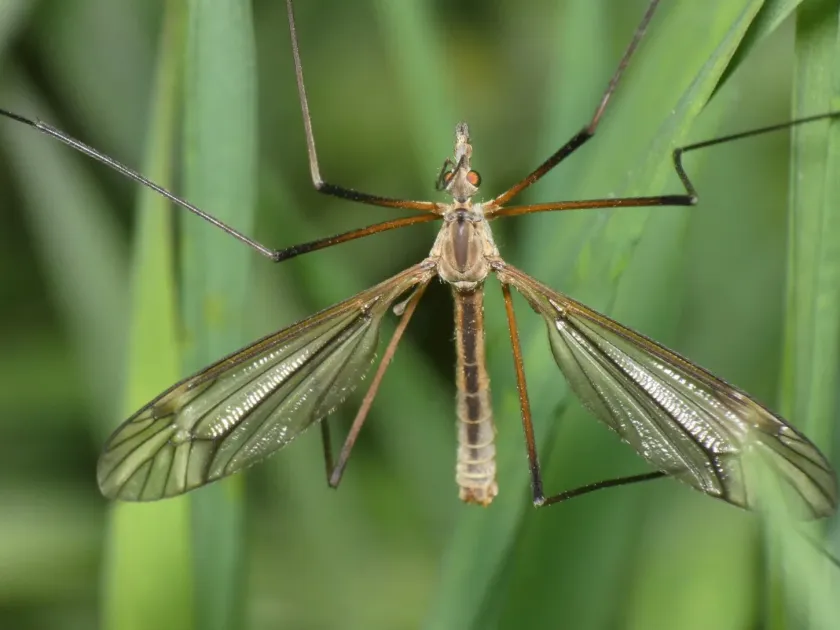
The marsh crane fly (Tipula vernalis) belongs to the order Diptera and the family Tipulidae. Adult insects resemble large mosquitoes with very long, fragile legs.
The body of the adult fly is typically greyish-brown with transparent wings featuring distinct dark spots. The wingspan usually ranges from 20 to 30 millimeters.
The larvae, often called leatherjackets, are legless, cylindrical, and brownish-grey in color. They can grow up to 30–40 mm in length.
Their skin is tough and leathery, which gives them high resistance to environmental factors and dehydration while living within the soil.
Pupae are brown and equipped with small spines, allowing them to wiggle towards the soil surface before the adult fly emerges.
What it damages
The larvae are primarily soil-dwelling pests that cause damage to a wide variety of crops by feeding on roots and underground stems.
Cereal crops like winter wheat and barley are particularly susceptible, as the larvae chew through the stalks, causing plant death and stand thinning.
Vegetable crops, especially seedlings of carrots, lettuce, and cabbage, are frequently attacked during the early stages of development.
Pastures and turf grasses are also damaged when larvae feed on the root system, causing yellowing and the death of large patches of grass.
In cases of high infestation, Tipula vernalis larvae can destroy entire patches of seedlings, leading to significant financial losses in agricultural production.
When it appears
Adult flies are typically active during the spring months, mainly in April and May, which corresponds to the insect's name.
Females lay their eggs in moist, organic-rich soil, where the larvae develop after hatching approximately two weeks later.
The larvae remain in the soil throughout their development, overwintering in the deeper layers to protect themselves from severe cold.
With the arrival of spring, they move closer to the surface to feed and eventually enter the pupal stage within the soil.
The life cycle is completed when the adults emerge from the pupae to mate and start a new generation of the pest.
Signs of infestation
A primary indicator of infestation is the unexplained wilting and yellowing of young plants that can be easily pulled from the soil.
Upon examination, the roots and base of the stems will show distinct, jagged chewing marks caused by the larvae’s powerful mouthparts.
On turfgrass, patches of dead or dying grass appear; these sections of sod can be easily lifted off the ground because their roots have been completely severed.
Soil surface activity, such as small holes or disturbed earth following rain, often marks the presence of the larvae in the upper soil layers.
The sudden interest of foraging birds in a specific field or garden area is often a visual cue that a large population of larvae is present in the soil.
Control measures
Cultural control methods such as deep autumn plowing are effective as they expose the larvae to predators and desiccation by wind and sun.
Improving soil drainage and removing excessive weed growth help create a less favorable environment for the crane fly to deposit its eggs.
Chemical control can be implemented using registered soil insecticides or seed treatments when larval populations exceed economic thresholds.
Biological control through the application of entomopathogenic nematodes is an environmentally friendly and highly effective method for managing larval populations.
- Deep plowing in autumn.
- Proper soil drainage management.
- Application of biological nematodes.
Taxonomy
- Latin name
- Tipula vernalis
- Order
- Diptera (flies)
- Family
- Tipulidae
- EPPO code
- TIPUVE
Discussion
No discussions yet — be the first.